
Why Celebrities Go to LA’s Entourage Barbershop to Get a Haircut
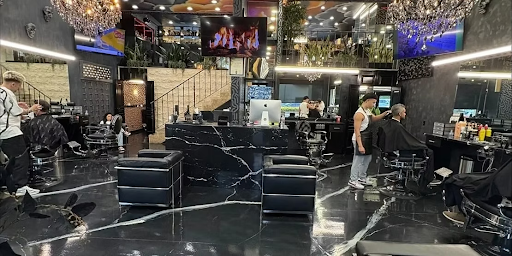
Since its opening in 2020, Entourage Barbershop’s luxury atmosphere and private haircut options have cemented its place as the ideal location for celebrities to get a fresh, red carpet-ready hairstyle that looks memorable on camera. Located in the heart of West Hollywood’s Sunset Strip, the barbershop has counted celebrities such as Jeff Goldblum among its clientele. By offering both private haircut appointments at its West Hollywood location and haircuts in the privacy of one’s home, Entourage Barbershop combines skill and discretion so that celebrities can enjoy their haircuts without turning them into a public appearance.
Skill and discretion are built into every part of Entourage Barbershop’s layout and services. With a private entrance and a secluded VIP section on its upper level, Entourage has designed its VIP experience with the needs of celebrities and discerning clientele in mind. Its VIP section also doubles as a lounge area where clients can enjoy an open bar, a pool table, video games, or some good conversations with fellow customers. Its barbers are also well-versed in modern hairstyling techniques such as fades, hot towel shaves, waxing, and hair coloring.
Entourage Barbershop’s experience working with celebrities and VIPs also creates benefits for its everyday clients, as it offers customers the opportunity to get their hair cut and styled like their favorite celebrities. By replicating the hairstyling techniques used by celebrity stylists, Entourage’s clients can share a hairstyle with popular figures such as Harry Styles, David Beckham, Brad Pitt, and Robert Pattinson.
Because personal barbers have also become popular among celebrities such as LeBron James, Entourage has also put together a barber house-call service through which stars can get haircuts in their home, studio, or office. Although prices for in-home haircuts come at a premium, Entourage owner Spike Eldib ensures clients that the premiums are worth it.
“When we do house calls, you have our undivided attention. We take time to make sure all of the details are right and we work with clients to make sure they get the exact haircut that they want,” Eldib said. “We are passionate about making you look and feel your best, whether you’re an A-list actor or a new client walking into the barbershop from the street.”

Discretion and personalized service are not just a part of Entourage Barbershop’s celebrity haircut experience, but also a part of the barbershop’s wider DNA, as seen in projects such as its “Hairapy” program. In recent years, Entourage has received media attention for its efforts to support men’s mental health by turning the barber’s chair into a safe space to discuss their troubles and stressors with a barber who will listen supportively, confidentially, and without judgment. Although Entourage’s barbers are not licensed mental health professionals, they have worked closely with therapists to ensure the advice they give is helpful and they can point clients to the right professionals if necessary.
“Hairapy is really just about giving people a place to talk. The barbershop has always been somewhere people come in, sit down, and open up about what’s going on in their lives,” Eldib said. “We wanted to take that a little further by teaching our barbers how to really listen, without judgment, and know when someone might need a little extra support.”
In the midst of the Sunset Strip’s nightlife, fashion, entertainment, and restaurants, Entourage Barbershop has served not only as a world-class barbershop frequented by celebrities and VIPs, but also as a community hub where customers can form genuine connections with their barbers and each other. These are just some of the reasons why Entourage was named one of the Top 10 Best Barbershops in West Hollywood shortly after its opening. For celebrities, that privacy and personal attention can make getting a haircut a lot easier, especially with busy schedules and cameras often around. But the experience isn’t limited to famous clients. Anyone who walks through Entourage’s doors can get the same attention, care, and personalized service that have made the shop popular.
Written in partnership with Tom White

Mental Health
Mikey Tableman on the Power Behind the My Manic Maze Multiverse
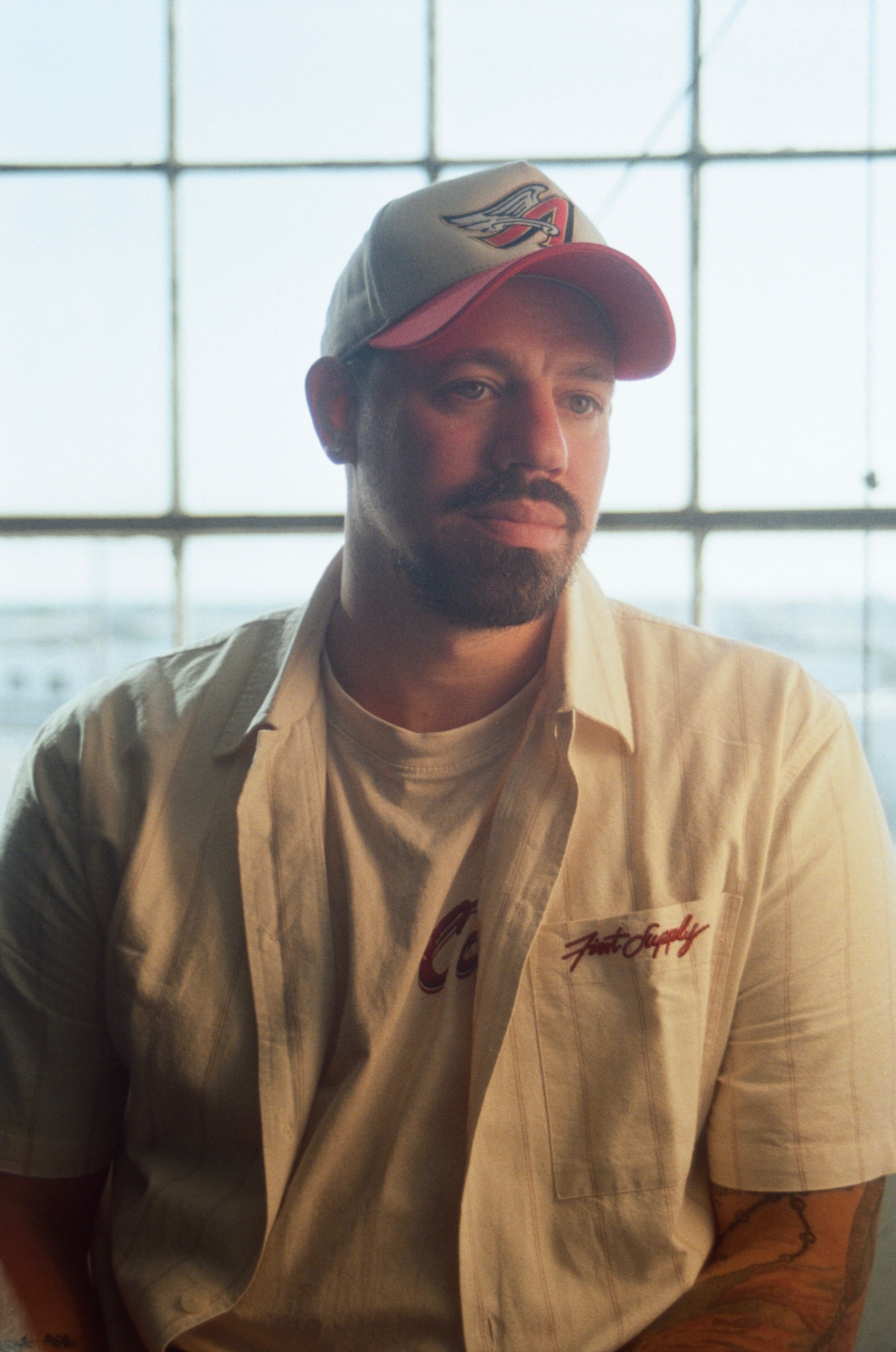
Mikey Tableman has experienced his own share of mental health struggles. He has since shaped them into a multifaceted EP and memoir titled My Manic Maze.
Mikey Tableman is upfront that his background is somewhat unconventional, especially for someone who calls himself a spoken word artist. Having spent over two decades working in nightlife, hospitality, and live entertainment, most would have assumed that he was living the life of his dreams.
Unfortunately, that was anything but the truth. Behind the scenes, Tableman was navigating a difficult reality, during which he struggled with anxiety, depression, ADHD, as well as his own complicated relationship with mental health.
During the pandemic, Tableman rediscovered his love of poetry. It would eventually turn the poems he wrote into a spoken word EP titled My Manic Maze, which aims to showcase the experiences that he and others like him go through.
“What started as something deeply personal has since evolved into cinematic visuals and an immersive live experience that combines music, storytelling, and theatrical production”

Dealing With Heavy Topics in My Manic Maze
Tableman is upfront that he is not standing on the other side of the struggles he has written about. As someone who actively continues to navigate his own mental health to this day, he has never wanted to position himself as an expert. Instead, he wanted to share his experiences to help others.
“I’ve never wanted to position myself as an expert telling people how to live their lives,” the artist shares. “I’m simply someone who’s experienced some incredibly dark moments, found a way to put those experiences into words, and discovered that those words can mean something to other people.”
In his EP and accompanying memoir, My Manic Maze brings Tableman’s experiences through sound, pacing, and delivery, adding layers that words on the page do not carry on their own. Each piece starts as a raw, unfiltered spoken-word poem, then opens into the real story behind it, highlighting not just where Tableman was mentally, but what wasn’t being said out loud at the same time.
“My Manic Maze is a multimedia storytelling project built around a seven-track spoken word EP and a companion memoir. They’re not two separate stories, but two different ways of experiencing the same one. The EP is where the emotion lives. The memoir takes you behind the poetry.”

Reshaping Trauma Into Power
After a mental health crisis in 2018, Tableman realized that he needed to start being more open about his mental health. During this time, he realized that the more he shared, the more people would begin to share their own experiences with him.
“It was eye-opening to realize how many of us were walking around carrying things that nobody else knew about,” Tableman says.
This realization, and his own personal experiences, led Tableman to found his 501(c)(3) nonprofit, A Mind’s Pursuit, which aims to help people rethink how they approach mental health.
“Awareness doesn’t always translate into connection, understanding, or meaningful change,” Tableman explains. “I wanted to build something that meets people where they are, using storytelling, entertainment, creativity, and community to start conversations that might otherwise never happen.”
The nonprofit, which is anchored by Tableman’s own battles with addiction, mania, and anxiety, aims to be more than just an organization that helps people through their mental health struggles. He aims to make it a movement that redefines how people think about mental health.
“Through A Mind’s Pursuit, the long-term goal is to continue building a global creative community where entertainment and meaningful conversations can exist together.”
Through his spoken word EP, his nonprofit, and his story, Mikey Tableman aims to remove stigma and help break down barriers within the mental health community. Above all, he wants people to know that honest conversations can be helpful, and that you don’t have to suffer in silence, no matter who you are.
Anyone who wants to follow the journey can find My Manic Maze on major music streaming platforms and explore the memoir through Amazon and other major online book retailers. Connect with everything being built through @AMindsPursuit and @Mikeytableman on all social platforms.

Written in partnership with Tom White
Business
Daddy Yankee Wears Maestros Joyeros to His Latin Recording Academy Person of the Year Gala
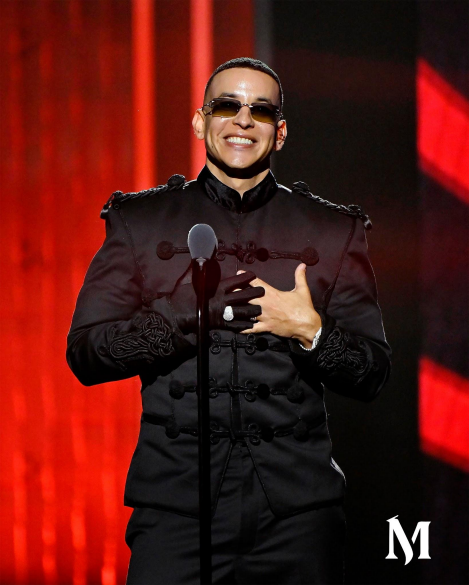
When Daddy Yankee placed his hands over his heart at the microphone in Las Vegas, a ring worn over a single black glove caught the stage lights. The Puerto Rican artist wore Mexican jewelry house Maestros Joyeros on November 11, the night the Latin Recording Academy
honored him as its 2026 Person of the Year. His high-collared jacket, with black braiding across the chest and cuffs, gave the ring a striking backdrop. From the red carpet to the stage, it was the detail that drew the eye.
Maestros Joyeros traces its roots to Guadalajara in 1931, when Don Ambrosio Rivas began the family’s jewelry business. Fifty years later, a 16-year-old César Villegas Guzmán opened a small workshop making gold medals. Today, the house is known for custom pieces and counts reggaeton veteran Yandel and Mexican artists Peso Pluma and Natanael Cano among its clients. Daddy Yankee’s gala appearance brought that family tradition to one of Latin GRAMMY Week’s most personal celebrations.
For Daddy Yankee, born Ramón Luis Ayala Rodríguez, the evening brought much of his musical history into one room. The Academy recognized both his humanitarian work and his role in taking reggaeton from the barrios of San Juan to a worldwide audience. DJ Playero, the first producer to record him, played a set drawn from the genre’s early days. Later, Tito El Bambino and Jowell & Randy joined Feid and Trueno for “Gasolina,” putting two generations of artists behind the same unmistakable chorus.
J Balvin and LL Cool J presented the honor, and Daddy Yankee took the stage himself for a set that included “Lo Que Pasó, Pasó.” For all the star power in the room, one of the evening’s most memorable images was also its simplest: the artist smiling at the microphone, hands to his chest, with a flash of Maestros Joyeros against black.
Written in partnership with Tom White
Documentary
Beyond the Spotlight: What Matthew Perry’s New Documentary Reveals About Addiction, Success and the Road to Recovery

Courtesy of The Turn Recovery
As Perry’s story returns to the spotlight, The Turn Recovery, a California treatment center, offers a fresh perspective on addiction and recovery.
Matthew Perry had what millions of people spend their lives chasing: fame, fortune, a successful career, and the affection of colleagues and audiences worldwide.
Yet behind the quick wit and unmistakable charm of Chandler Bing was a man fighting a deeply personal battle with addiction, one that continued despite his extraordinary professional success and access to treatment.
Now, three years after his death at 54, Perry’s story is back in the spotlight with Netflix’s new three-part documentary, The One About Matthew Perry, which premiered October 27. Featuring interviews with family members and longtime friends, the series offers a closer look at the man behind one of television’s most beloved characters.
His story raises a much larger question: Why is recovery so complicated, even for people who seemingly have every resource available to them?
It’s a question that professionals at The Turn Recovery, a newly opened private residential addiction treatment center in Healdsburg, California, are approaching with a philosophy centered on treating the whole person, not simply the addiction.
For Dr. Tim Worden, The Turn’s clinical director and a licensed neuropsychologist with more than 25 years of experience in addiction treatment programs, understanding the emotional, psychological, and behavioral factors behind substance use is essential to developing an effective treatment plan.
Addiction Doesn’t Discriminate
The image of someone struggling with addiction rarely tells the whole story.
It can be a young adult just beginning a career, a parent raising children, a successful entrepreneur, a healthcare professional or a retired executive. It can affect people across every income bracket, profession and generation.
And sometimes, the people struggling the most are the ones who appear to be doing exceptionally well.
In a world where professional success and outward appearances can mask personal struggles, that reality can be particularly difficult to recognize.
Someone can manage a business, maintain relationships, and fulfill professional responsibilities while privately struggling with a serious substance use disorder.
This is sometimes described as high-functioning addiction, although the term is not a formal medical diagnosis. In fact, it can be misleading, suggesting that someone who continues to perform well is somehow less vulnerable to the consequences of addiction.
For people accustomed to being in control, acknowledging the need for help can be especially difficult. Fear of professional consequences, embarrassment, or disappointing loved ones may create additional barriers to treatment.
Perry’s experience challenged the assumption that professional achievement, financial security or public admiration somehow protects a person from addiction.
The consequences extend far beyond Hollywood.
According to the California Department of Public Health’s 2026 State of Public Health Report, drug overdose was the leading cause of death among Californians ages 25 to 54 in 2024. It also ranked first statewide when measured by years of life lost, underscoring the devastating impact of lives cut short.
The problem extends far beyond California. Globally, an estimated 64 million people were living with drug use disorders, according to the United Nations World Situation with Regard to Drug Abuse (2026), highlighting the enormous reach of addiction across countries, cultures, and communities.
Behind those statistics are families, friends, and communities searching for answers.

Courtesy of The Turn Recovery
Why Recovery Requires More Than Detox
For decades, much of the public conversation around addiction has centered on getting sober. But stopping substance use, while essential, is only one part of a much larger process.
Substance use disorders can involve complex interactions among brain function, mental health, trauma, relationships, and physical health.
Dr. Worden’s clinical work focuses on these interconnected factors, including unresolved loss, trauma-related anxiety, guilt, shame, and relationship challenges that can accompany addiction.
At The Turn Recovery, that perspective helps shape an individualized approach to treatment.
Two people may arrive with the same diagnosis but have completely different histories. One may be struggling with unresolved trauma or anxiety. Another may be dealing with grief, relationship difficulties, or years of unhealthy coping mechanisms.
Even their definitions of a meaningful life in recovery may be entirely different.
The Turn’s treatment model combines medical and clinical care with opportunities to develop healthier routines, reconnect with personal interests, and build skills that support life beyond treatment.
The center also provides medically supervised detoxification, medication-assisted treatment when appropriate, and care for co-occurring mental health conditions.
The objective is not simply to address substance use, but to understand the individual circumstances that may contribute to it and develop a treatment plan that reflects those needs.

Courtesy of The Turn Recovery
Creating a Different Kind of Recovery Experience
That philosophy helped shape the vision behind The Turn Recovery.
Co-founder and managing partner Keith Greenberg brings more than 35 years of healthcare experience, including leadership in behavioral health and addiction treatment.
Throughout his career, Greenberg has seen how programs can be clinically sound yet still fall short of addressing the individual sitting in front of the treatment team.
When he joined forces with his co-founders, Jonathan and Patrick Wilhelm, whose background includes owning and developing premier golf and hospitality properties, they saw an opportunity to create a residential treatment environment that combined individualized clinical care with experiences designed to support personal growth.
Located in Sonoma County, The Turn integrates evidence-based treatment with wellness, outdoor activities and experiential opportunities tailored to each person’s recovery needs.
One of its most distinctive features is its relationship with Mayacama, one of the country’s premier private golf clubs, which is co-owned by the Wilhelm brothers.
That relationship provides opportunities to incorporate golf into the recovery process when clinically appropriate, including for individuals who have never played the game.
And the connection goes well beyond recreation.
Golf requires patience, focus, emotional regulation, and the ability to move forward after a setback. Those same skills can be valuable throughout recovery and in everyday life.
Every golfer knows that one bad hole doesn’t have to ruin an entire round. Similarly, a setback in recovery doesn’t have to erase the progress someone has made.
Golf is only one option. The Turn also incorporates creative outlets and other experiential activities based on individual treatment goals, complementing the clinical work taking place at the center.
For successful professionals who may have spent years defining themselves through achievement, responsibility, and performance, treatment can provide an opportunity to reconsider what a healthy, meaningful life looks like beyond their careers.
Changing the Conversation About Addiction
Matthew Perry’s legacy extends well beyond the television character that made him famous.
During his lifetime, he became an outspoken advocate for people struggling with addiction, openly discussing his own experiences and expressing a desire to be remembered for helping others.
His willingness to speak publicly about substance use disorders helped challenge the stigma that continues to prevent many people from seeking care.
The renewed attention surrounding his life offers another opportunity to move that conversation forward.
It’s also a conversation that reflects the philosophy behind The Turn Recovery: People struggling with addiction are more than their diagnoses, and effective treatment must recognize the individual behind the illness.
Recovery may involve medication, psychotherapy, family support, behavioral changes and the gradual rebuilding of relationships and routines. There are no guarantees or shortcuts, but effective treatment and sustained support can make recovery possible.
Perhaps the most meaningful lesson from Perry’s story is not simply that success cannot protect someone from addiction.
It’s that no matter how successful someone appears to be, how many times they’ve struggled or what their circumstances may be, they deserve the opportunity to heal, rebuild, and move forward.
To learn more about The Turn Recovery and its approach to individualized addiction treatment, visit the official website.
Written in partnership with Tom White
-

 4 years ago
Maggie Jenson Is Empowering People Battling Addiction
-

 Crypto10 months ago
The Real Story Behind teemchase’s Real Estate, Music, and Crypto Empire
-

 3 years ago
Latino Pulse in LA’s Hip-Hop Heart: The FACEvsIT Evolution
-

 Fashion3 years ago
From Brothers to Business: The Inspiring Journey of YoungLA
-

 Entertainment3 years ago
From ‘Cold’ Streetwear to Cosmic Dreams: The Ryley Gauthier Odyssey
-

 Entertainment3 years ago
Yolo Aventuras: From Venezuela to Global Stardom – The Rise of Digital Content Creators
-

 5 years ago
Demonstrating the power of social media- British bombshell, Bonnie Locket:
-

 Business2 years ago
Iron Wallet: The Ultimate Solution for Financial Independence