
Maggie Jenson Is Empowering People Battling Addiction

Drug or alcohol addiction can make people feel helpless. Although drugs and alcohol can ruin lives, getting sober gives you a sense of empowerment and strength. You will find an inner power that will enable you to live a more fruitful and fulfilling life. This is because you can moderate desires and stressors that might cause relapse.
The idea of empowerment is powerful. To empower someone means to inspire, motivate, and encourage them. In particular, empowerment makes you more robust and self-assured when recovering from addiction. Everything begins with taking the first step toward healing and giving yourself value. We start to comprehend our full potential.
Maggie Jenson is the founder of Magnify Progressive Wellness, a health concept that is a one-stop shop for mental wellness. Magnify is a revolutionary digital rehabilitation program for people struggling with sobriety or high-risk drinking. She offers progressive programming workouts, education on nutrition science, and expanding awareness of mindset principles like the Laws of Achievement and the Science of Success.
Having had first-hand experience struggling with sobriety, Maggie was determined to set up Magnify to help people battling addiction. She had succeeded in overcoming her drinking problems, hence the need to reach out and help others.
With Magnify, she aims to help individuals struggling with addictive behavior. She encourages them to start to “think different in order to drink different, or never again” by helping them build a health consciousness and a sense of purpose and direction.
The harm reduction specialist is also helping her clients achieve and maintain a healthy lifestyle without sacrificing personal growth. Most of her clients are people who have worked with her and recovered from addiction and can now enjoy their lives while working hard to fulfill their dreams.
Being a lone ranger gives Maggie the much-needed flexibility and adaptability to change. However, she also indicates that she occasionally feels as though her zeal is diminishing, especially when people try to demean her efforts. This has been her biggest obstacle by far, and she began to doubt her mission at one point.
“A lot of people don’t approve of my message, but I know in my heart that I was put on this earth to prove this to our society and help the millions, if not billions, of people struggling with alcohol and their families who are caught in the web of pain and trauma,” Maggie asserts.
But Maggie has also learned to maintain focus against all odds, irrespective of how low she sinks. She is a self-driven lady on a mission, and despite the many doubters, she has managed to maintain the dream by staying motivated and focused.
Your enthusiasm shouldn’t feel like forced labor or a grind and hustle. It shouldn’t feel like hard work or tiresome. She advises her clients to embrace bravery and confidence not just to find their calling but to go after it wholeheartedly. It will have a magnetic “flow-like” quality. Those who have gone through this have come to terms with the notion that they are deserving of and capable of fulfilling their specific purpose because it is what they most deeply desire.

Album
Michelle Grace’s “Me Time”: A Reintroduction Built on Earned Media and Crossover Appeal
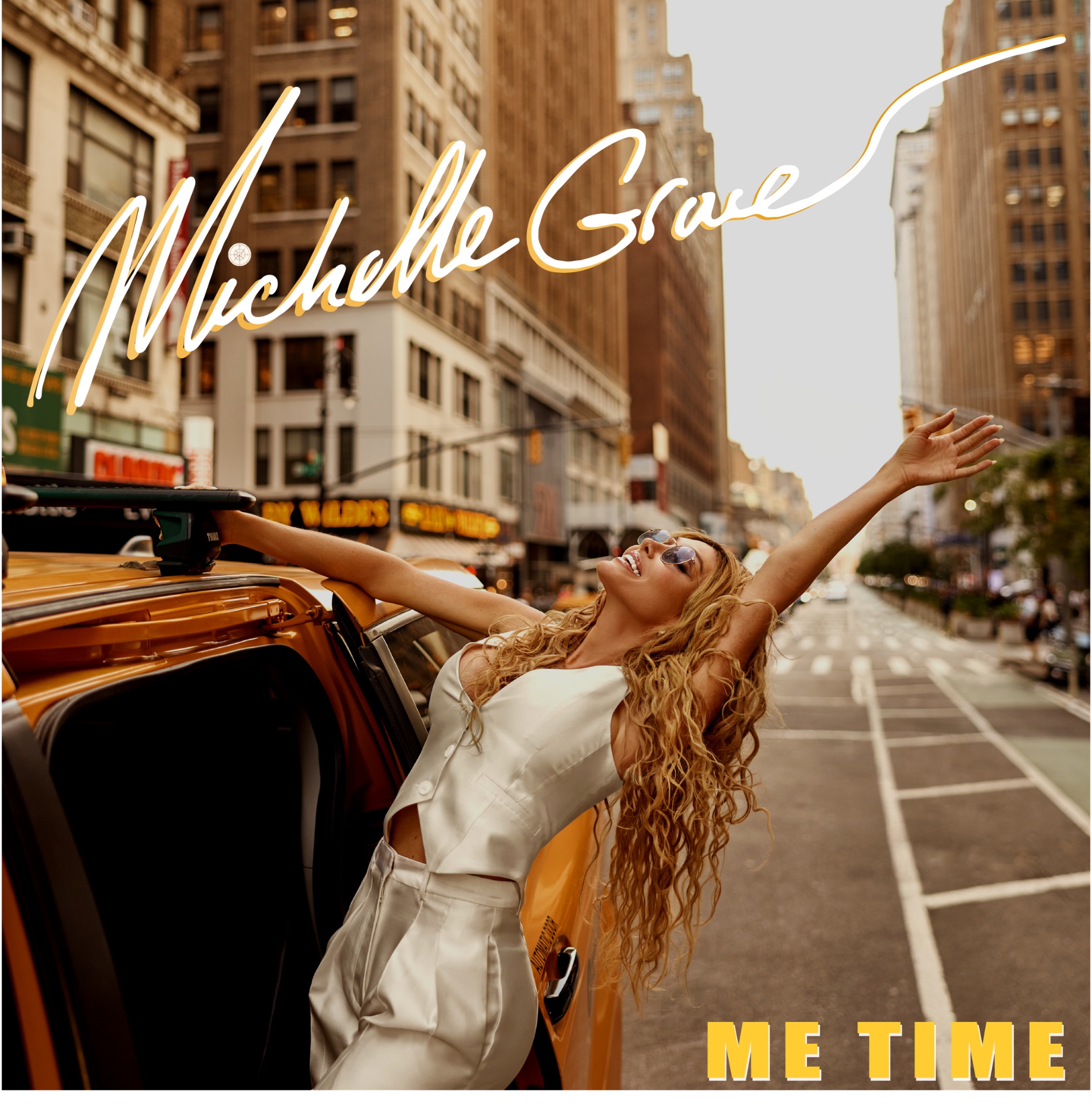
Michelle Grace’s “Me Time” arrives with the confidence of someone who has written a No. 1 before — because she has. The production leans into a warm, mid-tempo dance-pop pocket: a bassline that never overplays its hand, a chorus built for a single uncomplicated hook rather than three competing ones, and a vocal take that sits forward in the mix like it has nothing to prove.
What’s most interesting here is restraint. Where a comeback single often reaches for maximalism — a key change, a drop, a guest verse to signal relevance — “Me Time” does none of that. The arrangement stays uncluttered through two verses and a bridge, which is a harder trick to pull off than it sounds, and it’s the choice that lets the lyric do the heavy lifting instead of the production.

That’s the line the whole mix is built to frame. There’s space cut around the vocal right where it lands, no riser or filter sweep competing for attention, just enough low end to keep the groove honest. It’s a small, disciplined production choice, and it’s the kind that separates someone who understands pop songwriting from someone who’s just imitating its surface.
It’s a song built less for the festival drop and more for the drive home — which, for an artist re-entering the conversation on her own terms rather than chasing the sound of the moment, might be exactly the point. “Me Time” doesn’t need a remix package to prove itself. It already knows what it is.
Written in partnership with Tom White
Fashion
Petel Asaf Wants to Be a Victoria’s Secret Angel, and She’s Not Afraid to Say It

Petel Asaf is not interested in pretending her ambitions are modest. The model has a very specific dream: becoming a Victoria’s Secret Angel. After years of building a portfolio across international markets, she is comfortable saying the quiet part out loud.
The goal is aspirational, not an announced appointment. Asaf has not claimed to have signed with Victoria’s Secret. What she does have, by her account, is a collection of commercial-fashion experiences that helps explain why she considers a bigger runway and fashion platform within reach.
Her credits span projects associated with ASOS, JD Sports and Juicy Couture during a period in London, as well as SHEIN, Forever 21 and Missguided while working in China. They reflect the breadth of her experience, from accessible retail fashion to attention-grabbing billboard imagery, rather than any one signature look.
A Fashion Education Across Borders
Asaf’s story begins far from an established fashion capital. Born in Israel, she spent part of her childhood in Guatemala and Costa Rica. Modeling started at 16, and international assignments later meant moving between markets and learning to navigate unfamiliar places on her own.
The work was not easy to secure. Asaf recalls exhausting days in China and repeated casting rejections before a SHEIN campaign changed her momentum. London then provided further campaigns and billboard opportunities. The recurring lesson was that a recognizable brand name on a résumé is usually preceded by a great deal of work that no audience gets to see.
Now she is beginning a new phase in the United States, where her ambitions extend beyond being photographed in other labels’ clothing. She also wants to create a fashion business of her own.
The Designer Instinct Came First
That entrepreneurial idea reaches back to childhood. Raised by a single mother with limited financial resources, Asaf remembers cutting and sewing clothes to create looks her family could not simply buy. What began as improvisation became an early way of expressing her taste.
For her, a future label would close the loop between the girl who altered hand-me-down pieces and the working model who has worn clothes for globally recognized retailers. She has not announced a launch date or a brand name, so the concept remains a long-term aspiration rather than an upcoming product release.
Asaf has also appeared on Israel’s Big Brother, an experience that gives her fashion ambitions an entertainment dimension. At a time when models increasingly build their own audiences, her path does not have to follow just one runway.
Becoming a Victoria’s Secret Angel is an ambitious benchmark. Building a label is another. Whether either milestone comes next is unknown, but Asaf’s direction is clear: she wants to move from appearing in campaigns to shaping the image, and perhaps eventually the fashion, herself.
See more of Petel Asaf’s style and next chapter on Instagram.
Written in partnership with Tom White
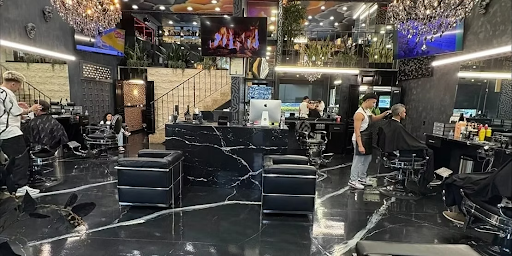
Since its opening in 2020, Entourage Barbershop’s luxury atmosphere and private haircut options have cemented its place as the ideal location for celebrities to get a fresh, red carpet-ready hairstyle that looks memorable on camera. Located in the heart of West Hollywood’s Sunset Strip, the barbershop has counted celebrities such as Jeff Goldblum among its clientele. By offering both private haircut appointments at its West Hollywood location and haircuts in the privacy of one’s home, Entourage Barbershop combines skill and discretion so that celebrities can enjoy their haircuts without turning them into a public appearance.
Skill and discretion are built into every part of Entourage Barbershop’s layout and services. With a private entrance and a secluded VIP section on its upper level, Entourage has designed its VIP experience with the needs of celebrities and discerning clientele in mind. Its VIP section also doubles as a lounge area where clients can enjoy an open bar, a pool table, video games, or some good conversations with fellow customers. Its barbers are also well-versed in modern hairstyling techniques such as fades, hot towel shaves, waxing, and hair coloring.
Entourage Barbershop’s experience working with celebrities and VIPs also creates benefits for its everyday clients, as it offers customers the opportunity to get their hair cut and styled like their favorite celebrities. By replicating the hairstyling techniques used by celebrity stylists, Entourage’s clients can share a hairstyle with popular figures such as Harry Styles, David Beckham, Brad Pitt, and Robert Pattinson.
Because personal barbers have also become popular among celebrities such as LeBron James, Entourage has also put together a barber house-call service through which stars can get haircuts in their home, studio, or office. Although prices for in-home haircuts come at a premium, Entourage owner Spike Eldib ensures clients that the premiums are worth it.
“When we do house calls, you have our undivided attention. We take time to make sure all of the details are right and we work with clients to make sure they get the exact haircut that they want,” Eldib said. “We are passionate about making you look and feel your best, whether you’re an A-list actor or a new client walking into the barbershop from the street.”

Discretion and personalized service are not just a part of Entourage Barbershop’s celebrity haircut experience, but also a part of the barbershop’s wider DNA, as seen in projects such as its “Hairapy” program. In recent years, Entourage has received media attention for its efforts to support men’s mental health by turning the barber’s chair into a safe space to discuss their troubles and stressors with a barber who will listen supportively, confidentially, and without judgment. Although Entourage’s barbers are not licensed mental health professionals, they have worked closely with therapists to ensure the advice they give is helpful and they can point clients to the right professionals if necessary.
“Hairapy is really just about giving people a place to talk. The barbershop has always been somewhere people come in, sit down, and open up about what’s going on in their lives,” Eldib said. “We wanted to take that a little further by teaching our barbers how to really listen, without judgment, and know when someone might need a little extra support.”
In the midst of the Sunset Strip’s nightlife, fashion, entertainment, and restaurants, Entourage Barbershop has served not only as a world-class barbershop frequented by celebrities and VIPs, but also as a community hub where customers can form genuine connections with their barbers and each other. These are just some of the reasons why Entourage was named one of the Top 10 Best Barbershops in West Hollywood shortly after its opening. For celebrities, that privacy and personal attention can make getting a haircut a lot easier, especially with busy schedules and cameras often around. But the experience isn’t limited to famous clients. Anyone who walks through Entourage’s doors can get the same attention, care, and personalized service that have made the shop popular.
Written in partnership with Tom White
-

 Crypto9 months ago
The Real Story Behind teemchase’s Real Estate, Music, and Crypto Empire
-

 3 years ago
Latino Pulse in LA’s Hip-Hop Heart: The FACEvsIT Evolution
-

 Fashion3 years ago
From Brothers to Business: The Inspiring Journey of YoungLA
-

 Entertainment3 years ago
From ‘Cold’ Streetwear to Cosmic Dreams: The Ryley Gauthier Odyssey
-

 Entertainment3 years ago
Yolo Aventuras: From Venezuela to Global Stardom – The Rise of Digital Content Creators
-

 5 years ago
Demonstrating the power of social media- British bombshell, Bonnie Locket:
-

 Business2 years ago
Iron Wallet: The Ultimate Solution for Financial Independence
-

 Entertainment3 years ago
Check out Lil Wayne’s New Artist, Drizzy P