
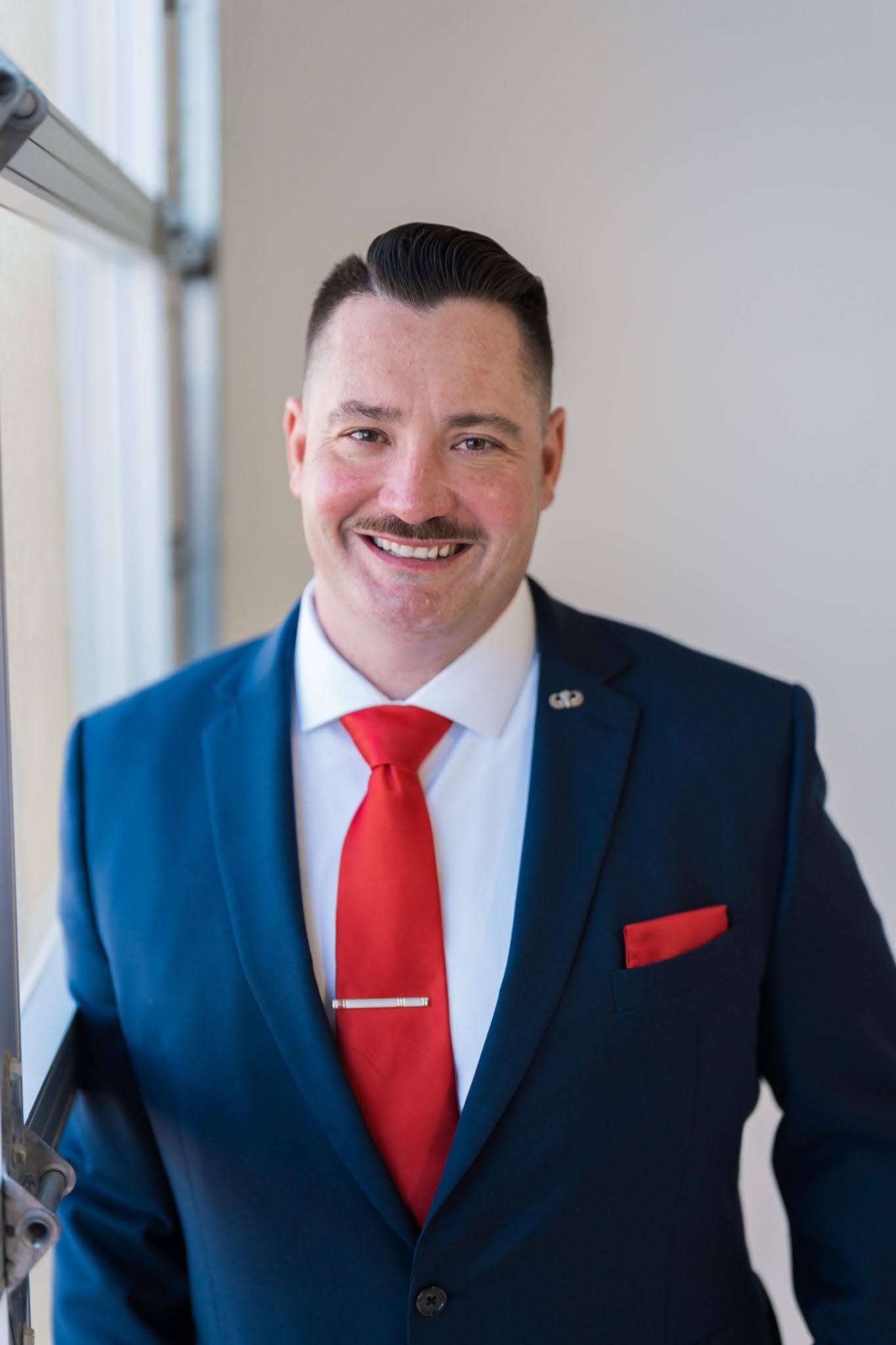
Pierre Subeh discusses his motivations in helping his community:

Pierre Subeh is a 22-year-old entrepreneur who owns multiple successful ventures and has also been mentioned in Forbes for his business expertise. After completing high school, Pierre was overwhelmed by which path he choose to study further. He took a gap after it, during which he looked forward to multiple opportunities. Pierre found himself attracted to the marketing area and was soon to join and start his career. His first job taught him a lot about the world, yet he never particularly enjoyed the corporate environment. It took him a very long time to realize that the corporate world cannot be the most integral part of your life, it’s more than just that. One’s work can never be their entire personality.
Since Pierre grew up in three countries, he understands a kind of world that is beyond borders. Indeed, experience allows a person to grow in almost all aspects of life. He equally enjoyed living in all the three countries and hence never understood the need to create borders within a common world. People not only created borders, but also discriminated against humanity itself. One race has become superior to the other. White skin is desired and advocated as beautiful. We have come a long way in past decades and the war is not yet over. Pierre is doing his bit and has been involved in many cases initiated by himself. With the help of his team and his marketing company X network, he can promote his social causes which attract eyeballs. Most of his campaigns manage to hit on point and some have also been recognized by people in power.
He has been doing a lot for people who share his origin and to develop more inclusiveness of Arab American community. The sour experience of 9/11 which led to the ruin of many lives also acted as a catalyst in adding to the already existed aggression towards the Arab community living in America.
The month of April was picked out to represent the Arab community, with the help of the Federal government. Pierre’s efforts and foresight are extraordinary and we respect his emotions towards changing the way our society works. As he considers himself a world citizen, the tag of being from a country doesn’t feel good to him.
For more detailed updates, please follow him on social media, especially Instagram and Twitter, where he is very active and also engages with his audience from time to time in interesting topics which need to be vocalized by famous people.
Website- https://www.pierresubeh.com/
Instagram- https://www.instagram.com/pierresubeh/?hl=en
Twitter- https://twitter.com/pierre_subeh?lang=en
LinkedIn- https://www.linkedin.com/in/pierre-subeh

Awards
Tyrannus Angel Awards Makes a Notable Global Debut in AI Filmmaking

With 633 submissions from more than 80 countries, the first-year awards offer a glimpse of the creative ambition seeking a place in cinema’s next chapter.
LOS ANGELES, September 21, 2026 — A new AI film awards initiative has begun with a distinctly international response. Tyrannus Angel Awards closed its inaugural submission period on September 20 with 633 entries from more than 80 countries, according to organizer Tyrannus Foundation.
The awards now enter its judging phase, with nominees to be announced progressively and the final list scheduled for October 1. Selected works will screen at the AI Film Summit Los Angeles on October 24 at City Club Los Angeles.
For a first-year initiative, the significance extends beyond the submission total. A new awards program must establish its identity while persuading creators to give it their attention and entrust it with their work. Participation spanning more than 80 countries gives Tyrannus an international starting point before it has completed its first awards cycle.
A Window into AI Filmmaking’s Creative Ambition
The submission pool offers a concrete view of participation in AI filmmaking: hundreds of entries put forward for consideration, representing work that creators want to share with an audience.
That distinction matters. Conversations about AI in film often revolve around what the technology can produce. An awards program brings another set of questions into focus: what creators choose to say, how they shape their stories, and whether those stories connect with viewers.
The geographic breadth of the inaugural response also creates an opportunity to discover perspectives beyond a single production market. As judging proceeds, attention will shift from the scale of participation to the individual films—their storytelling choices, artistic approaches, and use of emerging tools.
The figures alone cannot establish the quality of the submissions or predict the awards’ long-term standing. They do, however, establish a substantial first-year field and a foundation from which a new platform can develop. Its next test will be how effectively it turns that participation into thoughtful selection, meaningful exhibition, and continued engagement with creators.
Connecting the Work with the Industry
The connection to the AI Film Summit Los Angeles gives the awards a setting that extends beyond the announcement of nominees. Selected films will be presented in a dedicated Screening Room, alongside a Tyrannus Angel Awards Spotlight and discussions about the practical realities of building a future in AI filmmaking.
Presented by Tyrannus Foundation, the Summit’s four panel themes—MAKE IT, BUILD A CAREER, SELL IT, and OWN IT—address production workflows, professional opportunities, funding and distribution, and creative rights. A Creator Lab and Industry Exchange add opportunities to explore tools and connect with potential collaborators.
This combination places selected work within the same event as conversations about how films are made, financed, distributed, and protected. For an emerging awards initiative, that relationship offers a direction for growth: recognition connected to a wider professional community.
Tyrannus Angel Awards’ inaugural response provides an encouraging opening. The months ahead will begin to show how that international participation translates into a distinctive program and an ongoing place for creators to share their work.
The AI Film Summit Los Angeles takes place October 24, 2026, from 1:00 to 7:00 p.m. Pacific Time at City Club Los Angeles. Program information and tickets are available at https://aifilmsummit.com/.
About Tyrannus Foundation
Tyrannus Foundation is a faith-rooted organization whose mission centers on influence, rescue, and education. Open to creators of all backgrounds, its initiatives include the Tyrannus Angel Awards and AI Film Summit, supporting meaningful storytelling, creative exchange, and dialogue about emerging technology’s role in film.
Media Contact
Chantel Chang
Co-Founder, Tyrannus Foundation
chantel.chang@tyrannusfoundation.org
Written in partnership with Tom White
Reinvention
The Story That Comes After: Adam DeRito on Redemption, Reinvention, and the Life Built After Adversity
Every person who has ever faced a significant public failure knows the particular quality of the silence that follows. The moment when the noise stops — when the criticism has crested, and the verdict has been rendered — and you are left with the question of what comes next.
Adam DeRito has been in that silence. And The Guy in the Yellow Tie is, in significant part, the story of what he found there and what he chose to build in the aftermath.
What Comes After
DeRito is direct about the fact that his life has included adversity — not in the vague, broadly applicable sense that everyone’s life includes difficulty, but in the specific sense of facing public scrutiny, criticism that was amplified by people with interests in the outcome, and pressure to accept a diminished version of himself and recede from public life.
He did not. What came after was a series of choices — to keep serving in uniform, to keep working in the energy industry, to keep farming, to keep engaging in his community and in public life — that collectively constituted the story the book tells.
He holds a Top-Secret security clearance, which requires an extensive and ongoing federal background investigation. He has continued to build, to serve, and to advocate. None of that happened automatically. All of it required the sustained, daily decision to keep going rather than to stop.
Redemption as a Practice
DeRito is careful about the language of redemption. He does not use it in the dramatic, cinematic sense — as a single transformative moment that erases everything that came before. He uses it in the more demanding, less romantic sense: as a practice, extended over time, that demonstrates through accumulated action who a person actually is.
That framing matters because it is more honest. The narrative of redemption as a single turning point is appealing but rarely accurate. In real life, the process of rebuilding a life and a reputation after adversity is not a montage. It is years of work, most of it unremarked, that gradually shifts the balance between the story others are telling about you and the story your own conduct is writing.
DeRito has lived that slower version. The Guy in the Yellow Tie is his way of making the accumulated evidence of those years visible — not to demand a verdict, but to provide the material for readers to form one themselves.
Reinvention Without Betrayal
One of the more nuanced arguments in The Guy in the Yellow Tie is about the relationship between reinvention and integrity. DeRito has reinvented himself multiple times — moving between industries, taking on new roles, adapting to circumstances that changed faster than he could plan for. But he is insistent that reinvention, to be meaningful, cannot require the abandonment of the values that define who you are.
He has changed careers. He has changed contexts. He has changed his understanding of himself and of what he is capable of. What he has not changed is the conviction that service, accountability, and integrity matter — that they matter not instrumentally, as means to better outcomes, but as ends in themselves.
That consistency, maintained across circumstances that would have provided ample justification for abandoning it, is in some ways the most significant thing the book documents.
What He Wants Readers to Believe
DeRito is explicit about what he hopes readers take away from the book — not agreement with his politics, not admiration for his résumé, not sympathy for the difficulties he has faced. He wants readers to finish The Guy in the Yellow Tie believing three things.
First, that their own worst moment is not their final word. That growth and reinvention are genuinely available, not as abstract possibilities but as practical realities that are built through the accumulated choices of daily life.
Second, that ordinary people — people without platforms or power or the institutional backing that makes change easy — are still capable of making an extraordinary difference in their communities. That the work of showing up, doing the job, serving others, and maintaining integrity is not a consolation prize for those who could not achieve something larger. It is the something larger.
Third, that the story of any person’s life is more complex and more interesting than the version that fits most easily into a headline or a political argument. That the full arc of a life, evaluated honestly and with the patience the task requires, almost always contains more than any single narrative can hold.
The Yellow Tie, Explained
The title of the book is ultimately about visibility. About the choice to remain visible — to keep showing up, to keep being present in the spaces where your presence might matter — even when the easier and safer option would be to disappear.
DeRito made that choice. He is still making it. The Guy in the Yellow Tie is his invitation to anyone who has ever faced the silence after a difficult chapter to consider making it too.
Written in partnership with Tom White
Documentary
From Set to Spectacle: Actor Joey Luthman Takes on a World Record for Cat Health

Joey Luthman has spent two decades building a career in front of the camera. A veteran of network television and film, Luthman has appeared in recurring and guest roles on Weeds, Hawaii Five-0, Chicago Med, Alexa & Katie, *General Hospital, The Goldbergs, Speechless, and Modern Family, along with feature film credits including Bad Teacher and An American Carol. Discovered as a child performer on The Tyra Banks Show, Luthman comes from a family of seven performing siblings and has since built out a career behind the camera as well, working as a writer, director, and producer on his own projects. You can see his acting credits via IMDb: https://www.imdb.com/name/nm2545508/.
Now, Luthman is bringing that same instinct for performance to a very different kind of role, off-script and airborne.
THE NEXT ACT: A WORLD RECORD ATTEMPT
On September 19th, Luthman will attempt a Guinness World Record for hands-free pogo jumping in Glendale, CA, the latest stunt in an ongoing personal mission to raise $1 million for the EveryCat Health Foundation, the world’s leading granting foundation for feline health research and a top funder in the search for a cure for feline Chronic Kidney Disease (CKD), a disease that affects up to 50% of cats age 10 and older
It’s not the first time Luthman has turned a physical feat into a fundraising platform. Last year, he rode a one-wheeled electric bike across the United States to kick off the campaign, documenting the journey in his film CAT MAN: Journey to Save Cat Kind.
The documentary will get a free screening at the Glendale event starting at 3:00 PM, ahead of the 5:00 PM record attempt.
For an actor known for guest spots and recurring TV roles, the pivot to endurance stunts and philanthropy marks a notable expansion of his public profile — one built less on scripted performance and more on physical spectacle in service of a cause.
JOIN THIS WORLD RECORD-BREAKING EVENT
What: Joey Luthman attempts a Guinness World Record in hands-free pogo jumping
When: September 19th. Doors/screening 3:00 PM; Record attempt 5:00 PM
Where: 234 N. Isabela Street, Glendale, CA
Admission: Free, includes documentary screening and entertainment
WHAT’S NEXT
Luthman is also serving as an ambassador with a slate of upcoming appearances at feline and veterinary industry conferences, including Cat Con, later this year: https://www.catconworldwide.com.
Written in partnership with Tom White
-

 4 years ago
Maggie Jenson Is Empowering People Battling Addiction
-

 3 years ago
Latino Pulse in LA’s Hip-Hop Heart: The FACEvsIT Evolution
-

 Crypto8 months ago
The Real Story Behind teemchase’s Real Estate, Music, and Crypto Empire
-

 Fashion3 years ago
From Brothers to Business: The Inspiring Journey of YoungLA
-

 Entertainment3 years ago
From ‘Cold’ Streetwear to Cosmic Dreams: The Ryley Gauthier Odyssey
-

 Entertainment3 years ago
Yolo Aventuras: From Venezuela to Global Stardom – The Rise of Digital Content Creators
-

 5 years ago
Demonstrating the power of social media- British bombshell, Bonnie Locket:
-

 Business2 years ago
Iron Wallet: The Ultimate Solution for Financial Independence