
From zero to hero, here’s how Australian business tycoon Bryce Monkivitch did it all:

Bryce Monkivitch had always had big dreams and wanted to do something which would put his name in the books of history. However, he was not sure of how to achieve that dream. Business seemed to be the only way by which he could be both rich and influential. This perfectly aligned with all that Bryce ever wanted.
In late 2017 Bryce started off on this journey by setting up an online store that sold hats for pet dogs. It was all the craze back then and for a while, Bryce was deluded into thinking that it could actually work. However as one might have already realised this plan wasn’t full proof and soon enough since the trends were over, sales fell drastically. Bryce realised that what he needed was something that could be both trendy and sustainable in the long run. So, gathering up all his remaining savings which accounted for only $5000 Bryce started up his own women’s online fashion store by the name of Sincere Sally. Presently in the year 2021 Sincere Sally brings in annual revenue of more than $1 million and competes with international brands such as Fashion Nova.
Over the years, Bryce has extended his entrepreneurial empire to include 4 women’s fashion brands, a male-centric jewellery store and an online interior home decor website. By building himself up from the ground up, from zero to hero, Bryce has proven his capacity for being in his chosen line of work and has made himself one of the biggest in the Australian business scene.
So, what changed? How did Bryce Monkivitch bring such a big change singlehandedly? Well, Bryce says it wasn’t sheer luck or hard work which helped him get to this level in life, but a certain set of tips and tricks that he followed.
First and foremost, Bryce has always been of the opinion that true success cannot be measured through what you have achieved but by what your worth is in the eyes of others. Sincere Sally has surely been successful, as it provides great fashion at affordable rates to young girls and ladies all over Australia and the USA. However, as for Bryce himself, we can call him a successful man because of his ability to create and maintain lasting impressions and connections with whomever he chooses. Bryce has used this wonderful ability to make good relations with his staff as well as colleagues/competitors in the industry.
The second bit of advice that Bryce believes has helped his ventures is his go-getter attitude. Bryce thinks that for a man to establish himself as an entrepreneur, he must be a risk-taker and go after every opportunity the world provides. Unless and until you pursue every alley, can you be sure that you have taken the best decision for your business?
Bryce Monkivitch is an inspiration to many and he hopes that people who wish to follow in his footsteps would also succeed in their ambitions. Everyone’s journey to the top is different and Bryce is eagerly waiting to greet them when they get there.

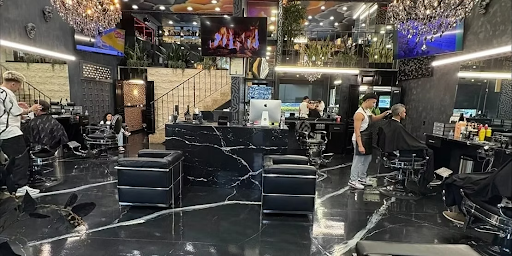
Since its opening in 2020, Entourage Barbershop’s luxury atmosphere and private haircut options have cemented its place as the ideal location for celebrities to get a fresh, red carpet-ready hairstyle that looks memorable on camera. Located in the heart of West Hollywood’s Sunset Strip, the barbershop has counted celebrities such as Jeff Goldblum among its clientele. By offering both private haircut appointments at its West Hollywood location and haircuts in the privacy of one’s home, Entourage Barbershop combines skill and discretion so that celebrities can enjoy their haircuts without turning them into a public appearance.
Skill and discretion are built into every part of Entourage Barbershop’s layout and services. With a private entrance and a secluded VIP section on its upper level, Entourage has designed its VIP experience with the needs of celebrities and discerning clientele in mind. Its VIP section also doubles as a lounge area where clients can enjoy an open bar, a pool table, video games, or some good conversations with fellow customers. Its barbers are also well-versed in modern hairstyling techniques such as fades, hot towel shaves, waxing, and hair coloring.
Entourage Barbershop’s experience working with celebrities and VIPs also creates benefits for its everyday clients, as it offers customers the opportunity to get their hair cut and styled like their favorite celebrities. By replicating the hairstyling techniques used by celebrity stylists, Entourage’s clients can share a hairstyle with popular figures such as Harry Styles, David Beckham, Brad Pitt, and Robert Pattinson.
Because personal barbers have also become popular among celebrities such as LeBron James, Entourage has also put together a barber house-call service through which stars can get haircuts in their home, studio, or office. Although prices for in-home haircuts come at a premium, Entourage owner Spike Eldib ensures clients that the premiums are worth it.
“When we do house calls, you have our undivided attention. We take time to make sure all of the details are right and we work with clients to make sure they get the exact haircut that they want,” Eldib said. “We are passionate about making you look and feel your best, whether you’re an A-list actor or a new client walking into the barbershop from the street.”

Discretion and personalized service are not just a part of Entourage Barbershop’s celebrity haircut experience, but also a part of the barbershop’s wider DNA, as seen in projects such as its “Hairapy” program. In recent years, Entourage has received media attention for its efforts to support men’s mental health by turning the barber’s chair into a safe space to discuss their troubles and stressors with a barber who will listen supportively, confidentially, and without judgment. Although Entourage’s barbers are not licensed mental health professionals, they have worked closely with therapists to ensure the advice they give is helpful and they can point clients to the right professionals if necessary.
“Hairapy is really just about giving people a place to talk. The barbershop has always been somewhere people come in, sit down, and open up about what’s going on in their lives,” Eldib said. “We wanted to take that a little further by teaching our barbers how to really listen, without judgment, and know when someone might need a little extra support.”
In the midst of the Sunset Strip’s nightlife, fashion, entertainment, and restaurants, Entourage Barbershop has served not only as a world-class barbershop frequented by celebrities and VIPs, but also as a community hub where customers can form genuine connections with their barbers and each other. These are just some of the reasons why Entourage was named one of the Top 10 Best Barbershops in West Hollywood shortly after its opening. For celebrities, that privacy and personal attention can make getting a haircut a lot easier, especially with busy schedules and cameras often around. But the experience isn’t limited to famous clients. Anyone who walks through Entourage’s doors can get the same attention, care, and personalized service that have made the shop popular.
Written in partnership with Tom White
Casino
Its most famous games earn the house nothing. So how did Duel make nearly $100 million in a year?

Duel’s in-house games are priced to break even. By the account of its founder, Ossi Ketola, the crypto casino still made just under $100 million in its first year. The explanation is a classic retail strategy, applied with discipline and described in plain terms.
Every retailer understands the loss leader. Few casino operators have built a company around it as deliberately as Duel.com.
The crypto casino, founded by the Finnish entrepreneur Ossi Ketola and launched in July 2025, is best known for in-house games that are designed to earn the house nothing. Dice, crash, plinko and the rest of its originals carry a net house edge of zero on the first $50,000 a player wagers each day, so over time the house expects neither to win nor to lose on them. By Ketola’s account, the business made just under $100 million in its first twelve months all the same.
The two facts are not in tension. Together, they are the strategy.
An old idea, newly applied
The textbook definition of a loss leader is “a product sold at a price below its minimum profit margin to stimulate other sales of more profitable goods or services.” Printer makers have long sold the machine at or near cost and earned their return on the ink. Game console makers have often launched new hardware as a loss leader to build market share and, with it, an ecosystem of games. Costco has held the price of its hot dog and soda combination at $1.50 since 1985, a figure widely believed to sit below cost, because the shoppers it brings through the door spend on everything else.
The classic loss leader shares a few traits. It is something customers buy often, so they recognise a bargain when they see one, and retailers commonly limit how much any one shopper can take, so the offer cannot be stockpiled. Duel’s originals fit that profile closely. They are the games experienced players return to most often, their prices are easy to compare, and the zero-edge offer runs to a fixed daily allowance per player.
The anchor products
Duel’s originals do the work that milk and bread do for a supermarket. Shoppers judge a store by the prices they know best, so a handful of staples are sold keenly, and the margin is earned across the rest of the basket. For experienced gamblers, the originals are the staples: simple, transparent games on which operators can be compared like for like, and on which Duel has set its price at zero.
The range is wider than the headline suggests. Duel’s lobby lists a dozen originals, from dice, mines, keno and limbo to rock paper scissors and a game called Beef, and every tile carries the same label: “100% RTP”. Castle Roulette, a live original, carries the same rate.
The basket
The margin is made across a deliberately broad catalogue. Around the originals sit more than 5,000 titles, most of them slots from established third-party studios, priced at the edges those studios set. Alongside them run a live dealer casino and a sportsbook covering more than 50 sports.
Ketola is clear about which part carries the commercial weight. He calls the slot catalogue Duel’s “real cash cow”.
The site’s own promotions point the same way. Where the originals sell themselves on price, the engagement spend is directed at the earning side of the catalogue: a banner across the site announces
“$3m monthly and $25k daily leaderboards now live for slots and live games.” The prize money sits precisely where the margin is made.
The price of the originals wins the attention of the customers who compare most carefully; the breadth of the catalogue gives them reason to stay. A player drawn in by a zero-edge dice game has thousands of other titles a click away, and no reason to take that business elsewhere.
The cherry-picker question
Any grocer could raise the first objection. A loss leader pays only if shoppers fill the rest of the basket, and some never do. Even the standard reference on the tactic concedes that “some customers may have the discipline to only buy the loss leaders.” A casino pricing its best-known games at zero, the reasoning goes, should attract exactly those customers.
The answer lies in where Duel set the price. A supermarket’s loss leader is sold below cost, so every cherry picker leaves the store a little poorer. Duel’s originals are priced at break-even rather than below it, and beyond the daily allowance a scaling edge applies. On a player who never strays from them, the house expects neither to gain nor to lose, and the allowance caps the volume the offer covers. What the grocer treats as a leak is, on Duel’s terms, a neutral outcome, while every player who moves on to the slots, the live tables or the sportsbook adds margin.
The scale of the business suggests plenty do. Deposit data gathered from the blockchain, independently of the company, places Duel second among crypto casinos, behind only Stake. By Ketola’s account, the year’s revenue came in just under $100 million, and with the originals priced to earn nothing, that money can only have come from the rest of the catalogue.
Candour as a selling point
What sets Duel apart from most loss-leader businesses is that it says so. Retailers rarely advertise that their cheapest lines exist to sell something else; a familiar tactic is to place the bargain at the rear of the store, so that shoppers must walk past the higher-margin goods to reach it. Duel sets out on its own pages what the
zero-edge offer covers and where it ends, and its founder discusses the economics of the catalogue in public, in terms most operators would reserve for the boardroom.
Profit and principle
Ossi Ketola frames the design in ethical as well as commercial terms. Capitalism, he has argued, is “a kind of arms race”, one in which the operators most willing to treat customers badly tend to make the most money. His answer was a structure in which fair treatment and profitability point in the same direction rather than pulling against each other.
By his account, it has delivered. “I’m grateful to be in a position where I can do things honestly,” he says, “and still make a very good profit.”
The games that made Duel famous were built to break even. The nearly $100 million, as he tells it, came from the basket.
Written in partnership with Tom White
Fashion
Mayeli Alonso Is Redefining What It Means to Be a Latina Powerhouse

For years, Mayeli Alonso was known to millions as a reality television personality — a recognizable face in the Latino entertainment world whose personal life often became part of the public conversation. But today, that identity tells only a fraction of her story.
Behind the cameras, Alonso has been building something much bigger: a business empire rooted in wellness, confidence, fashion, and the growing economic power of Latina women in the United States.
Her evolution is not simply about a new chapter. It is about changing the narrative around who she is.
The transformation is visible. Alonso has undergone a significant physical transformation in recent months, drawing attention across social media and prompting conversations about her evolving lifestyle. But focusing solely on her weight would miss the more important story. Her most significant transformation has been professional — moving from being recognized primarily as a reality television personality to establishing herself as an entrepreneur with a clear vision for the modern Latina consumer.
At the center of that evolution is Evolution Fit, the activewear and lifestyle brand she created from her own experience.
“I got tired of not feeling good about myself, of not recognizing who I was,” Alonso says. “I realized that change had to start from within.”
That realization became the foundation for a business designed to speak directly to women who, like Alonso, are navigating careers, motherhood, personal reinvention, and the pressure to constantly become something more.

From Reality Television to Entrepreneurship
The transition from entertainment personality to entrepreneur is not always an easy one.
Public figures can become defined by the characters audiences associate with them. For Alonso, breaking beyond that perception required building something that could exist independently of television.
Evolution Fit became part of that answer.
Alonso identified what she saw as a gap in the fitness and activewear market: products and messaging that genuinely connected with Latina women and their realities. Rather than creating another fitness label focused exclusively on aesthetics or performance, she wanted Evolution Fit to represent something broader — a lifestyle built around confidence, discipline, wellness, and personal evolution.
“A lot of brands talk about fitness, but they don’t connect with the reality of a woman who works, who is a mother, who has so many responsibilities and still wants to feel good in her own skin,” she explains.
That distinction is important.
Alonso isn’t selling the idea that women need to become someone else. She is building a brand around the idea that women can evolve without abandoning who they are.
The Business of Becoming
The word “evolution” is particularly fitting for Alonso’s current chapter.
Her own journey has become inseparable from the philosophy behind her company. Fitness introduced discipline. Personal change introduced patience. Entrepreneurship demanded consistency.
The lessons overlap.
“Nothing changes overnight, and that applies to everything in life,” Alonso says. “I learned to stay consistent even when I don’t feel like it.”
That mindset has become central to the way she approaches both business and personal growth.
Her recent physical transformation has consequently become part of a much larger conversation about reinvention. Rather than treating transformation as an endpoint, Alonso presents it as an ongoing process — one that begins mentally before it becomes visible externally.
For an audience that has watched her evolution publicly, that message carries particular weight.
She is no longer simply documenting a transformation. She is building a business around the philosophy that transformation is possible.

A Brand Built for Latina Women
Evolution Fit also reflects something happening far beyond Alonso herself.
Latina women are becoming an increasingly visible force in American entrepreneurship, fashion, entertainment, and consumer culture. Yet Alonso believes representation needs to go beyond visibility.
It also means ownership.
Creating a company, developing products, building a community, and controlling the narrative around her own identity have allowed Alonso to participate in the Latino market from a different position: not simply as talent, but as a business owner.
“Being Latina means having character and history,” she says. “I feel a responsibility to represent that in a positive way and to show that we can build, create, and lead. That we are not limited.”
That philosophy extends to the women who follow her.
Through social media, Alonso has built a direct relationship with an audience that sees more than the polished side of entrepreneurship. She shares routines, personal experiences, challenges, and moments of imperfection — creating a form of connection that feels less like celebrity-to-fan communication and more like one woman speaking to another.
Her message is consistent: there is no universal timeline for transformation.
More Than Activewear
What Alonso is building with Evolution Fit may ultimately extend far beyond clothing.
She envisions the company evolving into a broader wellness ecosystem — one that addresses physical health while also incorporating mental and emotional well-being.
“I would love to continue growing the activewear side, launching new collections, and collaborating with Latino talent,” she says. “I also want to expand into a more holistic wellness concept, not just physical, but mental and emotional.”
That vision positions Evolution Fit as something larger than an apparel company.
It becomes a community.
It becomes a philosophy.
And, potentially, it becomes one of the ways Alonso’s influence continues to expand beyond entertainment.
The New Mayeli Alonso
There is a tendency to categorize women according to the chapter in which audiences first discovered them.
For Mayeli Alonso, that chapter was reality television.
But entrepreneurship has given her the opportunity to write a different one.
Today, the conversation around Alonso increasingly extends into business, wellness, fashion, personal development, and Latina representation. Her physical transformation may have sparked renewed public attention, but her business evolution is what gives the moment staying power.
She is demonstrating that reinvention does not require abandoning your past. It requires building something that reflects where you are going.
For Alonso, that next destination is clear: more brands, more collaborations, more community, and a larger platform for Latina women who want to build lives and businesses on their own terms.
Her advice to the next generation reflects the philosophy behind everything she is creating:
“Use your story as your strength. Everything you’ve been through has value.”
That may be the clearest description of Mayeli Alonso’s evolution.
The reality star is still part of her story.
But she is no longer the whole story.
Written in partnership with Tom White
-

 4 years ago
Maggie Jenson Is Empowering People Battling Addiction
-

 Crypto9 months ago
The Real Story Behind teemchase’s Real Estate, Music, and Crypto Empire
-

 3 years ago
Latino Pulse in LA’s Hip-Hop Heart: The FACEvsIT Evolution
-

 Fashion3 years ago
From Brothers to Business: The Inspiring Journey of YoungLA
-

 Entertainment3 years ago
From ‘Cold’ Streetwear to Cosmic Dreams: The Ryley Gauthier Odyssey
-

 Entertainment3 years ago
Yolo Aventuras: From Venezuela to Global Stardom – The Rise of Digital Content Creators
-

 5 years ago
Demonstrating the power of social media- British bombshell, Bonnie Locket:
-

 Business2 years ago
Iron Wallet: The Ultimate Solution for Financial Independence