
DJ Samantha Michelle Remixes a Jewish Tradition to Inspire Togetherness
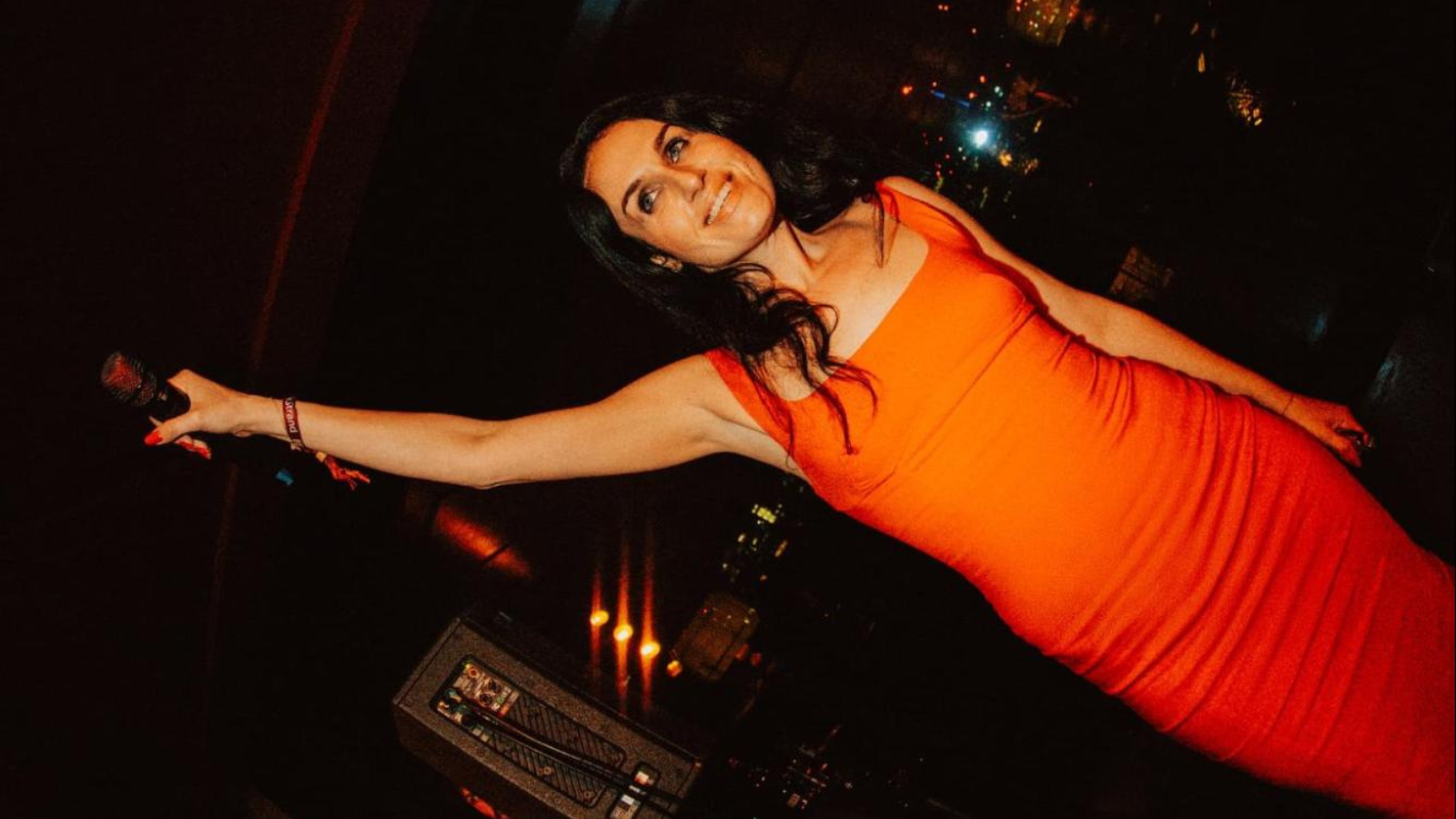
When DJ and filmmaker Samantha Michelle steps behind the decks, she’s creating a shared experience through a curated playlist. Her energy fills the room, not with noise, but with a sense of belonging. Through her “Soho Shabbat” event series, Michelle brings people together in a way that feels relevant, intentional, and cultural. It’s not just another night out. Instead, it’s a celebration of togetherness.
Ancient Custom With a Modern Twist
In fast-paced cities like New York, Los Angeles, and London, genuine connection can feel out of reach. For many young professionals, especially those in the Jewish community, traditional gatherings no longer fit their lifestyle. The question becomes how to preserve cultural traditions while resonating with a generation that craves authenticity. Instead of letting tradition fade, Michelle decided to remix it.
A Global Celebration of Faith
“Soho Shabbat” is a space where spirituality meets sound, and faith meets fun. The event invites guests to experience Shabbat in a way that feels current, inclusive, and personal. It’s a night of music, connection, and joy that reclaims a day of rest for those who may have lost touch with it. However, this soiree isn’t a party for the sake of partying. Michelle views her sets as a statement that tradition can evolve and still feel sacred.
Michelle’s recent London event on October 17 captured that spirit perfectly. With appearances from figures like Hen Mazzig and Ben Cohen, the night drew a crowd that reflected the global reach of her vision. Attendees weren’t just there for the music. They also came to experience community in a form that resonated with who they are today.

The Universal Language of Music
What makes Michelle’s work stand out is how she uses music as a universal language. Her DJ sets are emotional and immersive. It’s a sound that transcends genres and geographical boundaries. She has performed on some of the world’s most eclectic stages, such as Glastonbury, SXSW, Berlin’s KitKat Club, and Cannes. Each performance is like a heartbeat that creates a connection through rhythm and energy.
Michelle has cultivated more than just another nightlife event. The point is to inspire a sense of belonging worldwide. Whether she’s in Los Angeles or London, she brings people together under one beat.
A Creative Artist With Many Talents
Michelle’s artistry isn’t limited to turntables. As a filmmaker and cultural curator, she channels her creativity into storytelling that celebrates identity. Her projects, much like her sets, are intentional and full of purpose. There’s no separation between her art and community work. Both are part of the same conversation about how creativity can unite people.
What makes her distinct is her clarity of mission. Michelle doesn’t chase trends or titles. She uses her platform to highlight joy, connection, and shared experience. Her events are inclusive by design. They offer a space where people can feel seen, celebrated, and connected through sound.
The Rhythm of Music, Heritage, and Community
In an industry often focused on individual fame, Samantha Michelle stands for something collective. Her “Soho Shabbat” series shows that music can still serve as a bridge between heritage, spirituality, and modern life. For her audience, it’s a chance to dance, reflect, and rediscover what it means to belong.

Book
He Never Said Goodbye. He Just Stopped Coming Home.
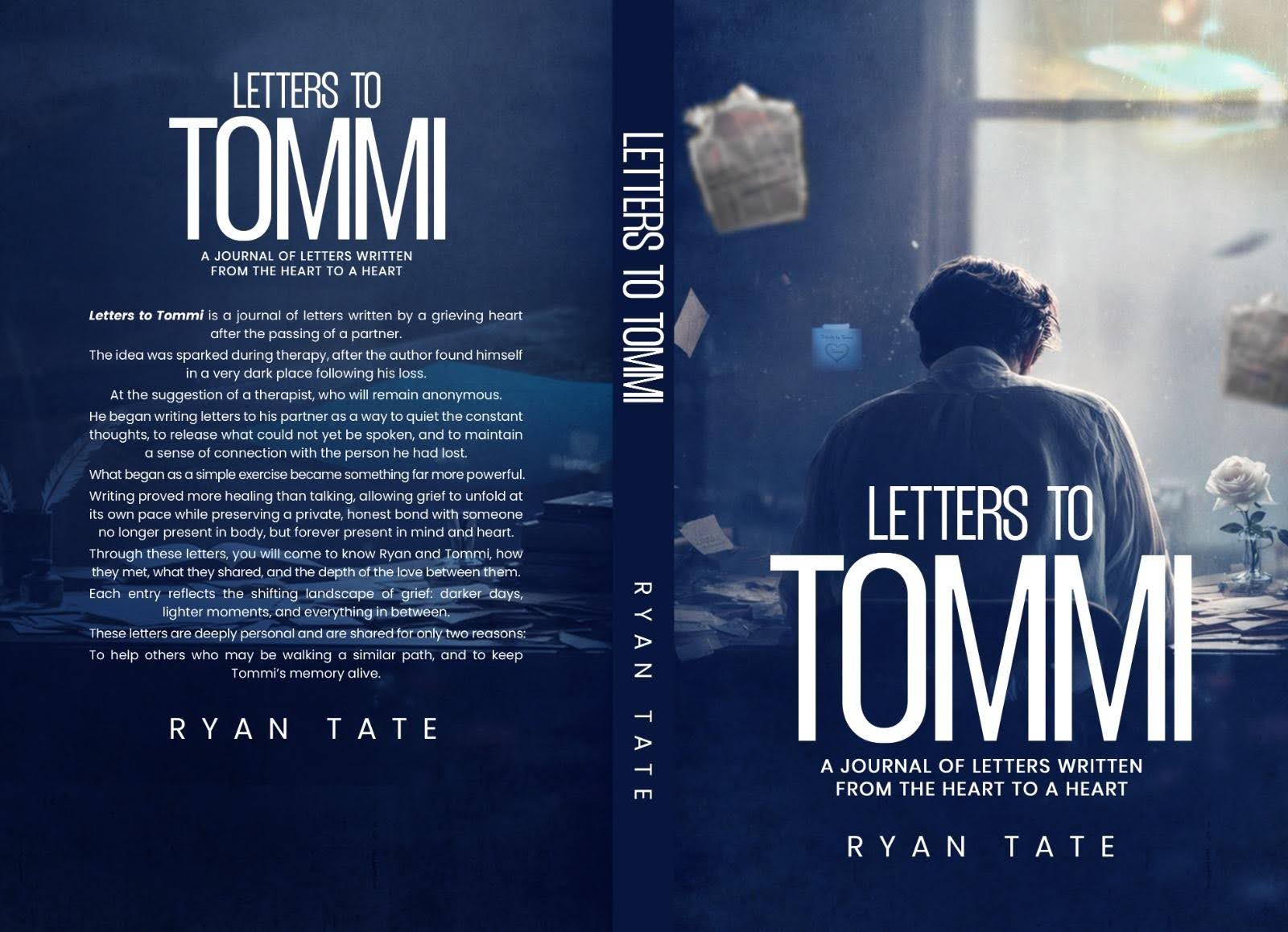
Some love stories don’t end. They just change where they live.
The Day Everything Went Quiet
In Letters to Tommi by Ryan Tate, a man comes upstairs to wake his partner for dinner. He finds him there, on the bed, still. No warning. No goodbye. Just the ordinary cruelty of a Tuesday afternoon that became the worst day of his life. Tommi — warm, funny, tall, Finnish, the man who hid little blue Post-it notes in jacket pockets and coat linings for Ryan to find — was gone. A cardiac arrest. Instant. And Ryan was left standing in a silence that has no name.
What do you do with a love that has nowhere to land?
He Kept Texting Him Anyway
Most people would have deleted the number. Ryan kept texting it.
“Hey Tom Tom, I can’t think what to cook for dinner, the kitchen was always your domain, any ideas?”
He knew there would be no reply. He said so himself: brain freeze, natural instinct, or hoping? But the instinct to reach for Tommi never switched off, because love doesn’t come with an off switch. Not the real kind.
Ryan slept three days on his side of the bed, three days on Tommi’s, one day in the middle. He kept buying daffodils because they reminded Tommi of spring. He still wore the white gold chain Tommi placed in his hand on a bridge on a cold winter night, when he asked Ryan to be his husband. He said it would never leave him. It hasn’t.
This is what Letters to Tommi understands that most books about grief get completely wrong. Love doesn’t end at death. It just loses its address.
Stop Telling Grieving People to Move On
Ryan’s friends meant well. They always do.
“Time will make it easier.” “You need to start living again.” “You were single before and fine.”
He forwarded every single one of those messages to Tommi’s phone. With barely disguised fury.
Because here is what nobody tells you about losing someone you were genuinely, completely, all-in in love with. The grief doesn’t move in stages. It moves like weather. Some mornings, he cleaned all eight rooms of the house to Tommi’s standard and felt almost steady. Some Friday nights, he sat alone with red wine and a Chinese takeaway for one and felt the darkness press in from every corner. Some nights, he wrote letters at 2am. Some nights, he found a hidden Post-it note in Finnish in his coat pocket and translated it with shaking fingers.
None of that is dysfunction. All of that is love, still doing what love does. Showing up, even when the person is gone.
The Truth This Book Tells
Letters to Tommi by Ryan Tate is not a self-help book. It has no five-step plan. It doesn’t promise you’ll be fine by spring.
What it does is sit beside you. The way Tommi used to sit beside Ryan, without fixing anything, without needing big words, just present. Just there.
Ryan wrote these letters for two reasons. To help others walking the same road. And to make sure the world doesn’t forget a big-eyed, glasses-wearing, sauna-loving, wardrobe-raiding Finnish man who made every room feel warmer just by being in it.
He succeeded on both counts.
If you have ever loved someone so completely that losing them broke something in you that hasn’t healed quite right, this book was written for you.
Some loves don’t fade with time. They just change where they live.
Letters to Tommi by Ryan Tate — because some stories deserve to be read, remembered, and kept. Available now on Amazon. Begin Your Reading Journey.
Media Details:
Client Name: Ryan Tate
Website Link: https://letterstotommi.com/
Kobo Live Link: https://www.kobo.com/us/en/ebook/letters-to-tommi?sId=105b70ca-3aaa-42bf-82a8-3ced21abc145&ssId=uW_c-Gs9g8ssSt-CAapK2&cPos=1
Written in partnership with Tom White
Entertainment
Keyla Wood and the Power of Playing by Her Own Rules

There is a particular kind of power in Hollywood that has very little to do with being the loudest person in the room. It comes from longevity, relationships, adaptability and understanding how culture moves before everyone else catches up. Keyla Wood has built her career around exactly that kind of power.
For decades, Keyla has lived inside entertainment as an actress, but her place in the industry has grown considerably beyond the roles she plays. From a substantial television career in Mexico to her work in American film, television and streaming productions, she has navigated two entertainment cultures while building an identity that belongs comfortably to both. Los Angeles became more than the city where she continued acting; it became the place where the different dimensions of her career began to converge.

Keyla Wood is part of a changing Hollywood in which cultural relevance is no longer defined by one job title. She acts, produces, develops projects, creates media, works with brands and has built TheWoodPr into an international public relations and image company. These are not side businesses surrounding an acting career. Together, they explain how she has learned to operate in an industry where talent may get someone into the room, but understanding people, perception and opportunity determines how long they remain there.
That perspective has also given Keyla influence beyond her own image. Through TheWoodPr, she has spent more than fifteen years positioning other actors, filmmakers, entrepreneurs, executives and companies, taking the same understanding of visibility that has shaped her own career and applying it to people with entirely different ambitions. Her professional world now moves naturally between Hollywood sets, business meetings, media, fashion, international relationships and cultural initiatives connecting Los Angeles with Mexico, Latin America, Europe and Dubai.

Perhaps that is what makes Keyla Wood particularly representative of Hollywood right now. She belongs to a generation that entered entertainment before followers, algorithms and personal brands became part of the vocabulary, yet she has successfully adapted to an industry increasingly driven by all three. She understands the traditional machinery of entertainment, but she also understands that today’s public figure can no longer depend entirely on that machinery. Keyla has consequently created her own.
Her acting continues. Her producing ambitions are expanding. TheWoodPr continues developing internationally. Her relationships within international media and entertainment have placed her in a position to amplify stories beyond her own, while her presence in Los Angeles keeps her connected to the constantly shifting intersection of entertainment, entrepreneurship and culture.

None of this happened overnight, and perhaps that is precisely the point.
Hollywood spends enormous energy searching for what is next. Keyla Wood’s story represents something different: the power of continuing to evolve until the industry has to reconsider what you are capable of becoming.
She is not simply maintaining a career. She is using everything that career has taught her to create the next version of it—and increasingly, to create opportunities for others along the way.
Written in partnership with Tom White
Casting
What Casting Directors Actually Look For: Insights From Jay Krymis
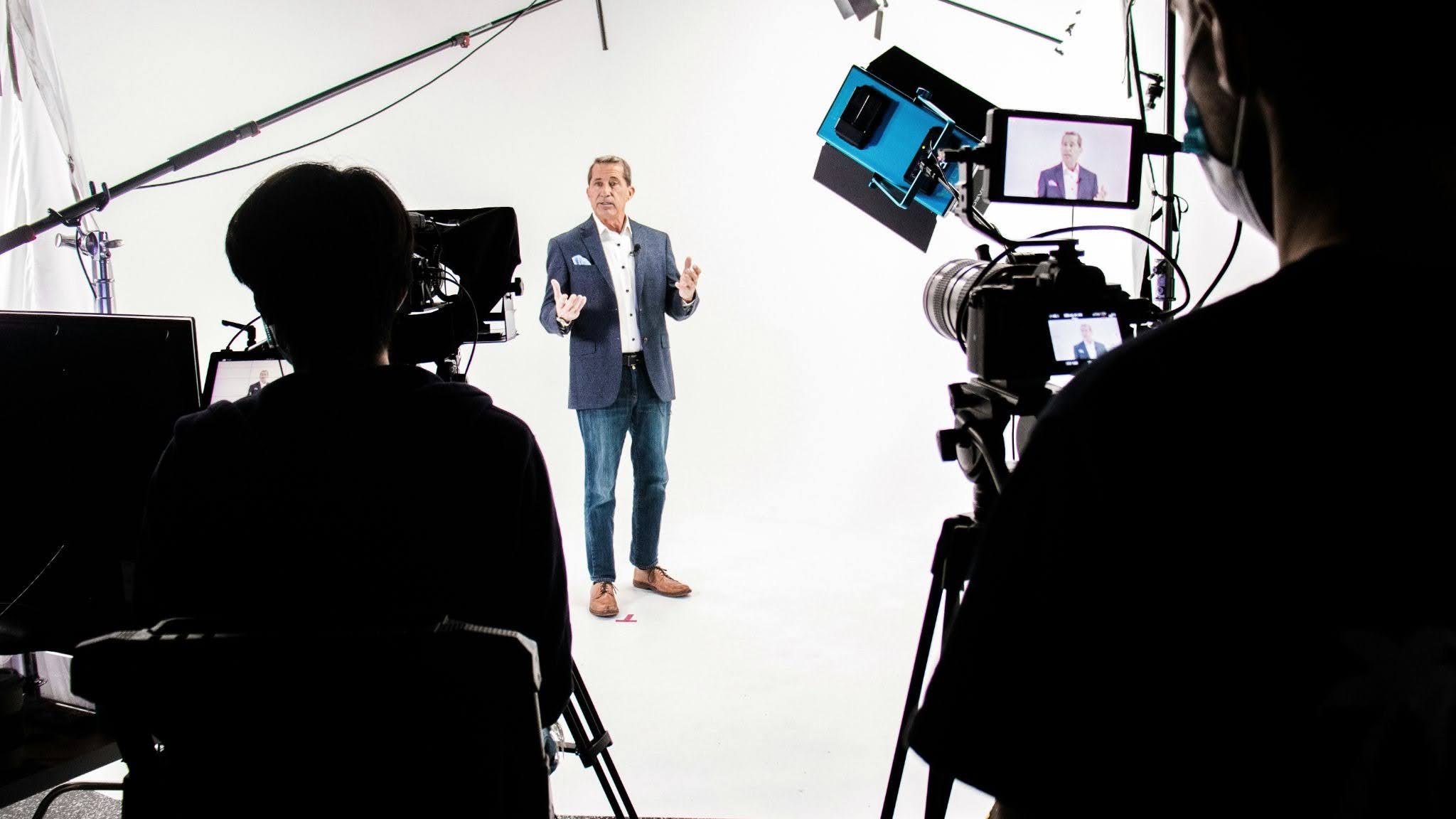
Casting is often described as the moment a script begins to come alive. Before a single scene is filmed, someone has to decide which actors have the presence, instincts, and authenticity to bring those characters to the screen. Few people have seen that process from as many angles as Jay Krymis, an actor, producer, and casting professional based in the Los Angeles area who has spent years on both sides of the audition room.
For actors trying to understand why one audition leads to a callback while another doesn’t, the answer is usually much more practical than people think. It isn’t about guessing what casting directors want to see. It’s about understanding what they’re actually looking for.
The Myth of the “Right Look”
Many actors assume casting decisions begin and end with appearance, but that’s only the first step. Casting directors often start with a character description that outlines an age range, personality, or general type, simply to narrow a large pool of submissions into something manageable.
Once auditions begin, however, the focus shifts quickly. The question is no longer whether someone looks like the character on paper, but whether they make that character feel believable. A performer who fits every physical description but never fully disappears into the role is often passed over in favor of someone who simply feels right.
That’s why casting directors frequently continue searching even after seeing technically strong auditions. A polished performance can check every box and still feel flat, while another actor brings an energy or authenticity that suddenly makes the character feel real. More often than not, they’re looking for the person who makes the role feel inevitable, not simply the person who looks the part.
Preparation Speaks Louder Than Talent
Natural ability may get an actor in the room, but preparation is often what leaves a lasting impression.
Actors who consistently book work rarely rely on instinct alone. They arrive having already made thoughtful choices about who the character is, what they want, and what’s standing in their way. That preparation reflects the discipline behind sustained performance, and it gives casting directors something tangible to work with.
Prepared actors are also easier to direct because they’re bringing a clear interpretation into the room. If adjustments are needed, there’s already a foundation to build from. By contrast, an actor who hasn’t done the work often forces the casting team to discover the character during the audition itself.
Talent may open the door, but preparation is what makes someone feel dependable.
Reliability Matters More Than Many Actors Realize
Every casting decision also carries a business reality behind it. Producers are managing schedules, budgets, and entire crews, which means they’re evaluating more than the performance itself.
Krymis has experienced this firsthand through producing various projects – including In the Big House – and working with major media companies like Viacom. That perspective from the business side of the industry changes the way casting decisions are viewed. Professionalism, punctuality, and consistency aren’t secondary qualities — they’re part of what casting directors and producers are assessing from the moment someone walks through the door.
An actor who is easy to work with, prepared, and dependable often becomes a safer choice than someone who delivers a slightly stronger audition but creates uncertainty elsewhere. Productions depend on people who can perform consistently under pressure, and casting directors know that long before filming begins.
Casting Is About Chemistry, Too
Even outstanding performances aren’t evaluated in isolation.
Most productions are assembling an ensemble, not simply filling individual roles. A performance that stands out on its own may not complement the actors already attached to the project, while another performer creates exactly the balance the story needs.
Chemistry isn’t limited to romance. It’s the way personalities, rhythms, and performances work together on screen.
Krymis experienced it firsthand while appearing in the Academy Award-winning film Traffic, whose ensemble received recognition from the Screen Actors Guild. Experiences like that reinforce an important lesson: the strongest individual audition isn’t always the strongest casting decision for the project as a whole.
Casting directors are constantly thinking about how every actor contributes to the larger story.
What Happens After the Audition
For actors, the audition often feels like the finish line. For casting professionals, it’s only one step in a much longer process.
Once auditions wrap, casting teams compare performances, revisit recordings, and evaluate how different actors fit together before making final recommendations. Sometimes an audition that seemed unremarkable in the room becomes exactly what the project needs after reviewing it alongside other performers.
Through the Booked Talent casting agency, which Krymis co-owns with his wife, Michel, the emphasis extends beyond simply filling roles. Their approach focuses on aligning performers with projects that fit both their skills and their longer-term direction, recognizing that the right opportunity often benefits both the production and the actor’s career.
That’s why actors shouldn’t interpret every rejection as failure. In many cases, it’s simply a matter of fit. The same performance that isn’t right for one production may be exactly what another casting director is searching for.
Advice Actors Can Actually Use
If there’s one consistent lesson behind successful auditions, it’s that casting directors appreciate actors who make the process easier.
Know the material well enough to make confident choices. Bring a specific interpretation instead of a generic one, while remaining flexible enough to adjust after receiving direction. Treat everyone in the room professionally because today’s casting assistant may become tomorrow’s producer or director.
Arrive on time. Be prepared. Be collaborative. Those qualities are noticed just as much as the performance itself.
None of those habits guarantee a role, and no experienced casting professional would suggest otherwise. What they do is help move an actor from the large group hoping for an opportunity into the much smaller group casting directors trust. Over time, that trust becomes the foundation for a lasting body of work in front of the camera.
Jay Krymis is a film and television actor and producer known for his work both in front of and behind the camera, including an appearance in Traffic and producing credits such as In the Big House. He is the co-owner of the Booked Talent casting agency, which he operates with his wife, Michel. His contributions have been recognized by the City of West Hollywood, the Hollywood Chamber of Commerce, and the California State Senate.
Written in partnership with Tom White
-

 4 years ago
Maggie Jenson Is Empowering People Battling Addiction
-

 3 years ago
Latino Pulse in LA’s Hip-Hop Heart: The FACEvsIT Evolution
-

 Crypto7 months ago
The Real Story Behind teemchase’s Real Estate, Music, and Crypto Empire
-

 Fashion3 years ago
From Brothers to Business: The Inspiring Journey of YoungLA
-

 Entertainment3 years ago
From ‘Cold’ Streetwear to Cosmic Dreams: The Ryley Gauthier Odyssey
-

 5 years ago
Demonstrating the power of social media- British bombshell, Bonnie Locket:
-

 Entertainment3 years ago
Yolo Aventuras: From Venezuela to Global Stardom – The Rise of Digital Content Creators
-

 Business2 years ago
Iron Wallet: The Ultimate Solution for Financial Independence