
Restaurant
Old Hollywood, New Horizons — The Smoke House’s 80-Year Journey
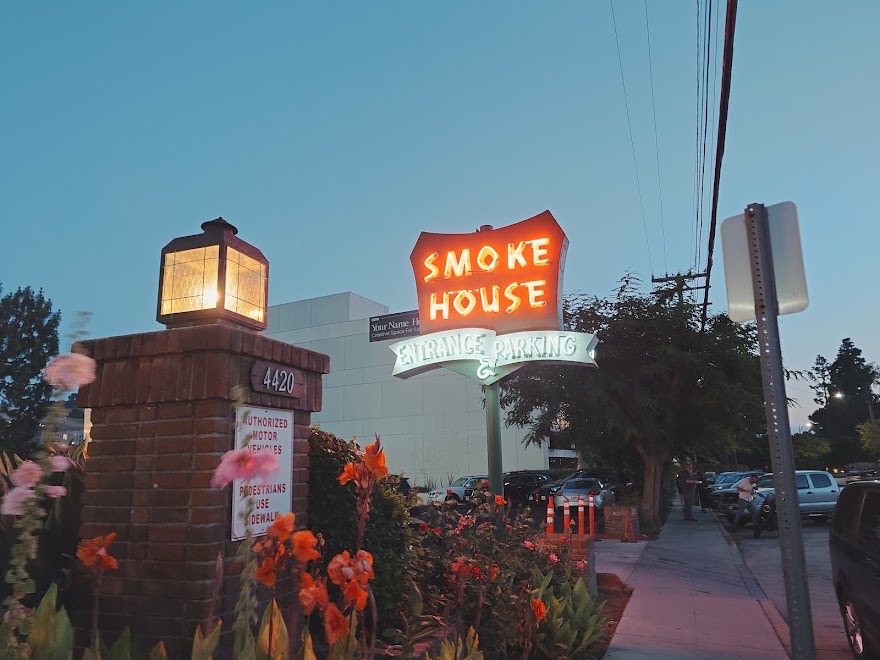
The burgundy booths at the Smoke House restaurant have witnessed everything from whispered deals to surprise serenades. Actor George Clooney so loved the place that he named his production company Smokehouse Pictures after the booth where he and Grant Heslov would scheme over martinis. It’s a fitting tribute to a steakhouse that has served as Hollywood’s unofficial clubhouse since 1946.
The restaurant began as a 46-seat chophouse at the corner of Pass Avenue and Riverside, frequented by stars like Bob Hope and Bing Crosby. Three years later, it moved to a Tudor-style inn across from Warner Bros. Studios and expanded again in 1955 under architect Wayne McAllister, growing to 18,000 square feet. Today it seats more than 500 people amid fireplaces, director’s chairs, and classic movie posters. A neon sign outside still flashes the motto “fine food at a fair price,” a promise that has endured since 1946.

For decades, the Smoke House has blurred the line between reality and the silver screen. Casts from “Friends” and “ER” gathered here after taping, while Judy Garland and Robert Redford were among its many regulars. Live music fills the lounge on weekends, drawing performers like Joni Mitchell, who celebrated her 80th birthday at the restaurant. The menu’s icons—prime rib with horseradish, creamy pastas, and that famous garlic cheese bread—remain unchanged, even as the kitchen sources more sustainable ingredients and modernizes its cocktail program.
Asked how the restaurant stays relevant in a city obsessed with reinvention, Smoke House management says the secret lies in preserving the “soul” of the place while meeting contemporary standards. Dim lighting, red booths, and genuine hospitality create a sense of continuity, while updated service, inclusivity, and sustainable sourcing appeal to modern diners. They describe the steakhouse as an “industry sanctuary” where patrons can finalize deals or rehearse scripts without paparazzi lurking. The management team sees the restaurant as a bridge between eras, a living link where veteran directors and young actors share garlic cheese bread and stories.

The upcoming 80th anniversary celebration embodies that philosophy. In October, the Smoke House will revive its 1946 Throwback Menu—pricing signature dishes at $19.46—and host curated events that lean into its Old Hollywood roots. The restaurant will launch digital storytelling projects to capture the memories of longtime staff and patrons and continue its support of the Burbank International Film Festival, ensuring that future filmmakers will have a place to call home. “We aren’t just celebrating a date on a calendar; we’re celebrating 80 years of being a cornerstone of the community,” management said.
After 80 years, the Smoke House remains a rare constant in Los Angeles: a steakhouse where the past and present collide, where garlic bread is as legendary as the stars who dine there, and where the next chapter of Hollywood history is just a booth away.
Written in partnership with Tom White


Restaurant
The Rise of Ghost Kitchens – How CloudKitchens Is Transforming the Restaurant Industry
The restaurant industry has experienced significant change over the past decade. Consumer demand for convenience, combined with the rapid growth of food delivery apps, has altered how people order and consume meals. Increasingly, diners expect restaurant-quality food delivered directly to their homes or workplaces within minutes.
This shift has helped fuel the rise of “ghost kitchens,” also known as cloud kitchens or virtual restaurants. These delivery-only operations remove the traditional dining room and focus entirely on preparing food for pickup or delivery. By eliminating storefront costs and maximizing efficiency, ghost kitchens have become one of the fastest-growing sectors in the foodservice industry. Global market estimates suggest the ghost kitchen industry reached tens of billions of dollars in 2024 and is projected to grow rapidly over the next decade.
Among the companies driving this transformation is CloudKitchens, which provides delivery-optimized kitchen infrastructure for restaurants, entrepreneurs, and food brands seeking to expand in the digital dining era.
The Shift Toward Delivery-First Restaurants
Traditional restaurants often require substantial upfront investment. Opening a new location typically involves leasing retail property, building a dining space, hiring front-of-house staff, and navigating lengthy permitting processes. For many operators, the cost of launching a new restaurant can reach hundreds of thousands of dollars.
Ghost kitchens offer an alternative model.
Instead of operating a dine-in restaurant, businesses prepare food in commercial kitchens designed exclusively for delivery orders. Without the need for expensive storefronts or dining rooms, operators can reduce overhead and focus entirely on food production and delivery logistics.
CloudKitchens has built its business around this concept. The company provides fully equipped commercial kitchens located in areas with high delivery demand. Restaurants and entrepreneurs can rent private kitchen spaces and immediately begin cooking for delivery, pickup, catering, or production.
In this model, the company manages the real estate, infrastructure, and operational logistics. Restaurant operators can concentrate on menu development, food quality, and brand growth.
Reducing Startup Costs for Food Entrepreneurs
One of the most significant barriers to entering the restaurant industry is startup cost. Traditional restaurants require expensive build-outs, long leases, and significant capital investment before the first customer ever orders a meal.
CloudKitchens addresses this challenge by offering move-in-ready kitchens. These spaces come equipped with essential appliances, utilities, and operational support. According to the company, restaurants can often launch new locations in a matter of weeks rather than months or years.
This dramatically lowers financial risk for operators.
For entrepreneurs testing a new concept, the ability to open quickly and cheaply can be a major advantage. Instead of committing to a permanent storefront, they can experiment with new menu ideas or virtual brands in a delivery-focused environment.
The approach also benefits existing restaurants. A successful neighborhood restaurant, for example, can use a ghost kitchen to expand its delivery range across a city without opening a second full restaurant.
Streamlining Delivery Operations
Running a delivery-focused restaurant requires managing multiple ordering platforms, coordinating drivers, and ensuring food is prepared quickly and accurately.
CloudKitchens supports these operations through integrated technology and on-site logistics. Its proprietary software platform, Otter, consolidates orders from delivery services such as Uber Eats, DoorDash, and Grubhub into a single interface.
This centralized system allows restaurants to manage orders more efficiently. Operators can track incoming requests, analyze sales data, and adjust menus across platforms without juggling multiple devices.
Beyond technology, CloudKitchens facilities typically include support staff who manage driver pickups and maintain shared spaces. These teams help coordinate order handoffs, maintain cleanliness, and handle logistical tasks that would normally require restaurant employees.
For many operators, this infrastructure simplifies day-to-day operations and reduces staffing requirements.
Expanding Restaurant Brands Without Storefronts
Another advantage of the ghost kitchen model is geographic expansion.
In the past, entering a new market required securing retail space in high-traffic locations. This often meant expensive leases and lengthy construction projects. Ghost kitchens allow brands to enter new neighborhoods—or even new cities—much more quickly.
CloudKitchens facilities are often located in dense urban areas where delivery demand is highest. By operating in these hubs, restaurants can reach customers across multiple neighborhoods without investing in retail storefronts.
For large restaurant chains, this approach enables faster expansion and market testing. A brand can launch a delivery-only location to gauge local demand before committing to a permanent restaurant.
Smaller operators benefit as well. Independent chefs and regional restaurants can expand their customer base while maintaining control of their brand and recipes.
What Restaurant Owners Say in CloudKitchens Reviews
Feedback from restaurant operators offers insight into how the platform works in practice.
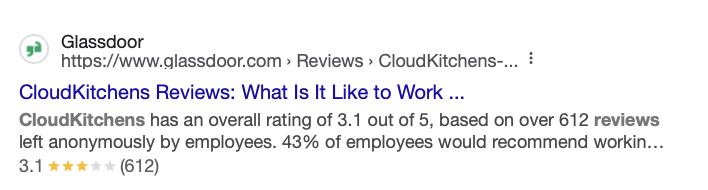
Many CloudKitchens reviews highlight the speed at which restaurants can launch new locations. Operators often cite the ability to go from concept to opening in just a few weeks, significantly faster than traditional restaurant development timelines.
Other reviews emphasize the financial advantages. By avoiding the cost of dining areas, front-of-house staff, and high retail rents, operators can allocate more resources toward ingredients, marketing, and menu development.
Some entrepreneurs also point to the platform’s ability to support high order volumes. With centralized delivery logistics and order-management tools, kitchens can handle large numbers of delivery orders during peak hours without the chaos that often accompanies busy dine-in restaurants.
These experiences help explain why many restaurant owners view CloudKitchens as a practical solution for scaling modern food businesses.
Supporting Both Established Brands and New Concepts
CloudKitchens serves a wide range of customers across the food industry.
Large restaurant chains often use ghost kitchens to expand their delivery footprint. By launching delivery-only locations, these brands can reach customers who live outside the range of existing restaurants.
Independent restaurants and local operators also benefit from the model. A popular neighborhood restaurant can use a ghost kitchen to serve customers across town without opening a second dine-in location.
The platform also attracts entrepreneurs and digital creators launching virtual food brands. Because ghost kitchens focus entirely on delivery, these operators can build a brand through online ordering platforms without ever operating a traditional restaurant.
In many cases, this flexibility allows multiple brands to operate within the same facility while maintaining separate kitchen spaces and operational independence.
The Broader Impact on the Restaurant Industry
The rise of ghost kitchens reflects broader changes in consumer behavior.
Delivery orders have grown dramatically as customers prioritize convenience and mobile ordering. Many meals are now consumed outside the restaurant, whether at home, in offices, or on the go.
This trend has encouraged restaurants to rethink traditional business models. Ghost kitchens represent one of the most prominent responses to this shift.
By focusing on delivery efficiency, these kitchens can operate in smaller spaces, reduce operating costs, and scale more quickly than traditional restaurants.
Companies like CloudKitchens are helping build the infrastructure for this evolving industry. By combining real estate, logistics, and technology, they provide the tools restaurants need to operate in a delivery-first environment.
The Future of Cloud Kitchens
As the food delivery economy continues to expand, ghost kitchens are expected to play an increasingly important role in the restaurant ecosystem.
Industry forecasts suggest the global ghost kitchen market could exceed hundreds of billions of dollars in value within the next decade, driven by demand for convenience and rapid delivery.
For restaurants and entrepreneurs, this growth presents both challenges and opportunities.
Operators must adapt to new technologies, evolving customer expectations, and intense competition in the delivery marketplace. At the same time, platforms like CloudKitchens offer a path to enter the industry with lower risk and greater flexibility.
The concept of a restaurant without a dining room may once have seemed unusual. Today, it represents a growing segment of the food industry—and a glimpse into how restaurants may operate in the digital future.
Written in partnership with Tom White
-

 4 years ago
Maggie Jenson Is Empowering People Battling Addiction
-

 3 years ago
Latino Pulse in LA’s Hip-Hop Heart: The FACEvsIT Evolution
-

 Fashion3 years ago
From Brothers to Business: The Inspiring Journey of YoungLA
-

 Entertainment3 years ago
From ‘Cold’ Streetwear to Cosmic Dreams: The Ryley Gauthier Odyssey
-

 Crypto6 months ago
The Real Story Behind teemchase’s Real Estate, Music, and Crypto Empire
-

 5 years ago
Demonstrating the power of social media- British bombshell, Bonnie Locket:
-

 Business2 years ago
Iron Wallet: The Ultimate Solution for Financial Independence
-

 Entertainment3 years ago
Check out Lil Wayne’s New Artist, Drizzy P