
Anastasia Nemyrovska: A Rising Star in Cinematic Storytelling

Bringing Depth and Emotion to Every Role
Anastasia Nemyrovska is captivating audiences with her compelling performances and dedication to her craft. More than just a screen presence, she is a storyteller who breathes life into every character she portrays. Her commitment to authenticity makes her stand out in an industry where genuine emotion is the key to unforgettable performances.
Anastasia’s ability to connect with her audience extends beyond the screen. Whether preparing for a dramatic role or sharing insights into her creative process, she embraces every opportunity to engage with her fans. Her passion for acting is evident in the way she meticulously studies her characters, ensuring that each role is portrayed with honesty and depth.
Engaging with Fans and the Acting Community
Beyond her performances, Anastasia nurtures a strong connection with her audience. She actively engages with her supporters, offering glimpses behind the scenes of her projects, personal reflections on her journey, and even discussions about the challenges of the entertainment industry. Through social media, she fosters a community of aspiring actors and film enthusiasts, creating a space where creativity and storytelling thrive.
Her live Q&A sessions and thoughtful interactions with fans make her more than just an actress—she becomes an inspiration to those looking to break into the world of film and television. By openly discussing her experiences, she encourages others to pursue their passions and stay true to their artistic visions.
Inspiring Through Authentic Storytelling
What truly sets Anastasia apart is her dedication to storytelling. Whether on screen or in real life, she understands the power of narratives in shaping perspectives and emotions. Through her roles, she conveys powerful messages that resonate deeply with audiences. Her work reflects a passion for portraying complex, multidimensional characters that challenge stereotypes and push creative boundaries.
Her artistic vision goes beyond acting—she collaborates closely with directors, writers, and fellow actors to ensure that every story she takes part in is told with authenticity. This commitment to her craft makes her an emerging force in the industry, someone whose work is not just watched but deeply felt.
For those eager to witness her journey, Anastasia’s growing body of work serves as a testament to the power of dedication and creativity. As she continues to take on new challenges, one thing remains clear—her influence in the cinematic world is only just beginning.

Tax
What Is the California Exit Tax and What Does It Mean If You’re Moving to Las Vegas?

California’s top marginal income tax rate of 13.3% is the highest of any state in the country.
So when people start planning a move to Las Vegas, where the state income tax rate is zero, the numbers do the talking.
But somewhere between making the decision and actually leaving, most people run into the same question: Is there a tax just for walking out the door?
Still on the Books, Even Off the Map
No exit tax exists in California law. There is no one-time charge triggered by relocating, no fee assessed at the state line, no departure levy. The confusion stems from two sources: a series of legislative proposals that generated significant headlines without becoming law, and the very real fact that California continues to tax former residents on certain income long after they’ve moved.
Assembly Bill 259, a wealth tax proposal with look-back provisions targeting high earners, died in committee in January 2024. A newer initiative, the 2026 Billionaire Tax Act, is a ballot measure rather than enacted law. If passed, it would impose a one-time 5% tax on net worth for California residents worth over $1 billion as of January 1, 2026. Governor Newsom has publicly opposed it, legal experts widely expect constitutional challenges, and for anyone relocating to Las Vegas without ten-figure wealth, it has no bearing on their situation whatsoever.
What does have bearing is how California treats income that remains tied to the state after someone leaves.
Your Old Address Has a Long Memory
California taxes residents on their worldwide income. Once someone establishes non-residency, that scope narrows, but it does not disappear. The California Franchise Tax Board (FTB) continues to tax “California-source income”: rent from a property still held in the state, wages earned during days physically worked there, capital gains from the sale of California real estate, and income from a business still operating in-state.
This is not a penalty for leaving. It is straightforward income sourcing, the same income taxed because it originates in California, regardless of where the earner now lives. Keeping a rental property in Los Angeles, or continuing to serve California clients without restructuring a business, keeps someone on the hook for California taxes on that portion of earnings.
What turns those tax obligations into something far larger is failing to establish non-residency convincingly. The FTB completed 520 residency audits on out-of-state individuals in 2023 alone, more than double the 230 it conducted in 2019. These audits exist to determine whether someone who claims to have left California actually did, or whether their life remained sufficiently anchored there that California can argue they never truly went.
Pack Everything, Including the Paper Trail
The FTB applies a “close connection” test to determine where someone’s primary residence actually is. It weighs the size of homes in each state, days spent in each, and a long checklist of what tax professionals call “badges of residency”: driver’s licence, voter registration, vehicle registration, bank accounts, doctors, schools, and where the family lives.
Someone who moves to Las Vegas but keeps their California licence, leaves their car registered in Los Angeles, and spends four months of the year back in the state gives the FTB substantial material to argue they remain a California resident, and therefore owe California tax on worldwide income.
A defensible non-residency file requires registering to vote in Nevada, transferring vehicle registration, opening Nevada bank accounts, and spending more than six months of the year at the new address. Those planning a relocation from California to Las Vegas typically need a dated “residency change” packet from day one: the new lease or deed, all updated registrations, and documentation of time spent in each state. For anyone with a business still operating in California, the standard advice is to formally close or relocate those operations before the move.
Zero Tax, Zero Ambiguity
Las Vegas has absorbed more Californians per capita than any other destination in recent years, and the tax picture explains a significant part of that. Nevada levies no state income tax, no tax on capital gains, and no tax on retirement income. Someone earning $150,000 a year in California pays state income tax approaching 10%. The same income earned as a Nevada resident carries no state liability at all.
The exit tax is largely a myth. Getting the residency paperwork right is not.
Written in partnership with Tom White
Film
Austin Audience Award Winner Sacrificios Heads to Raindance Following Breakout Festival Run
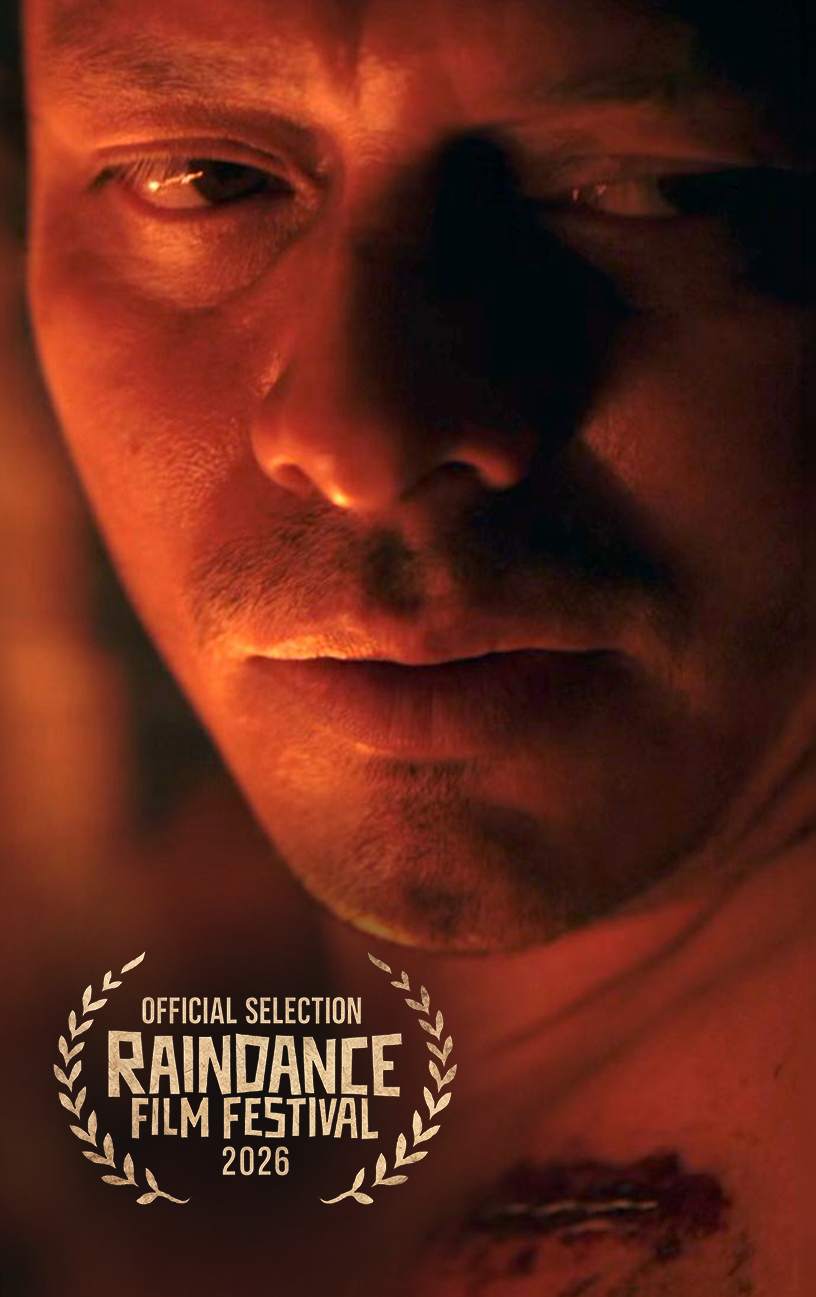
After making waves at the Austin Film Festival and the Fantaspoa International Fantastic Film Festival, Mexican psychological horror film Sacrificios is heading to Europe next month.
The film from writer/director Mauricio Chernovetzky and writer Alexander Ioshpe has officially been selected for the 34th edition of the Raindance Film Festival, where it will make its European premiere as part of the festival’s independent feature lineup.

The selection marks another milestone for the emotionally charged horror thriller, which first premiered at the 2025 Austin Film Festival and won the Audience Award in the Dark Matters category before traveling to Brazil for its Latin American premiere at Fantaspoa, the largest festival dedicated to fantastic genre cinema in Latin America.
For Chernovetzky and Ioshpe, the journey of Sacrificios has been deeply personal from the start.
“Something awoke in me when I returned to live in Mexico, reconnecting with its cultural layers, mysteries, and my own childhood,” Chernovetzky says. “That inevitably led me to think about my father and the sacrifices he made for me. That is when the idea for Sacrificios came. The story of what a father would do for his son.”
The film follows Juan, a grieving father devastated by the death of his young son. After a supernatural encounter at sea seemingly returns the child to him, Juan spirals into an increasingly dangerous cycle of sacrifice, obsession, and guilt as he fights to hold onto the impossible miracle.
Rather than building the film around traditional horror spectacle, Chernovetzky and Ioshpe approached Sacrificios as an intimate emotional story rooted in grief and faith.

“Grief breaks everything open, our sense of safety, certainty, and control,” Chernovetzky and Ioshpe tell LA Entertainment Weekly. “At that moment, faith becomes the only hope, the search for meaning, for answers, for a way to undo the loss. And the horror grows from there, from how far Juan is willing to go.”
The filmmakers credit lead actor Jorge A. Jimenez, known for Narcos, The Black Demon, and Borrega, with grounding the film’s emotional intensity. “There’s not a second of falsehood in his performance,” they say. “That truth carries the emotional core through everything.”
After years spent independently bringing the project to life, the response at Austin proved especially meaningful for the filmmakers. “Winning the Audience Award at Austin meant so much to us because it showed that our film truly connected,” they say. “People stayed after the screening to share their own traumas with us. Some came back a second time and brought friends.”
That momentum continued at Fantaspoa, where the filmmakers introduced the film to Latin American audiences for the first time. “We were curious how a hardcore genre audience would respond,” they say. “But the theater was packed, the audience was deeply engaged, and people stayed afterward to ask questions. It gave us the sense that the film is tapping into something universal.”
Looking ahead, Chernovetzky and Ioshpe hope the film finds a distribution path that allows it to connect with audiences seeking atmospheric, emotionally driven horror.
“Our ideal path would involve a targeted theatrical or hybrid rollout followed by a strong specialty and VOD release internationally,” they say. “We believe there’s an audience for horror films that are intimate, culturally grounded, and emotionally honest.”
With Raindance now ahead, Sacrificios continues to emerge as one of the more emotionally ambitious genre titles on the international festival circuit.
Written in partnership with Tom White
Book
From Hollywood Insiders to Trauma Storytellers: Why Breaking Jenny Had To Be Told

In Hollywood, stories are often built around clean endings. Heroes. Villains. Redemption arcs that arrive right on cue.
But real life rarely works that way.
That realization became impossible to ignore for filmmaker, screenwriter, and author Nic Fairbrother and Emmy® Award-winning filmmaker and best-selling author Shane Stanley while writing Breaking Jenny, a survivor-led memoir releasing May 12 that blends personal testimony with investigative reconstruction.
At the center of the book is “Jenny” (name changed for safety reasons), a woman whose relationship with her fiancé, Max, slowly unraveled into something far darker than she initially understood. After Max’s sudden death, Jenny discovered hidden phones, laptops, sinister journals, and digital archives concealed beneath the floorboards of their home, evidence that pointed to a life she never knew existed.
As the materials came together, what initially appeared to be deception revealed a far more complex and disturbing pattern of control and instability. Some of what Jenny uncovered pointed to escalating behavior that suggested Max’s plan to potentially murder Jenny, raising questions not just about who Max was, but how long the reality had gone unnoticed.
For Stanley, the material was not distant subject matter.
He knew Max personally.
In fact, Max had once been one of his closest friends.
“I had known Max since we were kids, and when you have that kind of history, you don’t see clearly,” Stanley explained. “You see what you want to preserve. What changed was realizing that the version of him I held onto and the reality of what Jenny experienced couldn’t coexist.”
That emotional proximity became one of the defining tensions of the book itself.
Rather than approaching the material as outside observers, Fairbrother and Stanley found themselves confronting uncomfortable questions about perception, accountability, and the ways harmful behavior can remain hidden in plain sight for years.
“Proximity actually made it harder to tell, not easier,” Stanley said. “You’re constantly questioning your role, what you saw, what you missed, what you chose not to see. But ultimately, what made it necessary was understanding stories like this don’t exist in isolation. They repeat.”
While Breaking Jenny contains many of the elements associated with psychological thrillers and true crime narratives, its focus ultimately centers on something more intimate: understanding how coercive control develops gradually over time, often without immediate recognition from the people inside it (or around it).
For Fairbrother, telling the story responsibly became just as important as telling it honestly.
“We chose to focus on Jenny’s healing journey and make it inspirational rather than exploitative,” Fairbrother said. “There were so many stories she shared with us that we ultimately decided to leave out, simply because we didn’t want to cross the same boundaries that so many people in her life already had.”
That balance shaped the tone of the entire project.
Built from extensive documentation, including private journals, recovered digital materials, financial records, and hundreds of thousands of text messages, the book reconstructs not just the collapse of a relationship, but the psychological environment that allowed it to continue for so long.
Both authors describe the experience of writing the book as deeply personal and, at times, emotionally destabilizing.
“I’ve been hearing different versions of this story my entire life — from women, from men, and sometimes, from my own mouth,” Fairbrother said. “Society is sick of the abuse. It’s time to drag the monsters out from under the bed and into the light.”
That desire to illuminate patterns rather than sensationalize them became central to the project’s purpose.
Instead of asking why someone stays, Breaking Jenny examines how manipulation often builds slowly through emotional conditioning, dependency, confusion, loyalty, and the gradual shifting of boundaries.
“It challenged a lot of assumptions I think people carry,” Stanley said. “That they would recognize abuse immediately, that they would act decisively, that it’s always clear-cut. What you start to see instead is how gradual it is. How it builds.”
For Jenny, according to both authors, the goal was never simply to recount what happened to her. She wanted the story to help others recognize warning signs before they became trapped inside similar dynamics themselves.
“Once she came out the other side, what mattered most to her was that her experience could serve as a kind of roadmap,” Stanley explained. “Something that might help someone recognize the signs earlier and choose a different path.”
That focus on recognition gives Breaking Jenny much of its emotional weight.
Because the story’s most unsettling revelations are not just about secrecy or deception. They are about how easily dangerous dynamics can camouflage themselves as familiarity, intimacy, or even love.
“Sometimes abuse is buried so deeply in our subconscious that we don’t recognize it until decades later,” Fairbrother said. “What gives me hope is that there are now far more tools and a much greater awareness to help survivors process those experiences — and to help prevent this kind of insidious behavior from continuing unchecked.”
For two storytellers whose careers were built in entertainment, Breaking Jenny became something very different from traditional narrative work.
Not an escape. A confrontation. And one they felt could no longer remain private.
Breaking Jenny is available now in paperback, e-book, and Kindle on Amazon and BreakingJenny.com.
Written in partnership with Tom White
-

 4 years ago
Maggie Jenson Is Empowering People Battling Addiction
-

 3 years ago
Latino Pulse in LA’s Hip-Hop Heart: The FACEvsIT Evolution
-

 Fashion3 years ago
From Brothers to Business: The Inspiring Journey of YoungLA
-

 Entertainment3 years ago
From ‘Cold’ Streetwear to Cosmic Dreams: The Ryley Gauthier Odyssey
-

 5 years ago
Demonstrating the power of social media- British bombshell, Bonnie Locket:
-

 Business2 years ago
Iron Wallet: The Ultimate Solution for Financial Independence
-

 Entertainment2 years ago
Check out Lil Wayne’s New Artist, Drizzy P
-

 Entertainment3 years ago
Yolo Aventuras: From Venezuela to Global Stardom – The Rise of Digital Content Creators