
Music
Who Really Shaped the Basement Boys Era? Neal Conway Tells All

For decades, dance floors across the globe have pulsed to the hypnotic organ riff of “Gypsy Woman (She’s Homeless)”, the 1991 house anthem with its unforgettable “la da dee, la da da” hook. The track topped charts in more than 15 countries, a gold record, which helped define early ’90s dance music.
But behind the global phenomenon was a producer whose name many casual fans never learned.
Neal Conway, world-renowned producer, songwriter, DJ, and remixer, was not just in the room during the Basement Boys’ rise. He helped shape the sound that made them legendary.
Now, decades later, Conway is telling his story.
“I Was There From the Beginning”
Conway’s journey began in the late 1980s under the mentorship of Thommy Davis of Basement Boy Music. As a young DJ learning the ropes, Conway was soon brought into the Basement Boys family, a collective that would become synonymous with the golden era of house music.
During his time with the group, Conway co-produced and co-wrote some of the most influential dance records of the era. Among them:
- “Gypsy Woman (She’s Homeless)” and “Makin’ Happy” from Crystal Waters’ gold album Surprise
- “Scandal” and “Rejoicing” for Ultra Naté
- “Tonite” for Those Guys
“I was the man behind a number of early Basement Boys productions,” Conway says candidly. “A lot of that original sound, that rawness, that was me in there.”
He doesn’t say it with bitterness. But there is honesty.
“People all over the world enjoy the music we created. But I don’t think I’ve always received the credit I deserved.”
“Gypsy Woman” wasn’t just a club hit. It carried a subtle but powerful social message about homelessness, layered over minimalist deep house grooves. Its organ riff became instantly recognizable; its hook remains embedded in pop culture.
The track’s influence has endured for more than three decades. Alicia Keys later reimagined it in “Brand New Me (Gypsy Woman Mix),” while UK artist Nick Brewer scored a hit with “Talk to Me” featuring Bibi Bourelly. The song’s DNA continues to ripple through contemporary music.
Conway’s songwriting and production extended far beyond house. In 2007, he co-wrote T.I.’s triple-platinum hit “Why You Wanna,” earning both a triple-platinum album distinction and recognition as one of ASCAP’s top songs of the year.
His catalog stretches across genres:
- “Walking” by Mary Mary (Soul Train Music Award for Best Gospel Performance; 2012 ASCAP Awards for Gospel and R&B)
- “Took My Love” by Pitbull (2012 Miss America Pageant theme song)
- “Going Out” by A.P.L. of the Black Eyed Peas
Neal Conway has contributed to six Gold and Platinum records across his career, a testament to both commercial impact and cultural longevity.
The résumé is undeniable. Yet Conway remains reflective rather than triumphant.
Reclaiming the Soul
In 2006, Conway launched Urban Retro Music Group (URMG), not simply as a record label, but as a statement.
At a time when house music was becoming increasingly synthetic and digitally over-processed, URMG aimed to reignite a soulful, live-instrument revolution. The label blended underground house energy with the spirit of soul, jazz, and funk, keeping alive the legacy of Marvin Gaye, Curtis Mayfield, and Donny Hathaway.
“Music started feeling overproduced. Too filtered. Too safe,” Conway explains. “I wanted to bring back live strings, real percussion, conscious lyrics, that feeling you can’t fake.”
Through curated releases and the SoulPowerRadio platform, URMG evolved into a cultural movement focused on authenticity and social consciousness. It was less about chasing trends and more about preserving a feeling.
“House music came from real stories. Real struggle. Real joy,” Conway says. “You can’t manufacture that.”
Teaching the Next Generation
Today, Conway’s studio looks different. In addition to producing, he teaches music, a role he admits he never imagined for himself.
“I never thought I’d end up teaching,” he says with a laugh. “But I love it.”
For Conway, mentoring the next generation is about more than technique. It’s about philosophy.
He encourages students to study structure and theory, but he also warns them about over-reliance on artificial intelligence and digital shortcuts.
“AI can assist,” he says. “But if it can’t feel. if It can’t bleed. If it can’t struggle. Music needs to be raw and unfiltered like it used to be.”
He challenges young producers to sit at a piano, to understand chord progressions, to write from lived experience.
“If you don’t put yourself into the music, what are you really saying?” he asks.
Completing the Narrative
For many, the Basement Boys name carries nostalgia and reverence. But Conway hopes the story expands, not to diminish anyone else, but to complete the narrative.
“I’m proud of what we did,” he says. “That era changed music. But I want people to understand how much I shaped the records I was part of.”
There is no anger in his tone, only clarity.
Neal Conway’s fingerprints are on gold records, platinum plaques, gospel anthems, hip-hop hits, and global house classics. He helped build a sound that moved millions, often without standing center stage.
Now, as a mentor, label founder, and advocate for authenticity in an increasingly automated industry, Conway seems less concerned with recognition and more focused on legacy.
“The music will always speak,” he says. “I just want people to know who was speaking through it.”
In a world driven by algorithms and instant fame, Neal Conway’s story is a reminder that some of the most influential architects of sound don’t always chase the spotlight, but their echoes last forever.
Written in partnership with Tom White


Music
Music Producer David Dyson: Behind the Beat
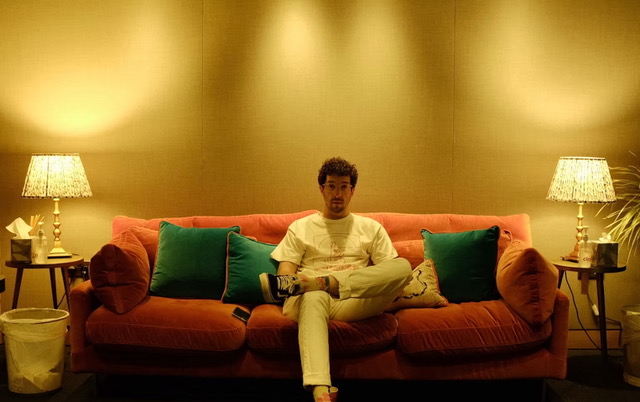
David Dyson grew up in the countryside of Leicestershire, England, where a lack of nearby neighbors meant he could practice drums for hours without complaint. His introduction to the instrument came remarkably early. At three years old, he accompanied his grandparents to a pub, where a live band was playing. The drummer noticed Dyson tapping on glasses with cocktail sticks and gave him his first proper pair of drumsticks. The encounter ignited a passion that would take him from university and conservatoire training to international tours, prestigious recording studios, and sessions with some of the most prominent artists in contemporary music. Yet even as his reputation as a drummer grew, Dyson’s ambitions extended beyond the instrument. He was always a producer at heart.
His professional drumming career has been defined by both technical ability and an instinct for choosing the right musical contribution. Dyson played drums on Jorja Smith’s “The One,” associated with her critically acclaimed debut album Lost & Found, which received a nomination for British Album of the Year at the 2019 Brit Awards. His work with Tems includes drumming on “Unfortunate” and arranging the strings for “You In My Face,” both featured on her debut album, Born in the Wild. Released in 2024, the album earned a Grammy nomination for Best Global Music Album and appeared on numerous year-end lists, including Billboard’s and Rolling Stone’s. Dyson also co-produced “Hate” on Berwyn’s Who Am I, an album that won Best Album at the 2025 Ivor Novello Awards and was nominated for the Mercury Prize.
His live credits are equally substantial. David Dyson has performed with artists including Camila Cabello, Chappell Roan, Raye, Yungblud, and Louis Tomlinson, while his musical experiences have brought him into contact with influential producers such as Trevor Horn and Tony Visconti. Something of a session regular at Abbey Road Studios, Dyson has also performed with Gregory Porter and the National Youth Jazz Orchestra of Great Britain inside Buckingham Palace. His first show with Louis Tomlinson, at Manchester Arena in 2017, remains a vivid memory, with the roar of the audience overwhelming his in-ear monitors.
Dyson has never perceived the drummer’s job as simply demonstrating skill. He approaches the instrument as a means of shaping a song’s emotional trajectory, knowing when to intensify a groove and when to leave space. “The drums are the foundation and heartbeat of any live show, and I feel the same way about production,” he notes. The same principle applies in the studio, where a carefully chosen snare sound, a change in rhythmic emphasis, or the decision not to use drums at all can be more significant than a technically dazzling performance.
This manner of thinking developed naturally from his musical education. Initially dreaming of playing in bands like the Red Hot Chili Peppers, Dyson became increasingly fascinated by jazz and later immersed himself in classical and jazz studies at university and conservatoire. He went on to work across musical theatre, pop, jazz, orchestral, and choral music, developing a broad musical vocabulary that informs his work today. His influences include Phil Collins, whose transition from Genesis drummer to frontman and solo artist represents a seamless integration of performance, songwriting, and production; Stewart Copeland, whose rhythmic imagination helped give the Police their distinctive energy and who later became a much in-demand composer and orchestrator; and Questlove, whose work with The Roots demonstrates how a drummer can shape the entire identity of a musical project.
David Dyson’s own movement into production accelerated during lockdown, when he had time to concentrate on developing his craft. But the desire to be involved in music from its earliest stages had always been there. He thinks first about the structure, melody, and emotional character of a song, then turns to the details that bring it into focus. David’s understanding of the relationship between drums and bass helps him establish the pocket, while his familiarity with different musical traditions allows him to recognize when complexity is useful and when simplicity is more powerful. The distinction between playing drums and producing is therefore less a question of changing roles than of expanding the scope of his musical decisions. Dyson is not a drummer who happens to produce; he is a producer whose understanding of rhythm gives him deep insight into the music.

Different Artists, Different Musical Worlds
The range of David Dyson’s production work is reflected in the contrasting musical identities of the artists with whom he collaborates. His work with Oliver Malcolm, Braye, 80purppp, and Skiifall spans alternative pop, West African musical traditions, experimental R&B, and Caribbean-influenced sounds. Rather than applying a fixed production formula, Dyson adapts to the particular character of each project, helping develop the music without losing what makes the artist distinctive.
With Oliver Malcolm, that process has extended across both touring and recording. Dyson co-wrote and co-produced several tracks on Mr Malcolm, including “Baby Don’t Go,” “Ginseng,” “Cause of You,” “Station Hill,” “Ghosts,” and “Still Bleed.” Their process is rooted in improvisation, allowing ideas to emerge through playing rather than following a rigid arrangement. The aim is to capture the energy of a performance while leaving room for experimentation.
David’s work with Braye draws on a different musical vocabulary. Dyson has produced two of the artist’s EPs and is now completing an upcoming album developed across Lagos and London. The process here embraces technology to allow for the transfer of ideas across the space of international borders when artist and producer cannot always physically be in the same location. Moving between the two cities has allowed the music to evolve through successive stages of writing, performance and refinement.
On 80purppp’s forthcoming ten-track album, Dyson has taken on the executive producer role to help establish the record’s overall musical direction. Vacillating between London and Toronto’s Sony Music Canada studio, this collaboration has yielded a tone that moves between alternative R&B, darker introspective textures, and the rhythmic pull of Afrobeats with a looser groove-driven sensibility. The challenge is to bring these influences into a coherent album while preserving the contrasts that give the music its character.
Multilingual artist Skiifall blends Afro-influenced music and dub with alternative R&B, Dancehall, and Zouk. Dyson has been producing sessions in Toronto for this artist with an approach that is focused on unique identity in a cohesive presentation. Brit Award-Winner Daniel Bedingfield professes the benefits of any artist or producer working with David Dyson declaring, “He won’t let bad music happen, I want him and his ears in every session I do.” Bedingfield and Dyson are currently working on an album together featuring some of the biggest names in garage, including Bigfoot, Craig David, Wookie, Sticky, and more.
Across these projects, Dyson’s contribution is not to impose a signature sound regardless of the artist, but instead to recognize what each artist brings into the room and help it become more fully realized. His experience as a drummer remains central to that process, but the larger perspective is unmistakably that of a producer.
From Artist Production to the Language of Film
Dyson is now extending that perspective into film composition, including work on an upcoming major blockbuster featuring an A-list cast. The move represents a new creative direction but the underlying principles are familiar. Whether working with a singer, a band, or a director, David begins by considering what the music needs to accomplish and how it can serve a larger emotional purpose.
In artist production, the challenge is to help musicians develop an identity and create recordings that stand on their own. Film introduces a different relationship between sound and storytelling. The music must complement the visuals, reinforce the director’s intentions, and deepen the audience’s connection to what is happening on screen. A score can establish atmosphere, heighten tension, or give a scene emotional weight, but it can also become intrusive if it attempts to communicate what the images already express.
Knowing when not to play is as important as knowing what to play for Dyson. As a drummer, he practiced restraint in leaving space for a vocal, holding back a fill, or allowing a groove to breathe. There is a natural counterpart in film composition to this concept. Music must sometimes lead the audience into a moment, while at other times it should recede and allow the visuals to carry the story. The discipline is similar, even if the creative brief changes. An elaborate arrangement is not automatically better than a simple one, just as a technically demanding drum part is not necessarily the right part for a song.
David Dyson’s career has already taken him from the touring stage to celebrated studios and collaborations with award-winning artists. Production allows him to bring those experiences together, influencing not just how a performance sounds but how an entire piece of music develops. Film offers a further opportunity to apply that instinct to storytelling on a different scale. The constant, across every setting, is his belief that the music should never exist merely to demonstrate what a musician can do. It should make the work itself more compelling.
Written in partnership with Tom White
Music
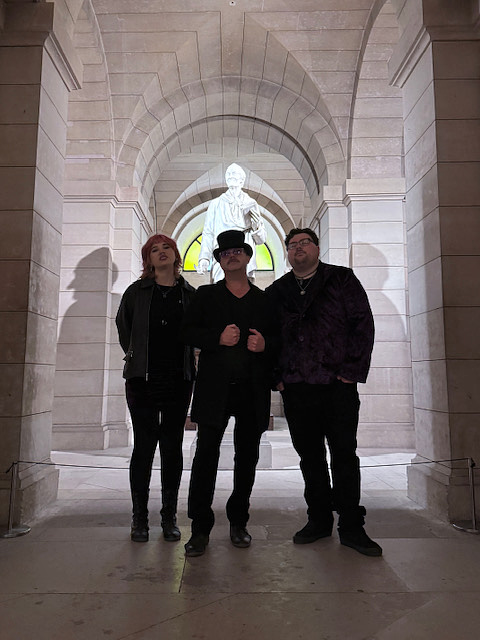
Colorado Band Voltaire’s Ghost Shows Softer Side with Brooding Goth Dream, “‘Till The Break of Day”
By Ryan Bazinet
Is it better to have loved and lost, or better to never have loved at all? That’s the question asked by “‘Till The Break of Day,” the new single by Colorado band Voltaire’s Ghost.
The track opens with distorted guitar and piano arpeggios circling two chords in dreamy perpetual motion. Upbeat drums drive the song along, like the forces of life that pull apart the two lovers at the center of the story.
It’s a bittersweet tale. Two lovers going in separate directions, like the wailing guitar solos which pan from left to right. Ruby Juhl’s echo-soaked vocals are alternately delicate and angry as she sings,
The only thing worse than not having met you
Was having met you, baby
The only thing worse than not having loved you
Was having loved you, baby
In the end, all she can do is sigh, over and over, “Hold me ‘till the break of day.”
The love story behind “‘Till The Break of Day” shows a softer side for the band. Previous songs, like “Death Becomes You” and “Spirit Animal,” help explain why their music has been described with terms like Dark Pop and Cosmic Goth. But fans will note that the brooding remains.
Voltaire’s Ghost was created in Grand Junction, Colorado by songwriter and guitarist Magnus, who released a series of singles in the summer of 2023. Those songs caught the attention of Nashville producer Dean Miller (son of Roger Miller, “King of the Road”), who reached out with an offer to record in the “Music City.”
Realizing he needed a band, Magnus soon connected with drummer Joshua Eggstaff, who was teaching drums at a local music shop and brought a 90s alternative-inspired edge to the band’s rhythms. Next came Ruby Juhl, a singer with a background in musical theater (and a student at the local university).
Magnus asked Ruby and Josh if they wanted to fly to Nashville to make a record. The result was the five-song EP, NEMESIS, released in 2024.
Now, Voltaire’s Ghost is ready to release a new full-length record, Black Petals Fallen. Produced by Magnus, Black Petals Fallen was recorded locally in Colorado. The band then sent the tracks off to Grammy-nominated engineer Joe Ayoub of LA’s Cherokee Studios for mixing. Drew Levine mastered the album.
Black Petals Fallen is available now on vinyl via the band’s official website. Four singles including “‘Till The Break of Day” are available on streaming platforms. The full album will be released for streaming soon.
In the arc of the band, “‘Till The Break of Day” is a full circle moment. The song was originally released as a guitar-and-voice demo back in 2023, before Magnus had assembled the full band. With the latest single, Voltaire’s Ghost has brought the vision to fruition.
Magnus says, “With the new recording, the song just came to life. The demo I released was a sketch. The new version is like a beautiful painting with really vibrant and emotional colors.”
Upcoming visuals include a music video for “‘Till The Break of Day” directed by Luke Ostermiller (who recently directed the super spooky video for “Black Petals Fallen.”) The band is also planning a short film for upcoming single, “The Ballad of Colleen Gray.”
“‘Till The Break of Day” is out now with promotional support from Starlight PR. Follow Voltaire’s Ghost at the links below.
Written in partnership with Tom White
Music
Zaruflo: For the Joy of Creating Music

Zaruflo is an independent multi-genre music producer. Zaruflo Productions blends hip-hop, R&B, and electronic elements into his unique music. Working on music and his future career as a professional pilot keeps him balanced, driven, and focused.
Zaruflo, also known as Imar Forbes, is an independent, self-made music producer. Zaruflo grew up in the Bronx in New York City. A natural creative, he developed his unique sound through experimentation and learning from other artists. Inspired by Beastboi and HOL!, he explores neo-dubstep, dubstep, hip-hop, R&B, and trap.
“I started making my own music after spending time listening to my favorite artists and thinking, ‘What if I could make my own?’” says Zaruflo.
Music as a Source of Joy
For Zaruflo, making music provides a way to be creative and continue to improve his craft. He’s not interested in music fame or fortune, but makes music for the joy of it. “Growing up in a strict household, I changed my trauma into a superpower instead of sadness and worked to become the best version of myself,” explains Zaruflo. Zaruflo believes that difficult experiences in life can build personal strength and be used as motivation to create and grow.
Creating music provides both a challenge and a way to focus on fun throughout life’s ups and downs. Zaruflo continues to work on building his audience and expanding his listener base. Growth isn’t easy. Zaruflo currently works multiple jobs to support his music and his aviation education.
When independent artists like Zaruflo create, it expresses their unique experiences, struggles, and triumphs. In essence, through music, one can create connections in the world and share experiences in a positive manner.
Dual Goals in Zaruflo’s Journey
Zaruflo is not only a musician but also has a career goal to become a professional pilot. Once a pilot, Zaruflo plans to relax and expand his music through continued creation. Although music will play second fiddle to his Aviation pilot career, Zaruflo plans to continue working to gain more plays on streaming platforms and get noticed by celebrities and influencers. “My pilot career is going to be the biggest accomplishment I’ll ever achieve,” says Zaruflo. “Of course, if I ever become successful off music itself, that would be awesome!”
Future Aspirations and Direction
Zaruflo plans to dedicate himself to completing his aviation education and becoming a professional pilot. Music becomes an important, life-building hobby that brings joy and continual creative challenge. He wants to continue producing music and getting plays on multiple platforms. Achieving over 10,000 plays on a single track remains a secondary goal. The most important goal in music is continuing to learn from other artists and producing music that attracts listeners.
Zaruflo wants the world to hear his music. Knowing that listeners enjoy his creations makes him happy. It’s good to be popular, but for Zaruflo it’s mostly about having fun and enjoying life. Zaruflo’s audience enjoys listening to original music inspired by his Bronx upbringing and experience with a wide variety of genres. He is up for the challenge of attracting new listeners and continues to work on getting his music out to the public. Reaching listeners in a massively competitive market isn’t easy, but it’s possible. If you’re looking for a unique mix of sounds, check out Zaruflo’s music.
Written in partnership with Tom White
-

 4 years ago
Maggie Jenson Is Empowering People Battling Addiction
-

 Crypto10 months ago
The Real Story Behind teemchase’s Real Estate, Music, and Crypto Empire
-

 3 years ago
Latino Pulse in LA’s Hip-Hop Heart: The FACEvsIT Evolution
-

 Fashion3 years ago
From Brothers to Business: The Inspiring Journey of YoungLA
-

 Entertainment3 years ago
From ‘Cold’ Streetwear to Cosmic Dreams: The Ryley Gauthier Odyssey
-

 Entertainment3 years ago
Yolo Aventuras: From Venezuela to Global Stardom – The Rise of Digital Content Creators
-

 5 years ago
Demonstrating the power of social media- British bombshell, Bonnie Locket:
-

 Business2 years ago
Iron Wallet: The Ultimate Solution for Financial Independence