
The Healing Beat: Neal Conway on the Soul of House Music in the Age of AI
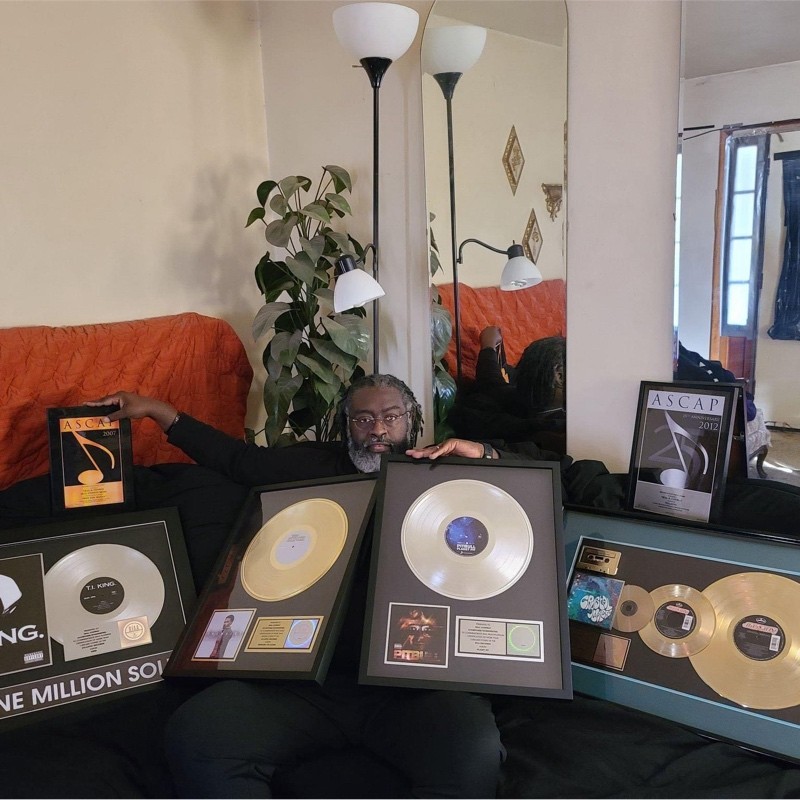
When Neal Conway first stepped into Odell’s nightclub in Baltimore in the early 1980s, he had no idea he was walking into history.
“I didn’t know I was witnessing the birth of a movement that would change not only music, but the way people connect,” he tells LA Entertainment Weekly. “House music, born from marginalized Black, Latino, and LGBTQ+ communities, became more than a genre. It became medicine, community, and revolution.”
Conway would go on to help carry that movement into the mainstream. As a composer and producer for Crystal Waters, he co-created the iconic “Gypsy Woman (She’s Homeless),” a house anthem whose unmistakable organ hook still echoes through clubs, commercials, and TikTok edits. The track has been sampled and interpolated by artists like Katy Perry, Pitbull, and 2 Chainz—but Conway insists the real story isn’t about charts or celebrity.
“The story of house music isn’t about fame,” he says. “It’s about healing and belonging.”
Legendary producer Marshall Jefferson frames it the same way. “House music was never just about the beat,” Jefferson told Conway. “It was about creating a space where everyone belonged.”
From Underground Salvation to Global Stage
What started in underground clubs in Chicago, New York, Baltimore, and Detroit eventually exploded into a global phenomenon—without the traditional gatekeepers. Affordable drum machines and synths, like the Roland TR-808 and TR-909, opened the door for working-class kids to make professional-sounding records straight from their bedrooms and basements.
“House music offered cultural freedom through technology,” Conway explains. “You didn’t need a million-dollar studio,” adds producer Geoffrey C. “You needed passion and a drum machine.”
That democratization didn’t just reshape the sound of pop, it reshaped the business. Festivals like Chosen Few in Chicago and Movement in Detroit now draw crowds from around the world, pumping millions into local economies. In the streaming era, classic house records have become evergreen—still racking up plays, licensing deals, and syncs decades later.
“We built an ecosystem,” says Thomas Davis of the Original Basement Boys. “We created jobs and careers outside the system.”
The Science of the Groove
What dancers felt intuitively in those dark, sweaty rooms, science is only now catching up to. Studies in leading neuroscience journals have shown that rhythmic music hovering around 120 BPM—the heartbeat of house—can lower stress hormones, elevate dopamine, and even support recovery in certain neurological conditions.
“Science has confirmed what we felt on the dance floor,” Conway says. “The groove literally heals.”
For him, crafting those rhythms wasn’t just a profession—it was intentional therapy. “For me, composing those patterns was more than art,” he explains. “It was therapy by design.”
Safe Spaces on the Dance Floor
Long before “safe space” was part of mainstream vocabulary, house parties were living it. For LGBTQ+ communities and other marginalized groups, the dance floor became sanctuary: a place where identity, gender, and expression weren’t policed—they were celebrated.
“You left your worries at the door,” DJ Disciple told Conway. “If you felt the music, you were family.”
In a world that seems more divided than ever, Conway sees that legacy as one of house music’s greatest achievements. The best parties still operate as one of the last truly democratic spaces: strangers, phones down, united by bass, sweat, and a kick drum.
Can AI Feel the Beat?
Today, Conway finds himself at another crossroads—this time between human creativity and artificial intelligence. AI can now master tracks in seconds, separate stems, and even generate melodies with a text prompt. But can it do what house music has always done—heal, connect, and move souls?
“AI can assist, but it can’t replace the craft,” Conway says. “Music lives in the imperfections—the subtle swing, the emotional nuance, the human touch no algorithm can code.”
He’s cautious about the industry’s rush toward automation.
“With AI, it’s dumbing us down with steroids,” he warns. “When creativity becomes too convenient, authenticity is the casualty.”
And yet, he also sees a cultural correction coming. Young producers scour his old analog recordings, sampling tape hiss and slightly off-grid drum patterns in search of something AI can’t quite fabricate: rawness.
“Audiences crave warmth, imperfection, and human energy,” he says. “Ironically, the more digital everything gets, the more people come looking for that human feel.”
The Beat Remains Human
More than three decades after its release, “Gypsy Woman” still hits like a revelation. Somewhere right now, a teenager is hearing that organ riff for the first time—no context, no nostalgia—just pure feeling.
“Every time that happens, it keeps me hopeful,” Conway says. “The future of music will include AI, but its heart will remain human.”
To him, the lesson of house music is simple and urgent: healing and joy aren’t extras. They’re essentials.
“As long as people need to move, connect, and feel alive,” he says, “the rhythm will continue. The beat persists. The groove remains human.”

Music
Colorado Band Voltaire’s Ghost Shows Softer Side with Brooding Goth Dream, “‘Till The Break of Day”
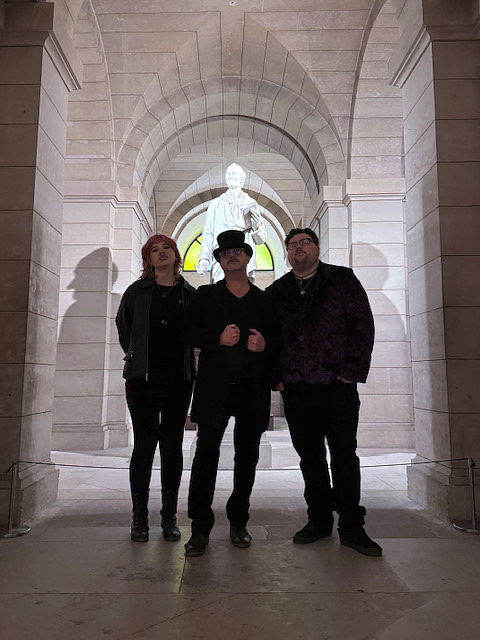
By Ryan Bazinet
Is it better to have loved and lost, or better to never have loved at all? That’s the question asked by “‘Till The Break of Day,” the new single by Colorado band Voltaire’s Ghost.
The track opens with distorted guitar and piano arpeggios circling two chords in dreamy perpetual motion. Upbeat drums drive the song along, like the forces of life that pull apart the two lovers at the center of the story.
It’s a bittersweet tale. Two lovers going in separate directions, like the wailing guitar solos which pan from left to right. Ruby Juhl’s echo-soaked vocals are alternately delicate and angry as she sings,
The only thing worse than not having met you
Was having met you, baby
The only thing worse than not having loved you
Was having loved you, baby
In the end, all she can do is sigh, over and over, “Hold me ‘till the break of day.”
The love story behind “‘Till The Break of Day” shows a softer side for the band. Previous songs, like “Death Becomes You” and “Spirit Animal,” help explain why their music has been described with terms like Dark Pop and Cosmic Goth. But fans will note that the brooding remains.
Voltaire’s Ghost was created in Grand Junction, Colorado by songwriter and guitarist Magnus, who released a series of singles in the summer of 2023. Those songs caught the attention of Nashville producer Dean Miller (son of Roger Miller, “King of the Road”), who reached out with an offer to record in the “Music City.”
Realizing he needed a band, Magnus soon connected with drummer Joshua Eggstaff, who was teaching drums at a local music shop and brought a 90s alternative-inspired edge to the band’s rhythms. Next came Ruby Juhl, a singer with a background in musical theater (and a student at the local university).
Magnus asked Ruby and Josh if they wanted to fly to Nashville to make a record. The result was the five-song EP, NEMESIS, released in 2024.
Now, Voltaire’s Ghost is ready to release a new full-length record, Black Petals Fallen. Produced by Magnus, Black Petals Fallen was recorded locally in Colorado. The band then sent the tracks off to Grammy-nominated engineer Joe Ayoub of LA’s Cherokee Studios for mixing. Drew Levine mastered the album.
Black Petals Fallen is available now on vinyl via the band’s official website. Four singles including “‘Till The Break of Day” are available on streaming platforms. The full album will be released for streaming soon.
In the arc of the band, “‘Till The Break of Day” is a full circle moment. The song was originally released as a guitar-and-voice demo back in 2023, before Magnus had assembled the full band. With the latest single, Voltaire’s Ghost has brought the vision to fruition.
Magnus says, “With the new recording, the song just came to life. The demo I released was a sketch. The new version is like a beautiful painting with really vibrant and emotional colors.”
Upcoming visuals include a music video for “‘Till The Break of Day” directed by Luke Ostermiller (who recently directed the super spooky video for “Black Petals Fallen.”) The band is also planning a short film for upcoming single, “The Ballad of Colleen Gray.”
“‘Till The Break of Day” is out now with promotional support from Starlight PR. Follow Voltaire’s Ghost at the links below.
Written in partnership with Tom White
Culture
Directing in LA: How Dante Navigates Culture, Narrative, and International Commercials

What do Chinese electronic brands, US film study, and the LA production industry have in common? Dante Jiayu Liu.
Some commercials capture public attention long after the ad ends. Sometimes they use popular music or trending design to spark visual appeal.
Staying power and influence may be the goal of commercial directors, and they are two pillars of Dante Jiayu Liu’s work as a commercial and creative director.
The award-winning director works with global brands, particularly consumer electronics and technology companies, reimagining their identity, values, and image for Western audiences.
Experiencing Chinese and American Culture
Liu spent his childhood in China and grew up with Chinese culture all around. He came to the US for high school and received a Western education as an adult.
The perspective Liu gained from dual cultural immersion is integral to his work now. Experiencing youth in the US and China means he was, in his words, “bathed in the pop culture.”
He says, “I loved talking to people from different countries, and that helped me really understand that the United States is a place where culture merges. We have to be able to listen to other people and really understand the differences between our own originality.”
Listening is the first step in his process, but once Liu hears the message, he must convey it digitally through art and film.
Studying visual art in college helped him understand the practical elements of conveying cultural differences into a similar language. Merging Chinese brands with American culture is not without its struggles for Liu.
His Philosophy: Sharing Culture through Communication
The Chinese and US markets are two different markets rooted in two different cultures, creating a barrier to connection for Liu. His role often involves introducing consumer electronics to US consumers, while the tech makers are Chinese.
He says, “To [the makers], it’s hard for them to speak in a language that will sell their product to American people. Despite that, we live in a modern global world; cultural differences can sometimes become very sensitive in terms of how we convince other people or how we go about the way we live our lives.”
Liu’s task is to understand the branding of the Chinese business and carry it across the cultural divide to reach American audiences for the Chinese electronic business’s benefit.
He notes that many companies try to save on budget by lowering production costs and moving production to their home country or other countries where production is less costly.
Liu tells clients that budget is not the biggest concern. In his professional experience, to sell a product to a different culture, you meet them where they are.
He explains, “We need to understand and respect the culture, make the commercial on their domestic soil, in their own language, and really become friends with the culture, respect the culture.”
Each time Liu transports productions, he creates jobs in LA film production for local assistants, creatives, videographers, and more.
If listening is his first step, communicating is his next, and his work shows how communication matters to his practice as a filmmaker and cultural explorer.
Shokz x HYROX
Art and communication are evident in Liu’s work, but technology, specifically AI, also shapes his style.
He directed a collaboration commercial campaign between Shokz, a bone-conduction headphone brand, and HYROX, a global fitness race. Liu’s Shokz x HYROX collaboration commercial won the Telly “Silver Winner in Generative AI-Branding” Award in 2026.
This was not Liu’s first time working with Shokz. He directed a release campaign for Shokz’s flagship product, OpenFit2, in 2025. Later in 2026, he directed another campaign for Shokz’s OpenMeet in Los Angeles.
Liu repeatedly works with brands to bring their identity to Western audiences. In Shokz’s case, the company’s audiences are European and American, so he communicates the identity for two cross-cultural markets.
Dante Jiayu Liu’s Practice: Film, Tech, and Communication
Liu’s long-term ambition is to carry his cross-cultural advertising experience into narrative filmmaking.
He has seen some success in film with Grandma’s House, a 2020 short film he directed, which later screened at a variety of film festivals, including the 15th FIRST International Film Festival. The film was a finalist at the USA Film Festival.
Listening is Dante Jiayu Liu’s first step to creating stories that audiences of different cultures can enjoy and share, and with his command of technology, communicating across cultures through media appears within his grasp.
Written in partnership with Tom White
Awards
Tyrannus Angel Awards Makes a Notable Global Debut in AI Filmmaking

With 633 submissions from more than 80 countries, the first-year awards offer a glimpse of the creative ambition seeking a place in cinema’s next chapter.
LOS ANGELES, September 21, 2026 — A new AI film awards initiative has begun with a distinctly international response. Tyrannus Angel Awards closed its inaugural submission period on September 20 with 633 entries from more than 80 countries, according to organizer Tyrannus Foundation.
The awards now enter its judging phase, with nominees to be announced progressively and the final list scheduled for October 1. Selected works will screen at the AI Film Summit Los Angeles on October 24 at City Club Los Angeles.
For a first-year initiative, the significance extends beyond the submission total. A new awards program must establish its identity while persuading creators to give it their attention and entrust it with their work. Participation spanning more than 80 countries gives Tyrannus an international starting point before it has completed its first awards cycle.
A Window into AI Filmmaking’s Creative Ambition
The submission pool offers a concrete view of participation in AI filmmaking: hundreds of entries put forward for consideration, representing work that creators want to share with an audience.
That distinction matters. Conversations about AI in film often revolve around what the technology can produce. An awards program brings another set of questions into focus: what creators choose to say, how they shape their stories, and whether those stories connect with viewers.
The geographic breadth of the inaugural response also creates an opportunity to discover perspectives beyond a single production market. As judging proceeds, attention will shift from the scale of participation to the individual films—their storytelling choices, artistic approaches, and use of emerging tools.
The figures alone cannot establish the quality of the submissions or predict the awards’ long-term standing. They do, however, establish a substantial first-year field and a foundation from which a new platform can develop. Its next test will be how effectively it turns that participation into thoughtful selection, meaningful exhibition, and continued engagement with creators.
Connecting the Work with the Industry
The connection to the AI Film Summit Los Angeles gives the awards a setting that extends beyond the announcement of nominees. Selected films will be presented in a dedicated Screening Room, alongside a Tyrannus Angel Awards Spotlight and discussions about the practical realities of building a future in AI filmmaking.
Presented by Tyrannus Foundation, the Summit’s four panel themes—MAKE IT, BUILD A CAREER, SELL IT, and OWN IT—address production workflows, professional opportunities, funding and distribution, and creative rights. A Creator Lab and Industry Exchange add opportunities to explore tools and connect with potential collaborators.
This combination places selected work within the same event as conversations about how films are made, financed, distributed, and protected. For an emerging awards initiative, that relationship offers a direction for growth: recognition connected to a wider professional community.
Tyrannus Angel Awards’ inaugural response provides an encouraging opening. The months ahead will begin to show how that international participation translates into a distinctive program and an ongoing place for creators to share their work.
The AI Film Summit Los Angeles takes place October 24, 2026, from 1:00 to 7:00 p.m. Pacific Time at City Club Los Angeles. Program information and tickets are available at https://aifilmsummit.com/.
About Tyrannus Foundation
Tyrannus Foundation is a faith-rooted organization whose mission centers on influence, rescue, and education. Open to creators of all backgrounds, its initiatives include the Tyrannus Angel Awards and AI Film Summit, supporting meaningful storytelling, creative exchange, and dialogue about emerging technology’s role in film.
Media Contact
Chantel Chang
Co-Founder, Tyrannus Foundation
chantel.chang@tyrannusfoundation.org
Written in partnership with Tom White
-

 4 years ago
Maggie Jenson Is Empowering People Battling Addiction
-

 3 years ago
Latino Pulse in LA’s Hip-Hop Heart: The FACEvsIT Evolution
-

 Crypto9 months ago
The Real Story Behind teemchase’s Real Estate, Music, and Crypto Empire
-

 Fashion3 years ago
From Brothers to Business: The Inspiring Journey of YoungLA
-

 Entertainment3 years ago
From ‘Cold’ Streetwear to Cosmic Dreams: The Ryley Gauthier Odyssey
-

 Entertainment3 years ago
Yolo Aventuras: From Venezuela to Global Stardom – The Rise of Digital Content Creators
-

 5 years ago
Demonstrating the power of social media- British bombshell, Bonnie Locket:
-

 Business2 years ago
Iron Wallet: The Ultimate Solution for Financial Independence