
The Healing Beat: Neal Conway on the Soul of House Music in the Age of AI

When Neal Conway first stepped into Odell’s nightclub in Baltimore in the early 1980s, he had no idea he was walking into history.
“I didn’t know I was witnessing the birth of a movement that would change not only music, but the way people connect,” he tells LA Entertainment Weekly. “House music, born from marginalized Black, Latino, and LGBTQ+ communities, became more than a genre. It became medicine, community, and revolution.”
Conway would go on to help carry that movement into the mainstream. As a composer and producer for Crystal Waters, he co-created the iconic “Gypsy Woman (She’s Homeless),” a house anthem whose unmistakable organ hook still echoes through clubs, commercials, and TikTok edits. The track has been sampled and interpolated by artists like Katy Perry, Pitbull, and 2 Chainz—but Conway insists the real story isn’t about charts or celebrity.
“The story of house music isn’t about fame,” he says. “It’s about healing and belonging.”
Legendary producer Marshall Jefferson frames it the same way. “House music was never just about the beat,” Jefferson told Conway. “It was about creating a space where everyone belonged.”
From Underground Salvation to Global Stage
What started in underground clubs in Chicago, New York, Baltimore, and Detroit eventually exploded into a global phenomenon—without the traditional gatekeepers. Affordable drum machines and synths, like the Roland TR-808 and TR-909, opened the door for working-class kids to make professional-sounding records straight from their bedrooms and basements.
“House music offered cultural freedom through technology,” Conway explains. “You didn’t need a million-dollar studio,” adds producer Geoffrey C. “You needed passion and a drum machine.”
That democratization didn’t just reshape the sound of pop, it reshaped the business. Festivals like Chosen Few in Chicago and Movement in Detroit now draw crowds from around the world, pumping millions into local economies. In the streaming era, classic house records have become evergreen—still racking up plays, licensing deals, and syncs decades later.
“We built an ecosystem,” says Thomas Davis of the Original Basement Boys. “We created jobs and careers outside the system.”
The Science of the Groove
What dancers felt intuitively in those dark, sweaty rooms, science is only now catching up to. Studies in leading neuroscience journals have shown that rhythmic music hovering around 120 BPM—the heartbeat of house—can lower stress hormones, elevate dopamine, and even support recovery in certain neurological conditions.
“Science has confirmed what we felt on the dance floor,” Conway says. “The groove literally heals.”
For him, crafting those rhythms wasn’t just a profession—it was intentional therapy. “For me, composing those patterns was more than art,” he explains. “It was therapy by design.”
Safe Spaces on the Dance Floor
Long before “safe space” was part of mainstream vocabulary, house parties were living it. For LGBTQ+ communities and other marginalized groups, the dance floor became sanctuary: a place where identity, gender, and expression weren’t policed—they were celebrated.
“You left your worries at the door,” DJ Disciple told Conway. “If you felt the music, you were family.”
In a world that seems more divided than ever, Conway sees that legacy as one of house music’s greatest achievements. The best parties still operate as one of the last truly democratic spaces: strangers, phones down, united by bass, sweat, and a kick drum.
Can AI Feel the Beat?
Today, Conway finds himself at another crossroads—this time between human creativity and artificial intelligence. AI can now master tracks in seconds, separate stems, and even generate melodies with a text prompt. But can it do what house music has always done—heal, connect, and move souls?
“AI can assist, but it can’t replace the craft,” Conway says. “Music lives in the imperfections—the subtle swing, the emotional nuance, the human touch no algorithm can code.”
He’s cautious about the industry’s rush toward automation.
“With AI, it’s dumbing us down with steroids,” he warns. “When creativity becomes too convenient, authenticity is the casualty.”
And yet, he also sees a cultural correction coming. Young producers scour his old analog recordings, sampling tape hiss and slightly off-grid drum patterns in search of something AI can’t quite fabricate: rawness.
“Audiences crave warmth, imperfection, and human energy,” he says. “Ironically, the more digital everything gets, the more people come looking for that human feel.”
The Beat Remains Human
More than three decades after its release, “Gypsy Woman” still hits like a revelation. Somewhere right now, a teenager is hearing that organ riff for the first time—no context, no nostalgia—just pure feeling.
“Every time that happens, it keeps me hopeful,” Conway says. “The future of music will include AI, but its heart will remain human.”
To him, the lesson of house music is simple and urgent: healing and joy aren’t extras. They’re essentials.
“As long as people need to move, connect, and feel alive,” he says, “the rhythm will continue. The beat persists. The groove remains human.”

Dreamscape
Date Night Just Got an Upgrade at Melrose Alpine Club

Looking to impress your Valentine or plan a standout night out with friends? Melrose Alpine Club Presented by Hello Molly is turning up the romance in West Hollywood.
Located on the rooftop of EP and LP, this open air ice rink pairs skyline views with cozy winter charm. Skate under the stars, sip seasonal cocktails, and enjoy a sweet treat all included in your $22 ticket. Each session includes one hour of skating and skate rentals. The rink is open Fridays from 5 pm to 9 pm and Saturdays and Sundays from 12 pm to 9 pm at 603 N La Cienega Blvd.

Fashion lovers can lean into the moment with Hello Molly’s signature faux fur styles, perfect for a chic winter date night look. Guests can take 10 percent off rink tickets with code HELLOMOLLY10 and 10 percent off Hello Molly styles using code ALPINE10.
On February 11, the space transforms into a pink Valentine’s Day dreamscape with new photo ops and romantic activations that will remain through the end of the month.
Skate, sip, and celebrate love above the city. Book your tickets now and plan your perfect winter date night.
Written in partnership with Tom White
Precision
The Quiet Power of Precision: Sound Editor Wooin Jeon’s Discipline in Narrative Design
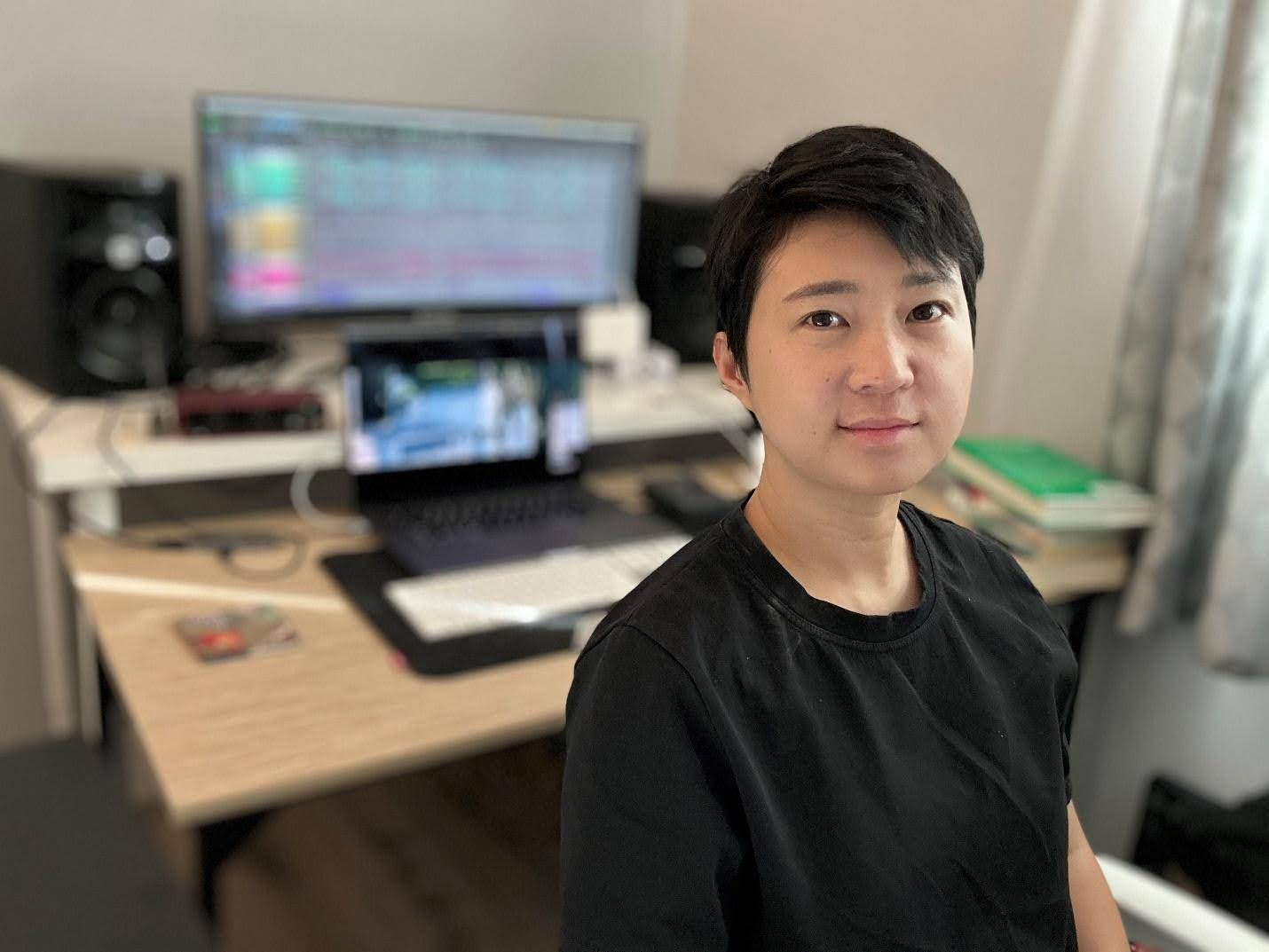
Sound, often the least visible element of a film, carries undeniable weight in shaping a story’s impact. Los Angeles-based sound editor and designer Wooin Jeon is a professional whose work is defined by a meticulous, story-driven approach to the craft. Her contributions have been instrumental in preparing films for major festivals, with her sound work featured in 24 projects—16 of which have earned official selection at respected events, including the Los Angeles Latino International Film Festival and Dances with Films New York.
Wooin’s reputation is built on her ability to deliver coherent, deeply engaging films across the diverse technical environments of the festival circuit. This consistent quality stems from her disciplined control over the sonic structure of each project.
A significant marker of her expertise is her work on the recent feature film By the Grape of God. For this project, Wooin single-handedly managed the entire post-production sound workflow: dialogue editing, sound design, effects, background ambience, music editing, and re-recording mixing, all while adapting to continuous picture updates. Successfully maintaining a unified and immersive sonic structure across an extended feature runtime—where even subtle inconsistencies can disrupt the audience experience—is a testament to her sustained focus and technical control.

For Wooin, sound’s primary function extends beyond simple support for the image; it is a critical force in guiding how a narrative is received and understood. Professional sound work ensures scenes connect smoothly and naturally, enveloping the viewer without drawing undue attention to the technical process itself.
“Have you ever turned on subtitles because the dialogue was hard to hear?” Wooin asks. “Or watched a film where the dialogue felt distant, but the action sound effects were uncomfortably loud? Those moments pull the audience out of the story.” She emphasizes that an unbalanced sound design is a distraction that compromises the narrative, regardless of the visual content’s strength.

Wooin approaches sound design as an exploration, likening it to the creative process of composing music, a skill rooted in her background as a musician. “I usually begin with a direction or a feeling I want to explore,” she notes, often finding that the outcome is an evolution of her initial concept. She views this creative journey as essential, allowing the soundscape to evolve organically with the story. While certain scenes demand adherence to established technical conventions, Wooin finds true creative fulfillment beyond those boundaries, believing that accidental moments of discovery push professional limits and define new creative spaces.
In post-production, Wooin treats dialogue, music, Foley, background ambience, and sound design as interconnected components of a single narrative system. Her work on films like the documentary Muljil and the short The Art of Pretending Everything Is Fine highlights this comprehensive approach. Clean dialogue is paramount for story clarity, while sound design provides the dynamic contrast necessary for tension and pacing shifts. Background ambience grounds the scene in its environment, and the final mix integrates these elements to ensure the story unfolds seamlessly.

Her professional philosophy is centered on restraint as much as on creation. “To create a sense of dynamic in a story, you can’t just keep adding sound endlessly,” she explains. “You need to subtract. Knowing what to leave out is what keeps a scene from feeling excessive.”
This philosophy also shapes her measure of success: “If sound doesn’t call attention to itself and instead blends seamlessly into the story, that’s when I consider it successful sound editing,” she concludes.
The value of Wooin’s detailed and precise technical work is perhaps best summarized by director Andrés Orellana, who described her contribution to the community-rooted project The Land as bringing “an extraordinary level of precision, creativity, and professionalism.” He credited her meticulous editing of dialogue, removal of problematic noise, and crafting of “nuanced soundscapes” with elevating the emotional tone of key scenes, which ultimately contributed to the film’s selection at major Latino film festivals.

For filmmakers navigating the demanding festival circuit, a collaborator with Wooin Jeon’s disciplined, story-driven understanding of sound is essential. Her professional focus ensures a film’s voice is not only heard but consistently strengthens its capacity to resonate with and compete before global audiences.
Written in partnership with Tom White
Cannabis
CBD Discounter Bets on Scale and Control to Challenge Traditional CBD Pricing

In an industry long defined by boutique branding and premium price tags, CBD Discounter is taking a decidedly different route. Rather than competing on image or hype, the company is wagering that scale, operational control, and disciplined production can do what flashy marketing cannot: permanently lower the cost of high-quality CBD.
At the core of CBD Discounter’s strategy is an insistence on owning the process instead of renting it. While many CBD brands rely on layered supply chains—cultivators, wholesalers, processors, distributors—CBD Discounter commissions its own production directly from EU-certified industrial hemp farms in Austria. This approach allows the company to bypass traditional supply-and-demand bottlenecks that often inflate prices long before products reach consumers.
Control, however, is not only about cost. By working closely with cultivation partners and maintaining a multi-person specialist team on-site, CBD Discounter oversees every critical stage, from seed selection to harvest. All hemp is organically grown under strict EU and pharmaceutical standards, and no product is released without passing extensive internal and independent laboratory testing. The result is a portfolio that meets premium benchmarks without carrying a premium price.
Scale plays an equally decisive role. By purchasing large quantities and planning production well in advance, CBD Discounter leverages economies of scale that smaller competitors simply cannot access. Bulk commissioning stabilizes pricing, shields customers from market volatility, and allows the company to offer consistent value to both casual buyers and high-volume customers. In a sector where price fluctuations are common, this predictability has become a key differentiator.
Freshness is another area where the company challenges convention. Instead of pre-packaging and warehousing large inventories, CBD Discounter packages CBD flowers only after an order is placed. This just-in-time model reduces storage costs while ensuring that customers receive products at peak potency and aroma—an advantage that typically costs more, not less.
The company’s product range reflects the same philosophy. CBD flowers remain the flagship, offered in multiple strains with distinct terpene profiles, such as fruity and citrus-forward varieties. Complementing these are CBD oils in full-spectrum and broad-spectrum formats, CBG flowers, and high-concentration extracts like hash and Moon & ICE Rocks. All products comply with EU regulations and contain less than 0.2% THC, reinforcing both legality and consumer trust.
Founded in 2019, CBD Discounter’s ambitions extend beyond pricing disruption. A portion of profits is allocated to charitable initiatives supporting animals and children in need, signaling a broader vision of accessibility—not only to CBD, but to social responsibility.
By betting on scale and control rather than exclusivity, CBD Discounter is quietly redefining what “affordable” can mean in the CBD market—and challenging competitors to rethink how much of their pricing is truly unavoidable.
Written in partnership with Tom White
-

 4 years ago
Maggie Jenson Is Empowering People Battling Addiction
-

 3 years ago
Latino Pulse in LA’s Hip-Hop Heart: The FACEvsIT Evolution
-

 Fashion2 years ago
From Brothers to Business: The Inspiring Journey of YoungLA
-

 Entertainment2 years ago
From ‘Cold’ Streetwear to Cosmic Dreams: The Ryley Gauthier Odyssey
-

 5 years ago
Demonstrating the power of social media- British bombshell, Bonnie Locket:
-

 Business1 year ago
Iron Wallet: The Ultimate Solution for Financial Independence
-

 Entertainment2 years ago
Check out Lil Wayne’s New Artist, Drizzy P
-

 Entertainment2 years ago
Yolo Aventuras: From Venezuela to Global Stardom – The Rise of Digital Content Creators