
Angelina Usanova Establishes U.S.-Based Foundation to Support Children and the Planet Worldwide
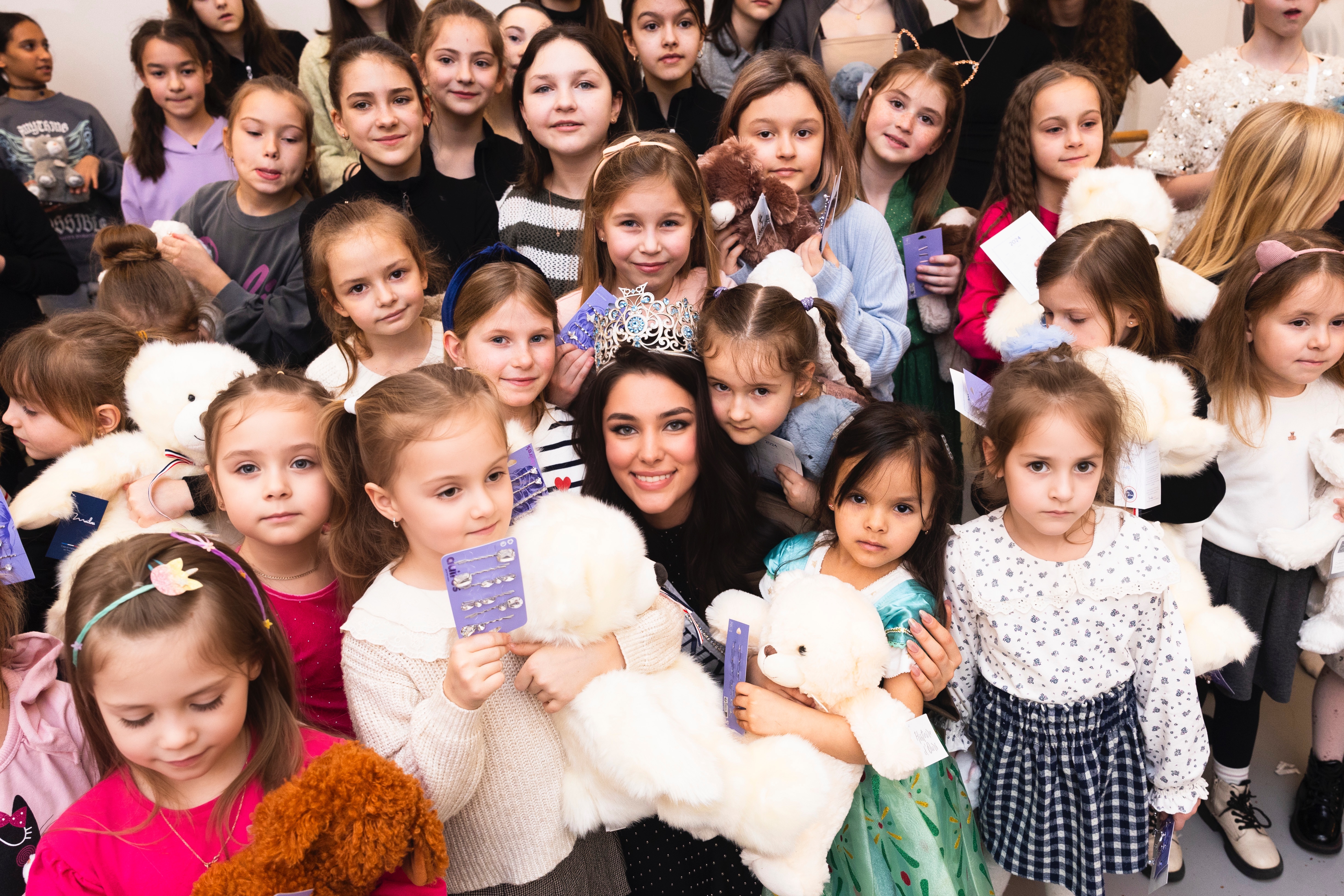
Angelina Usanova is not a typical beauty queen. Born in Ukraine and now based between California and Switzerland, she has emerged as a transformative force in international advocacy, blending art, humanitarianism, and global visibility into a powerful movement for compassion. After earning the title of Miss Universe Ukraine and placing as a silver finalist in the “Voice for Change” category at Miss Universe 2023, she went on to become Miss Eco International 2024. Yet her influence stretches far beyond the pageant stage.
With a background in classical music and a passion for storytelling, Usanova has channeled her talents into something deeper: a mission to restore dignity, inspire healing, and bring tangible support to those who need it most – especially children. Her work has taken her from hospitals in Honolulu to refugee centers in Paris and war-affected shelters in Ukraine. Wherever she goes, her message remains the same: healing begins with human connection.
The full-scale war in Ukraine became a turning point in her life. No longer content to simply speak about peace, Usanova chose to embody it through consistent and hands-on work. In Kyiv, she has maintained ongoing support for Special School No. 15, a school for children with special needs. On International Children’s Day, she personally delivered essential educational materials, toys, and gifts – reminding each child that they are seen and capable of greatness.
In June 2024, she donated pageant gowns to female students from Mariupol State University who had fled to Kyiv. These young women, displaced by war and stripped of normalcy, received not only clothing but also a symbolic restoration of pride and celebration on their graduation day. For Usanova, these moments—when joy and dignity are returned – are the reason she does this work.

Her commitment to humanitarian relief also includes vital support for medical institutions. In October 2024, she contributed life-saving supplies to the “City of Goodness” shelter in Chernivtsi, which serves over 400 patients, including women, children, andanimals affected by war. The partnership reflects her holistic view of care – one that encompasses both human and animal lives.
Usanova’s outreach has also extended to Ukrainians living in exile. In March 2024, she organized a celebration in Paris for a group of refugee girls passionate about dance. Many of them had fled their homes, carrying memories no child should bear. Through art, performance, and simple acts of joy, she offered them a space to reclaim their childhood. That same month, she hosted a charity concert at Vienna’s historic Palais Ferstel titled PEACE. We Can Overcome War. The evening raised funds for Ukrainian families and served as a reminder of how art can become both witness and remedy in times of crisis.
Artistic expression remains central to Usanova’s advocacy. A trained singer and songwriter, she has released original music including “Truth is Love” and “Earth,” songs that reflect her belief that personal healing is inseparable from global change. Her children’s books, like My Home, plant seeds of compassion, environmental awareness, and curiosity in young readers across cultures and languages.

The crown, for her, was never the destination but a tool – one she now wields to build something lasting. In 2025, she began laying the groundwork for a U.S.-based charitable foundation focused on children affected by war, climate disaster, and poverty. Though still in its implementation phase, the foundation will unite her work under a single mission: to protect childhood, nurture creativity, and create pathways to resilience through education, music, and care.
Usanova is part of a new generation of public figures redefining what global beauty means. Her advocacy is not limited by borders, nor is it confined to symbolic gestures. It is direct, sustained, and deeply personal. Her message to American audiences – and to the world – is simple: support matters. Whether through a donation, a repost, or a shared word of solidarity, every action creates a ripple.
“Ukrainians are not just fighting for their land,” she often says, “but for shared human values – freedom, dignity, and the right to live without fear.” Through her work, Usanova invites others to join not out of pity, but out of shared purpose. Not to save, but to stand together.
As she continues to expand her foundation, travel on humanitarian missions, and use music as a tool for healing, one thing becomes clear: Angelina Usanova is not a beauty queen with a cause. She is a cause, personified.

Fashion
Mayeli Alonso Is Redefining What It Means to Be a Latina Powerhouse

For years, Mayeli Alonso was known to millions as a reality television personality — a recognizable face in the Latino entertainment world whose personal life often became part of the public conversation. But today, that identity tells only a fraction of her story.
Behind the cameras, Alonso has been building something much bigger: a business empire rooted in wellness, confidence, fashion, and the growing economic power of Latina women in the United States.
Her evolution is not simply about a new chapter. It is about changing the narrative around who she is.
The transformation is visible. Alonso has undergone a significant physical transformation in recent months, drawing attention across social media and prompting conversations about her evolving lifestyle. But focusing solely on her weight would miss the more important story. Her most significant transformation has been professional — moving from being recognized primarily as a reality television personality to establishing herself as an entrepreneur with a clear vision for the modern Latina consumer.
At the center of that evolution is Evolution Fit, the activewear and lifestyle brand she created from her own experience.
“I got tired of not feeling good about myself, of not recognizing who I was,” Alonso says. “I realized that change had to start from within.”
That realization became the foundation for a business designed to speak directly to women who, like Alonso, are navigating careers, motherhood, personal reinvention, and the pressure to constantly become something more.

From Reality Television to Entrepreneurship
The transition from entertainment personality to entrepreneur is not always an easy one.
Public figures can become defined by the characters audiences associate with them. For Alonso, breaking beyond that perception required building something that could exist independently of television.
Evolution Fit became part of that answer.
Alonso identified what she saw as a gap in the fitness and activewear market: products and messaging that genuinely connected with Latina women and their realities. Rather than creating another fitness label focused exclusively on aesthetics or performance, she wanted Evolution Fit to represent something broader — a lifestyle built around confidence, discipline, wellness, and personal evolution.
“A lot of brands talk about fitness, but they don’t connect with the reality of a woman who works, who is a mother, who has so many responsibilities and still wants to feel good in her own skin,” she explains.
That distinction is important.
Alonso isn’t selling the idea that women need to become someone else. She is building a brand around the idea that women can evolve without abandoning who they are.
The Business of Becoming
The word “evolution” is particularly fitting for Alonso’s current chapter.
Her own journey has become inseparable from the philosophy behind her company. Fitness introduced discipline. Personal change introduced patience. Entrepreneurship demanded consistency.
The lessons overlap.
“Nothing changes overnight, and that applies to everything in life,” Alonso says. “I learned to stay consistent even when I don’t feel like it.”
That mindset has become central to the way she approaches both business and personal growth.
Her recent physical transformation has consequently become part of a much larger conversation about reinvention. Rather than treating transformation as an endpoint, Alonso presents it as an ongoing process — one that begins mentally before it becomes visible externally.
For an audience that has watched her evolution publicly, that message carries particular weight.
She is no longer simply documenting a transformation. She is building a business around the philosophy that transformation is possible.

A Brand Built for Latina Women
Evolution Fit also reflects something happening far beyond Alonso herself.
Latina women are becoming an increasingly visible force in American entrepreneurship, fashion, entertainment, and consumer culture. Yet Alonso believes representation needs to go beyond visibility.
It also means ownership.
Creating a company, developing products, building a community, and controlling the narrative around her own identity have allowed Alonso to participate in the Latino market from a different position: not simply as talent, but as a business owner.
“Being Latina means having character and history,” she says. “I feel a responsibility to represent that in a positive way and to show that we can build, create, and lead. That we are not limited.”
That philosophy extends to the women who follow her.
Through social media, Alonso has built a direct relationship with an audience that sees more than the polished side of entrepreneurship. She shares routines, personal experiences, challenges, and moments of imperfection — creating a form of connection that feels less like celebrity-to-fan communication and more like one woman speaking to another.
Her message is consistent: there is no universal timeline for transformation.
More Than Activewear
What Alonso is building with Evolution Fit may ultimately extend far beyond clothing.
She envisions the company evolving into a broader wellness ecosystem — one that addresses physical health while also incorporating mental and emotional well-being.
“I would love to continue growing the activewear side, launching new collections, and collaborating with Latino talent,” she says. “I also want to expand into a more holistic wellness concept, not just physical, but mental and emotional.”
That vision positions Evolution Fit as something larger than an apparel company.
It becomes a community.
It becomes a philosophy.
And, potentially, it becomes one of the ways Alonso’s influence continues to expand beyond entertainment.
The New Mayeli Alonso
There is a tendency to categorize women according to the chapter in which audiences first discovered them.
For Mayeli Alonso, that chapter was reality television.
But entrepreneurship has given her the opportunity to write a different one.
Today, the conversation around Alonso increasingly extends into business, wellness, fashion, personal development, and Latina representation. Her physical transformation may have sparked renewed public attention, but her business evolution is what gives the moment staying power.
She is demonstrating that reinvention does not require abandoning your past. It requires building something that reflects where you are going.
For Alonso, that next destination is clear: more brands, more collaborations, more community, and a larger platform for Latina women who want to build lives and businesses on their own terms.
Her advice to the next generation reflects the philosophy behind everything she is creating:
“Use your story as your strength. Everything you’ve been through has value.”
That may be the clearest description of Mayeli Alonso’s evolution.
The reality star is still part of her story.
But she is no longer the whole story.
Written in partnership with Tom White
Cinematography
From a Mumbai Movie Theater to Taylor Swift’s Set: Cinematographer Shubham Gosalia on the Path That Led Him to Launch His Own Production Company

Photo courtesy: Shubham Gosalia
For cinematographer Shubham Gosalia, the road that eventually led to sets with Taylor Swift and Patrick Mahomes started with a weekly ritual: Friday nights at the movies with his parents in Mumbai, in the same seats no matter what was playing. It wasn’t until high school, when a friend asked him to help shoot a short film about a man’s relationship with his cup of tea, that Gosalia began to suspect filmmaking might be more than a habit picked up in a theater seat.
That interest eventually took him thousands of miles from home. Choosing a film school meant a six-month search that moved from Mumbai to Pune, Dubai, London, Miami and Canada before landing him in Los Angeles at the New York Film Academy. It also led him, a few years later, to a chair in a Los Angeles studio that happened to be occupied by Taylor Swift.
Gosalia was accepted into Gold Rising, the Academy of Motion Picture Arts and Sciences’ summer fellowship for early career filmmakers, on the strength of a submission he describes as unpolished but sincere, a collage of his work rather than a traditional reel. He recalls a program coordinator later telling him he was chosen because he was eager to learn, even without a finished showreel. The eight-week fellowship put him in rooms with producers from Disney and Marvel, took him to a private screening of “Top Gun: Maverick” at the IMAX headquarters, and got him a seat in the audience at the 2023 Oscars.
At the end of the program, the Academy paired him with a mentor, Jess Hall, the ASC and BSC-recognized cinematographer behind Marvel’s “The Fantastic Four: First Steps.” Gosalia’s first assignment shadowing Hall arrived with a stack of contracts so heavily redacted that the artist’s name had been scrubbed throughout, save for one unremoved reference to Taylor Swift Productions. Days later, he was on set in Los Angeles, camera assisting a music video shoot with Swift over four days. He recalls introducing himself to her without meaning to, by accidentally bumping her chair before the two had been formally introduced, only realizing who she was afterward. The second production Hall brought him onto was a Super Bowl campaign for Subway featuring Patrick Mahomes and Travis Kelce.
Those two projects, Gosalia says, reshaped how he thought about a career that, until then, had mostly meant student productions in Los Angeles and India. “It is not even in my dreams, because I don’t know what to dream at that level,” he says of the run of work.
Now splitting his time between Los Angeles and Mumbai, Gosalia has started his own production company, Sure Shot, built around a concern he says is reshaping the industry: the instability of a career built entirely on freelance camera work, as AI tools and tighter budgets change how and where productions get made. Sure Shot is built around story-led commercial work, music videos and podcasts rather than straightforward product shoots. Its first campaign, in production this month, is for a Mumbai-based vegan leather footwear brand that has built a following across the Middle East and London and is now expanding into the United States and Canada.
Gosalia has also spent recent months shooting for the vertical, mobile-first format that has taken over platforms like TikTok, a discipline he describes as fundamentally different from traditional cinematography. Vertical productions move fast, often covering multiple pages of script in a single day across two or three cameras, prioritizing coverage and pace over the composition choices that define feature and music video work.
Gosalia’s most recent on-screen credit remains Diljit Dosanjh’s music video “Saanvle,” shot across a single day on a Beverly Hills property, where he served as cinematographer.
Written in partnership with Tom White
Music
Colorado Band Voltaire’s Ghost Shows Softer Side with Brooding Goth Dream, “‘Till The Break of Day”
By Ryan Bazinet
Is it better to have loved and lost, or better to never have loved at all? That’s the question asked by “‘Till The Break of Day,” the new single by Colorado band Voltaire’s Ghost.
The track opens with distorted guitar and piano arpeggios circling two chords in dreamy perpetual motion. Upbeat drums drive the song along, like the forces of life that pull apart the two lovers at the center of the story.
It’s a bittersweet tale. Two lovers going in separate directions, like the wailing guitar solos which pan from left to right. Ruby Juhl’s echo-soaked vocals are alternately delicate and angry as she sings,
The only thing worse than not having met you
Was having met you, baby
The only thing worse than not having loved you
Was having loved you, baby
In the end, all she can do is sigh, over and over, “Hold me ‘till the break of day.”
The love story behind “‘Till The Break of Day” shows a softer side for the band. Previous songs, like “Death Becomes You” and “Spirit Animal,” help explain why their music has been described with terms like Dark Pop and Cosmic Goth. But fans will note that the brooding remains.
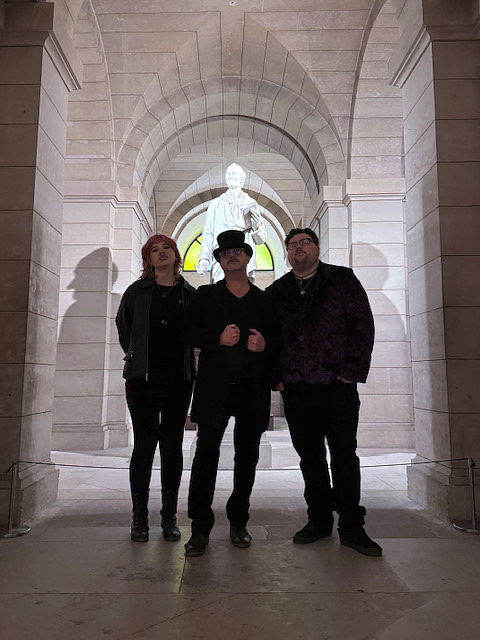
Voltaire’s Ghost was created in Grand Junction, Colorado by songwriter and guitarist Magnus, who released a series of singles in the summer of 2023. Those songs caught the attention of Nashville producer Dean Miller (son of Roger Miller, “King of the Road”), who reached out with an offer to record in the “Music City.”
Realizing he needed a band, Magnus soon connected with drummer Joshua Eggstaff, who was teaching drums at a local music shop and brought a 90s alternative-inspired edge to the band’s rhythms. Next came Ruby Juhl, a singer with a background in musical theater (and a student at the local university).
Magnus asked Ruby and Josh if they wanted to fly to Nashville to make a record. The result was the five-song EP, NEMESIS, released in 2024.
Now, Voltaire’s Ghost is ready to release a new full-length record, Black Petals Fallen. Produced by Magnus, Black Petals Fallen was recorded locally in Colorado. The band then sent the tracks off to Grammy-nominated engineer Joe Ayoub of LA’s Cherokee Studios for mixing. Drew Levine mastered the album.
Black Petals Fallen is available now on vinyl via the band’s official website. Four singles including “‘Till The Break of Day” are available on streaming platforms. The full album will be released for streaming soon.
In the arc of the band, “‘Till The Break of Day” is a full circle moment. The song was originally released as a guitar-and-voice demo back in 2023, before Magnus had assembled the full band. With the latest single, Voltaire’s Ghost has brought the vision to fruition.
Magnus says, “With the new recording, the song just came to life. The demo I released was a sketch. The new version is like a beautiful painting with really vibrant and emotional colors.”
Upcoming visuals include a music video for “‘Till The Break of Day” directed by Luke Ostermiller (who recently directed the super spooky video for “Black Petals Fallen.”) The band is also planning a short film for upcoming single, “The Ballad of Colleen Gray.”
“‘Till The Break of Day” is out now with promotional support from Starlight PR. Follow Voltaire’s Ghost at the links below.
Written in partnership with Tom White
-

 4 years ago
Maggie Jenson Is Empowering People Battling Addiction
-

 3 years ago
Latino Pulse in LA’s Hip-Hop Heart: The FACEvsIT Evolution
-

 Crypto9 months ago
The Real Story Behind teemchase’s Real Estate, Music, and Crypto Empire
-

 Fashion3 years ago
From Brothers to Business: The Inspiring Journey of YoungLA
-

 Entertainment3 years ago
From ‘Cold’ Streetwear to Cosmic Dreams: The Ryley Gauthier Odyssey
-

 Entertainment3 years ago
Yolo Aventuras: From Venezuela to Global Stardom – The Rise of Digital Content Creators
-

 5 years ago
Demonstrating the power of social media- British bombshell, Bonnie Locket:
-

 Business2 years ago
Iron Wallet: The Ultimate Solution for Financial Independence