
AI Influencers: Reshaping the Talent Industry’s Future

Have you noticed the Instagram models who look almost too perfect to be real? These digital personas are not just a passing trend… they’re revolutionizing social media and transforming the talent industry from the ground up. At the forefront of this digital transformation are innovative leaders like Gidon Rotteveel and Tal Lavi from Delka Talents, who are actively exploring and pioneering the intersection of artificial intelligence and influencer marketing.
The Digital Human Phenomenon
AI influencers represent a groundbreaking convergence of technology, marketing, and creative expression. Unlike traditional digital avatars, these are not simple cartoon characters or basic animations. They are hyper-realistic, meticulously designed digital entities that can pass for humans at first glance.
AI Influencers?
AI influencers are sophisticated computer-generated characters meticulously crafted to look and behave like real people. Pioneers like Lil Miquela, with her millions of followers, Imma with her distinctive pink hair, and Shudu Gram, who is widely recognized as the world’s first digital supermodel. All of them have become trailblazers in this emerging field.
These digital stars are not just static images but dynamic entities created using advanced computer graphics and cutting-edge artificial intelligence. They post on platforms like Instagram and TikTok, mimicking human influencers by sharing curated photos, personal stories, and even promoting products with unprecedented precision.
The Psychological Appeal
The allure of AI influencers is deeply rooted in psychological fascination. Younger generations, particularly millennials and Gen Z, are drawn to these digital personalities for several compelling reasons:
- Perfect Aesthetic Control: Unlike human influencers, AI characters offer a flawless, curated image that never experiences bad hair days or unflattering angles.
- Narrative Consistency: These digital personas can maintain a perfectly crafted storyline without the unpredictability of human behavior.
- Aspirational Fantasy: They represent an idealized version of human interaction, free from real-world imperfections.
Technological Evolution
The current boom in AI influencers is a direct result of rapid technological advancements. Just a few years ago, creating a realistic digital human required movie-studio level resources and expertise. Today, even smaller companies can generate impressive digital characters with relatively modest investments.
Machine learning algorithms, photorealistic rendering techniques, and sophisticated motion capture technologies have dramatically reduced the barriers to entry. What once required millions in production costs can now be achieved with advanced software and creative talent.
Pioneering the AI Influencer Landscape
Leading the charge in this innovative space are Gidon Rotteveel and Tal Lavi, co-founders of Delka Talents. With their deep understanding of digital marketing and keen insight into emerging technologies, they recognize AI influencers not as a passing trend, but as a fundamental shift in talent representation.
Gidon and Tal are positioning Delka Talents as thought leaders, actively exploring how AI can complement traditional influencer talent management. They understand that the future of influencer marketing isn’t about replacing human talent, but creating symbiotic relationships between digital and human personalities.
Industry Implications
For talent agencies, virtual characters present unprecedented opportunities:
- Complete ownership of digital influencer assets
- Characters that never age, fall ill, or require retirement
- Simultaneous global presence and representation
- New revenue streams through merchandise, licensing, and strategic partnerships
However, this digital revolution also introduces complex challenges for human influencers, who now compete with meticulously designed digital alternatives.
Ethical Considerations
As AI influencers become more popular, we’re facing some tricky ethical questions that go beyond just cool technology. These digital characters aren’t just fancy graphics… they’re raising real concerns about identity, representation, and how we connect online.
The world of AI influencers isn’t black and white. It’s a complex landscape that requires careful thinking about how we create and use these digital personalities. Some key ethical questions include:
- Should companies have to clearly label when an influencer isn’t real?
- Who owns the rights to an AI influencer’s image and personality?
- What happens when people start forming emotional connections with digital characters?
- How might these perfect digital bodies impact real people’s self-image?
Future Projections
AI influencers aren’t just a passing trend. They’re the beginning of a major shift in how we experience digital content. As technology gets smarter, these digital personalities are about to become much more than just pretty pictures on a screen.
The next wave of AI influencers could bring some game-changing developments:
- Real-time conversations powered by advanced AI
- Appearing in movies, TV shows, and interactive experiences
- Super-specialized digital personalities for niche audiences
- Seamless integration with virtual and augmented reality platforms
Strategic Recommendations
Jumping into the world of AI influencers isn’t as simple as creating a cool digital character. Brands need a thoughtful approach that balances cutting-edge technology with genuine human connection.
For companies looking to work with AI influencers:
- Start by using them alongside human influencers, not as a complete replacement
- Be completely transparent about which influencers are digital
- Focus on creating compelling stories, not just perfectly designed characters
- Stay open to audience feedback and be ready to adapt
- Develop clear guidelines about how these digital personalities will represent your brand
Conclusion on AI Influencers
AI influencers represent more than a technological novelty… they’re a fundamental reimagining of digital engagement. While they won’t entirely replace human talent, they’re expanding the boundaries of creativity and storytelling.
As technology continues advancing, the distinction between real and artificial will become increasingly nuanced. What remains constant is the fundamental human desire for authentic, meaningful connections. Whether facilitated by humans or their digital counterparts.
The digital revolution is here, and visionaries like Gidon Rotteveel and Tal Lavi are leading the way, transforming how we perceive talent, marketing, and human interaction in the digital age.

Wellness
Personal Fitness Coaching Isn’t Just for Celebrities, Says QBod Founder

With Thanksgiving gatherings, holiday parties and year-end deadlines approaching, founder Michele Balco wants fitness guidance to fit the life you actually lead
In Los Angeles, personal attention has long been part of the celebrity wellness equation. Training sessions fit around filming schedules, nutrition plans accommodate travel, and someone is available to help work through the details. For socialites and stars heading into a season of holiday parties and public appearances, having that kind of support becomes especially important.
Fitness and wellness coaching app QBod brings personalized guidance for busy schedules, from influencers juggling appearances and travel to parents balancing work, school pickups and holiday plans. Its AI coach, Coach Q, considers nutrition, training, sleep, recovery and personal goals together. Users can discuss how to approach a workout between events or adjust their routine while visiting family.
Founder Michele Balco developed QBod after encountering those competing demands herself. With Thanksgiving approaching and December invitations beginning to arrive, her approach speaks to a familiar wish: having help making a healthy routine work around your life.
The Founder Behind the Coach in Your Pocket
Before founding QBod, Balco spent more than 20 years at a Fortune 100 financial services company, leading strategic portfolios and large-scale technology projects. The idea grew out of her own efforts to balance that career with family life and fitness. She was using separate apps to manage different parts of her health, then trying to make sense of the information herself.
“My food app didn’t know I had slept four hours, and my workout app couldn’t account for it,” she says.
Balco’s experience reflects a broader frustration with managing multiple health apps. A 2026 survey commissioned by MD Live by Evernorth found that respondents used an average of six health-related apps. More than half said they had too many to manage, and nearly half reported weekly burnout from logging, alerts and updates.
Balco built QBod to bring that information together. Coach Q draws on users’ workout histories, food logs and sleep data to offer guidance based on their goals and daily circumstances.

Personal Attention Beyond the Celebrity Circuit
The appetite for a more individual approach to wellness reaches well beyond Hollywood. McKinsey’s 2025 Future of Wellness research found that 84% of U.S. consumers considered wellness a top or important priority. It also described younger consumers’ growing emphasis on daily, personalized practices across fitness, nutrition, sleep and mindfulness.
QBod brings that focus to decisions that might otherwise leave someone searching through general advice. Users can explain that they have limited equipment, a shorter window to train or a disrupted schedule, then discuss an approach that takes those details into account.
For someone leaving a studio lot and someone finishing a shift before picking up the kids, the question may be much the same: what can I realistically do today to keep moving toward my goal?
A Routine That Travels With You
The Wednesday before Thanksgiving offers a familiar test. Work runs late, a suitcase needs packing, and the hour set aside for the gym has become 30 minutes before leaving for LAX.
A user can ask Coach Q for a workout that fits that window and their training goals. Once away, they can explain how their meals, schedule or access to a gym have changed and discuss adjustments.
That conversation can continue through Hanukkah, Christmas and the year-end party circuit. A hotel gym might replace a usual training space, while a late evening could prompt a discussion about recovery before the next session.
Having somewhere to work through those changes can help make a busy season feel more manageable.

Tracking Habits, Not Just Results
QBod’s Q-Score tracks daily follow-through across nutrition, fitness and recovery. It reflects actions taken toward a goal, rather than serving as a health grade or measuring results.
“You can’t make the scale move on a Tuesday, but you can hit your protein target, get your workout in and protect your sleep,” Balco says.
During the holidays, that perspective gives a shorter workout or attention to recovery a place in the bigger picture. It also reflects the practical concern that led Balco to build QBod: people want guidance that considers their lives, including the weeks when very little goes according to plan.
Written in partnership with Tom White
Film
Peter Zerzan Takes The Tourist to Its Next Audience as a Bigger Story Takes Shape
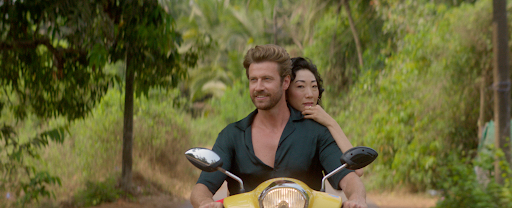
Peter Zerzan’s short film The Tourist, a Goa-set story shaped by atmosphere, character, and the emotional possibilities of travel, is preparing to reach a wider audience following its festival run. The upcoming public release marks a new chapter for the filmmaker, whose ambitions are already moving toward a considerably larger production.
The timing feels fitting. Cinema has always been a conversation between what a director has made and what he still wants to make. Zerzan’s work reflects that ongoing dialogue, with each project offering a new opportunity to explore the relationship between place, narrative, and the audience’s emotional experience.
The Tourist emerged as an international production shaped by Goa’s distinctive visual and cultural character. The film’s setting provides more than a backdrop. Its atmosphere informs the storytelling, allowing the landscape to influence the emotional rhythm of the narrative.
The score, composed by Ayaka Nakamoto, was developed with that sensibility at its core. Drawing inspiration from Indian and Iberian musical traditions, Nakamoto incorporated sitar, Portuguese guitar, strings, and piano to create a soundscape responsive to the film’s location.
“I wanted to create a nostalgic atmosphere in the romantic moments, while using modern harmonies to give the score a contemporary feel,” Nakamoto explains. “I wanted the score to reflect how Akiko’s experiences in Goa gradually changed her inner state. I shaped these shifts through instrumentation, meter, and string articulations, allowing the music to evolve naturally with her experience.”
Her approach follows Akiko’s emotional evolution throughout the film, with instrumentation, meter, and string articulation reflecting subtle shifts in her experience. The music gives the narrative room to breathe, allowing the visual language and performances to carry their own weight. She adds, “Rather than over-explaining every moment, I wanted to leave room for the audience to absorb the imagery and performances.”
Nakamoto’s work with a live string quartet added another layer of intimacy to the production. She recalls the warmth and expressive detail that emerged through live performance, particularly during the waltz and melancholic passages.
“Hearing the players respond to each other gave the music a more human and organic quality,” she reflects. “Small details in the performance made a big difference. Subtle changes in phrasing, timing, and dynamics gave the music a sense of life. I’m very grateful to Peter for giving me the opportunity to record the score with a live string quartet for the film.”
Such details reveal the care invested in The Tourist, a film whose creative identity extends across its visual storytelling and musical composition. Zerzan’s decision to bring the project to a general audience now gives viewers the chance to experience those choices outside the festival environment.
The release is expected toward the beginning of November, subject to final post-production preparations. Zerzan is working with his post-production team to ensure the best quality before making it available through a digital platform such as Vimeo or YouTube.
The film’s public arrival also serves as an introduction to the filmmaker’s next ambition.
Zerzan is currently developing a new thriller, a project that represents his most expansive filmmaking undertaking to date. The screenplay has been completed, and investment conversations have already begun.
Details surrounding the narrative remain closely held, though the production’s direction is becoming clearer. Zerzan is preparing to return to the United States for filming, with soundstage access in San Francisco being explored alongside producer Jeff Allard.
The move brings the filmmaker back to American soil for a project he envisions on a larger scale. His international experience has broadened his understanding of production, and the forthcoming thriller offers an opportunity to apply those lessons to a more ambitious cinematic framework.
Zerzan’s current trajectory reflects the natural progression of an independent filmmaker building toward increasingly substantial work. The Tourist provides a complete creative statement, while the thriller represents the next challenge, one that demands greater resources and a committed network of collaborators.
His interest in connecting with potential investors and production partners forms part of that next phase. The public release of The Tourist offers an accessible introduction to his work and a glimpse into the filmmaking sensibility guiding his future projects.
Ultimately, Peter Zerzan finds his purpose in the gap between what is finished and what is yet to come. As one project meets the world and another waits behind the curtain, he thrives in the transition, using the quiet space of imagination to build what’s next.
Written in partnership with Tom White
Music
Music Producer David Dyson: Behind the Beat
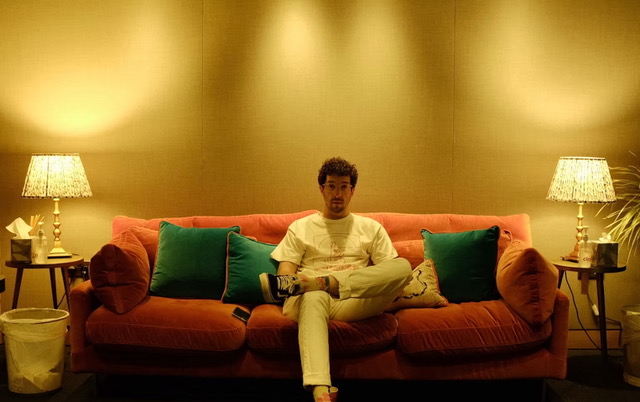
David Dyson grew up in the countryside of Leicestershire, England, where a lack of nearby neighbors meant he could practice drums for hours without complaint. His introduction to the instrument came remarkably early. At three years old, he accompanied his grandparents to a pub, where a live band was playing. The drummer noticed Dyson tapping on glasses with cocktail sticks and gave him his first proper pair of drumsticks. The encounter ignited a passion that would take him from university and conservatoire training to international tours, prestigious recording studios, and sessions with some of the most prominent artists in contemporary music. Yet even as his reputation as a drummer grew, Dyson’s ambitions extended beyond the instrument. He was always a producer at heart.
His professional drumming career has been defined by both technical ability and an instinct for choosing the right musical contribution. Dyson played drums on Jorja Smith’s “The One,” associated with her critically acclaimed debut album Lost & Found, which received a nomination for British Album of the Year at the 2019 Brit Awards. His work with Tems includes drumming on “Unfortunate” and arranging the strings for “You In My Face,” both featured on her debut album, Born in the Wild. Released in 2024, the album earned a Grammy nomination for Best Global Music Album and appeared on numerous year-end lists, including Billboard’s and Rolling Stone’s. Dyson also co-produced “Hate” on Berwyn’s Who Am I, an album that won Best Album at the 2025 Ivor Novello Awards and was nominated for the Mercury Prize.
His live credits are equally substantial. David Dyson has performed with artists including Camila Cabello, Chappell Roan, Raye, Yungblud, and Louis Tomlinson, while his musical experiences have brought him into contact with influential producers such as Trevor Horn and Tony Visconti. Something of a session regular at Abbey Road Studios, Dyson has also performed with Gregory Porter and the National Youth Jazz Orchestra of Great Britain inside Buckingham Palace. His first show with Louis Tomlinson, at Manchester Arena in 2017, remains a vivid memory, with the roar of the audience overwhelming his in-ear monitors.
Dyson has never perceived the drummer’s job as simply demonstrating skill. He approaches the instrument as a means of shaping a song’s emotional trajectory, knowing when to intensify a groove and when to leave space. “The drums are the foundation and heartbeat of any live show, and I feel the same way about production,” he notes. The same principle applies in the studio, where a carefully chosen snare sound, a change in rhythmic emphasis, or the decision not to use drums at all can be more significant than a technically dazzling performance.
This manner of thinking developed naturally from his musical education. Initially dreaming of playing in bands like the Red Hot Chili Peppers, Dyson became increasingly fascinated by jazz and later immersed himself in classical and jazz studies at university and conservatoire. He went on to work across musical theatre, pop, jazz, orchestral, and choral music, developing a broad musical vocabulary that informs his work today. His influences include Phil Collins, whose transition from Genesis drummer to frontman and solo artist represents a seamless integration of performance, songwriting, and production; Stewart Copeland, whose rhythmic imagination helped give the Police their distinctive energy and who later became a much in-demand composer and orchestrator; and Questlove, whose work with The Roots demonstrates how a drummer can shape the entire identity of a musical project.
David Dyson’s own movement into production accelerated during lockdown, when he had time to concentrate on developing his craft. But the desire to be involved in music from its earliest stages had always been there. He thinks first about the structure, melody, and emotional character of a song, then turns to the details that bring it into focus. David’s understanding of the relationship between drums and bass helps him establish the pocket, while his familiarity with different musical traditions allows him to recognize when complexity is useful and when simplicity is more powerful. The distinction between playing drums and producing is therefore less a question of changing roles than of expanding the scope of his musical decisions. Dyson is not a drummer who happens to produce; he is a producer whose understanding of rhythm gives him deep insight into the music.

Different Artists, Different Musical Worlds
The range of David Dyson’s production work is reflected in the contrasting musical identities of the artists with whom he collaborates. His work with Oliver Malcolm, Braye, 80purppp, and Skiifall spans alternative pop, West African musical traditions, experimental R&B, and Caribbean-influenced sounds. Rather than applying a fixed production formula, Dyson adapts to the particular character of each project, helping develop the music without losing what makes the artist distinctive.
With Oliver Malcolm, that process has extended across both touring and recording. Dyson co-wrote and co-produced several tracks on Mr Malcolm, including “Baby Don’t Go,” “Ginseng,” “Cause of You,” “Station Hill,” “Ghosts,” and “Still Bleed.” Their process is rooted in improvisation, allowing ideas to emerge through playing rather than following a rigid arrangement. The aim is to capture the energy of a performance while leaving room for experimentation.
David’s work with Braye draws on a different musical vocabulary. Dyson has produced two of the artist’s EPs and is now completing an upcoming album developed across Lagos and London. The process here embraces technology to allow for the transfer of ideas across the space of international borders when artist and producer cannot always physically be in the same location. Moving between the two cities has allowed the music to evolve through successive stages of writing, performance and refinement.
On 80purppp’s forthcoming ten-track album, Dyson has taken on the executive producer role to help establish the record’s overall musical direction. Vacillating between London and Toronto’s Sony Music Canada studio, this collaboration has yielded a tone that moves between alternative R&B, darker introspective textures, and the rhythmic pull of Afrobeats with a looser groove-driven sensibility. The challenge is to bring these influences into a coherent album while preserving the contrasts that give the music its character.
Multilingual artist Skiifall blends Afro-influenced music and dub with alternative R&B, Dancehall, and Zouk. Dyson has been producing sessions in Toronto for this artist with an approach that is focused on unique identity in a cohesive presentation. Brit Award-Winner Daniel Bedingfield professes the benefits of any artist or producer working with David Dyson declaring, “He won’t let bad music happen, I want him and his ears in every session I do.” Bedingfield and Dyson are currently working on an album together featuring some of the biggest names in garage, including Bigfoot, Craig David, Wookie, Sticky, and more.
Across these projects, Dyson’s contribution is not to impose a signature sound regardless of the artist, but instead to recognize what each artist brings into the room and help it become more fully realized. His experience as a drummer remains central to that process, but the larger perspective is unmistakably that of a producer.
From Artist Production to the Language of Film
Dyson is now extending that perspective into film composition, including work on an upcoming major blockbuster featuring an A-list cast. The move represents a new creative direction but the underlying principles are familiar. Whether working with a singer, a band, or a director, David begins by considering what the music needs to accomplish and how it can serve a larger emotional purpose.
In artist production, the challenge is to help musicians develop an identity and create recordings that stand on their own. Film introduces a different relationship between sound and storytelling. The music must complement the visuals, reinforce the director’s intentions, and deepen the audience’s connection to what is happening on screen. A score can establish atmosphere, heighten tension, or give a scene emotional weight, but it can also become intrusive if it attempts to communicate what the images already express.
Knowing when not to play is as important as knowing what to play for Dyson. As a drummer, he practiced restraint in leaving space for a vocal, holding back a fill, or allowing a groove to breathe. There is a natural counterpart in film composition to this concept. Music must sometimes lead the audience into a moment, while at other times it should recede and allow the visuals to carry the story. The discipline is similar, even if the creative brief changes. An elaborate arrangement is not automatically better than a simple one, just as a technically demanding drum part is not necessarily the right part for a song.
David Dyson’s career has already taken him from the touring stage to celebrated studios and collaborations with award-winning artists. Production allows him to bring those experiences together, influencing not just how a performance sounds but how an entire piece of music develops. Film offers a further opportunity to apply that instinct to storytelling on a different scale. The constant, across every setting, is his belief that the music should never exist merely to demonstrate what a musician can do. It should make the work itself more compelling.
Written in partnership with Tom White
-

 4 years ago
Maggie Jenson Is Empowering People Battling Addiction
-

 Crypto10 months ago
The Real Story Behind teemchase’s Real Estate, Music, and Crypto Empire
-

 3 years ago
Latino Pulse in LA’s Hip-Hop Heart: The FACEvsIT Evolution
-

 Fashion3 years ago
From Brothers to Business: The Inspiring Journey of YoungLA
-

 Entertainment3 years ago
From ‘Cold’ Streetwear to Cosmic Dreams: The Ryley Gauthier Odyssey
-

 Entertainment3 years ago
Yolo Aventuras: From Venezuela to Global Stardom – The Rise of Digital Content Creators
-

 5 years ago
Demonstrating the power of social media- British bombshell, Bonnie Locket:
-

 Business2 years ago
Iron Wallet: The Ultimate Solution for Financial Independence