
Arts
Art as Investment: Why Financial Titans Nationwide Are Drawn to Artwork
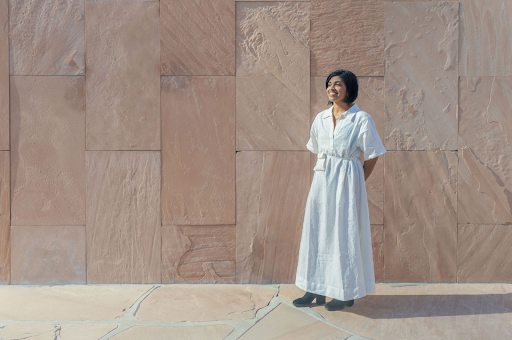
Even before leaving the finance world to pursue her creative passions for a career in art, Mini Mukherjee always managed to bridge the gap between the two. While she once roamed the corporate corridors working in finance and tech, one decision involving a metalsmith studio changed the trajectory of her life.
Now, Mukherjee is building her career in the art world as big players in the financial world increasingly consider art a worthy investment for their portfolios. For Mukherjee, it is a blend of two worlds she knows well — and is setting her apart among others in the competitive art space.
Art as investment
The art market has seen a resurgence in recent years. As private equity firms, hedge funds, and wealthy private citizens seek alternative investments for their portfolios, they have been capitalizing on art as an asset. Art offers a blend of personal interest and financial benefit that few other assets can claim. While collections of cars and vacation homes may be standard among the well-heeled, art collections suggest a certain level of sophistication that many may be seeking. The right art validates their taste — and their level of wealth.
The art market is strong as well, making art a sound investment. From 2022 to 2023, the global art market grew from $441 billion to $579 billion, with people seeking unique yet timeless pieces to add to their collections and buffer their investment portfolios. Art investments can lead to incredible returns, depending on the pieces chosen, and allow wealthy art enthusiasts to support local artists or artists whose vision they believe in.
From finance to fire
Mukherjee looks back on her years in the finance sector with acknowledgment that her inner artist was always trying to break through. “On the outside, everything looked great,” she explains. But inside, she was constantly seeking an outlet for her artistic vision.
Eventually, this drive led her to take a metalworking class, and she never looked back. “I used to tell stories with numbers, but now I tell stories with art,” she says. “On paper, it may seem that the worlds of Finance and Fine Art are not connected, but I see so many connections and curiosities between them.”
Today, Mukherjee is thankful for those years in finance because they helped her stay grounded, patient, and collaborative as she took her business background into the Arts. She is the founder of Mini But Mighty Art (MBMA) and, through her studio, has produced award-winning pieces for private and public collections across the United States and globally.
Mukherjee’s work, a direct reflection of her values of joy, resilience, and the pull toward community togetherness, has resonated with collectors and galleries. The various pieces in her Joy Buddies collection have been particularly popular, speaking to ideas of challenging ingrained institutions, ideas of strength and grace, and bringing more wonder and play to the art world. The pieces represent values that resonate with many of us — regardless of income or our place in society.
Mukherjee’s approach uses a unique fire-painting technique that has made her various pieces highly sought after. Mukherjee is even exploring other mediums, such as animation, immersive web3, and even live botanicals. Through each piece, she stays true to her values and her vision as an artist. “I want to help people focus on joy and helping one another,” she explains.
It’s an approach that has served her well as she enters an art world where savvy investors are always on the lookout for the next big thing in investing.
A foot in both worlds
Even though Mukherjee has completely dedicated herself to the artistic realm, she still has an aptitude for finance. Mukherjee knows that when it comes to investing, patience and long-term planning often pay off handsomely.
Mukherjee also describes herself as equal parts artist and entrepreneur, enjoying the relationship between the creative aspects and the business aspects of her art. “I worked with some amazing people during my time in Finance and Tech, and I saw how a lot of their professional success and joy came from being patient and trusting their intuition, so I began to trust my gut early on,” she says.
Through it all, Mukherjee is focused on continuing to create meaningful art pieces, whether they are for public consumption or private collections. The art market continues to evolve, and year by year, more investors will consider art for their diverse portfolios. Mini Mukherjee knows what it’s like to live at the intersection of finance and creative pursuits. Through her unique position as a former financial professional, Mukherjee has insight into art as an asset class — an insight that could prove valuable.
Those with a high net worth focused on collecting art favor new and emerging artists and seek work that tells a story or says something about the state of the world and its people. Artists with distinctive collections like Mukherjee’s, which speak to the human condition in a way that has seldom been seen, are likely to be considered sound investments for years to come.

Arts
Inside Industry Showcases for Colleges and Schools at Studio For Performing Arts LA

By Matthew Kayser
Los Angeles — November 12, 2024
For educators preparing actors to enter an increasingly competitive industry, the challenge is no longer talent alone—it’s relevance. Training must reflect how the industry actually functions today. That is where Studio For Performing Arts LA has become a valued resource for colleges, schools, and private studios looking to extend their programs beyond the classroom.
Rather than operating as a one-off showcase provider, Studio For Performing Arts LA works as a partner to educators, designing industry showcases and professional experiences that build directly on existing training. Programs are developed in collaboration with faculty and studio owners and may include casting director and industry masterclasses, agent and manager showcases, and professional demo scene production for film and television—giving students both context and materials they can use immediately for submissions and bookings.
A defining feature of the model is flexibility. Programs can be delivered in Los Angeles, virtually, or on location at a school or studio, allowing institutions to integrate industry exposure into their calendar without restructuring curriculum. For many educators, this adaptability makes the programs feel less like an add-on and more like a natural extension of their training track.
The studio was founded by actor, director, and educator Walid Chaya, whose two decades of experience across Los Angeles, New York, and Washington, D.C. shaped a clear focus: helping students move from technique to professional readiness without relying on outdated models or unrealistic expectations. That education-first perspective is reinforced through the studio’s nonprofit arm, the Studio for Performing Arts Foundation, which supports access and scholarship initiatives aligned with institutional values.
Students participating in these programs gain clarity around how casting directors and representatives evaluate talent, what professional materials are expected, and how to navigate next steps after graduation. Many also experience meaningful industry momentum, including meetings with agents and managers, casting callbacks, and professional follow-up—outcomes that strengthen, rather than distract from, academic training.
For college professors, these programs function as industry showcases that also serve as professional preparation or capstone-style experiences. For private studios and schools, they offer a credible pathway for advanced students ready to engage with the professional market. With logistics and coordination handled by Studio For Performing Arts LA, educators are able to offer current, industry-relevant experiences without additional administrative burden.
In a field often driven by hype, Studio For Performing Arts LA has earned trust by staying grounded—treating education and professional access as interconnected goals. That balance continues to attract repeat partnerships from institutions seeking a more realistic, contemporary bridge between training and working in the industry.
⸻
Studio For Performing Arts LA partners with colleges, schools, and private studios to provide customized acting showcases and professional preparation experiences connecting students with the entertainment industry.
Website: studioforperformingarts.com
Instagram: @studioforperformingarts
Written in partnership with Tom White
-

 4 years ago
Maggie Jenson Is Empowering People Battling Addiction
-

 3 years ago
Latino Pulse in LA’s Hip-Hop Heart: The FACEvsIT Evolution
-

 Fashion2 years ago
From Brothers to Business: The Inspiring Journey of YoungLA
-

 Entertainment2 years ago
From ‘Cold’ Streetwear to Cosmic Dreams: The Ryley Gauthier Odyssey
-

 5 years ago
Demonstrating the power of social media- British bombshell, Bonnie Locket:
-

 Business1 year ago
Iron Wallet: The Ultimate Solution for Financial Independence
-

 Entertainment2 years ago
Check out Lil Wayne’s New Artist, Drizzy P
-

 Entertainment2 years ago
Yolo Aventuras: From Venezuela to Global Stardom – The Rise of Digital Content Creators